

‘A cycle that needs to be fixed’
Advertisement
Read this article for free:
or
Already have an account? Log in here »
To continue reading, please subscribe:
Monthly Digital Subscription
$1 per week for 24 weeks*
- Enjoy unlimited reading on winnipegfreepress.com
- Read the E-Edition, our digital replica newspaper
- Access News Break, our award-winning app
- Play interactive puzzles
*Billed as $4.00 plus GST every four weeks. After 24 weeks, price increases to the regular rate of $19.95 plus GST every four weeks. Offer available to new and qualified returning subscribers only. Cancel any time.
Monthly Digital Subscription
$4.99/week*
- Enjoy unlimited reading on winnipegfreepress.com
- Read the E-Edition, our digital replica newspaper
- Access News Break, our award-winning app
- Play interactive puzzles
*Billed as $19.95 plus GST every four weeks. Cancel any time.
To continue reading, please subscribe:
Add Free Press access to your Brandon Sun subscription for only an additional
$1 for the first 4 weeks*
*Your next subscription payment will increase by $1.00 and you will be charged $16.99 plus GST for four weeks. After four weeks, your payment will increase to $23.99 plus GST every four weeks.
Read unlimited articles for free today:
or
Already have an account? Log in here »
Hey there, time traveller!
This article was published 22/01/2018 (3011 days ago), so information in it may no longer be current.
Mary Burton keeps her phone charged because she never knows when another North End mother will get wrapped up in the child-welfare system.
Burton co-founded Fearless R2W three years ago, named after the North End postal code where one in five children are in care of Child and Family Services.
Having unpaid bills or being a former ward of the state can be enough to bring CFS workers into the home. Dressing a child with multiple sweaters and a spring jacket instead of a coat can lead to a six-month apprehension.
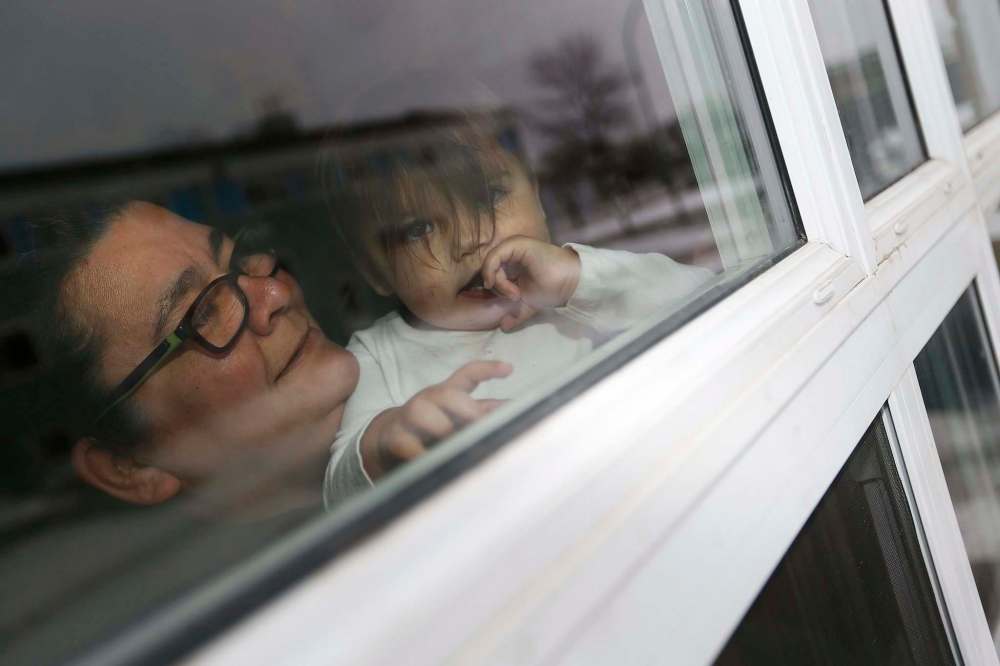
That’s why Burton and other North End grandmothers are trying to make families “fearless” in navigating a labyrinthine bureaucracy. She believes CFS workers are often too overworked to suggest alternative options for parents with relatively minor problems, or to let them know their rights.
Days before a landmark summit in Ottawa aimed at reforming CFS care, Burton is cautiously optimistic that a backlogged, opaque system can be changed and brought under more Indigenous control.
“The system is broken and the more broken it is, the more children are affected,” said Burton, who herself was raised in the child-welfare system. “It’s a cycle that needs to be fixed.”
Indigenous, federal and provincial leaders agree with her. Manitoba has one of the world’s highest rates of child-welfare cases, jumping by three-quarters in the past decade. As of spring 2016, 87 per cent of them were First Nations or Métis, despite Indigenous Peoples making up just 17 per cent of Manitoba’s population.
This Wednesday, federal Indigenous Services Minister Jane Philpott will welcome CFS officials from across Canada for a two-day “emergency meeting” aimed at reforming how child-welfare systems treat Indigenous families.
The provincial government, Métis leadership and Manitoba First Nations say they have enough momentum and trust to start a drastic rethinking of child welfare.
Their tasks include confronting a centuries-long colonial legacy, building a funding model that no longer encourages agencies to take lower-risk children from their families, and balancing Indigenous autonomy with oversight.
Burton said the stakes are high and that Winnipeggers could see a safer, happier community by building up Indigenous families. “A strength-based approach is better than ripping a child out of the home.”
Intergenerational trauma
To many advocates, CFS is the result of residential schools. According to the Truth and Reconciliation Commission’s final report, Ottawa realized in the 1960s that half its students were effectively being housed as foster children.
“The 1960s Scoop was in some measure simply a transferring of children from one form of institutional care, the residential school, to another, the child-welfare agency,” reads the report.
Michael Champagne, who co-founded R2W, sees that legacy manifesting in the North End. “That plays a very large factor in people’s brains.” He draws a parallel between these historic programs and the powerlessness parents feel when child-welfare workers arrive.
“The families have to fight this CFS monster by themselves,” said Champagne, which is why he and Burton intervene in apprehensions and explain to parents their rights.
The two often respond to maternity wards because a mother’s prior involvement in CFS will trigger a “birth alert.” That’s when child-welfare intake officers arrive at the hospital to assess whether the newborn is at risk. Some women reportedly give birth at home to evade CFS interrogations.
Last year, Manitoba CFS agents took 354 babies into care within their first month of life; 73 per cent of them remained in the system by the end of 2017 and 86 per cent were Indigenous.
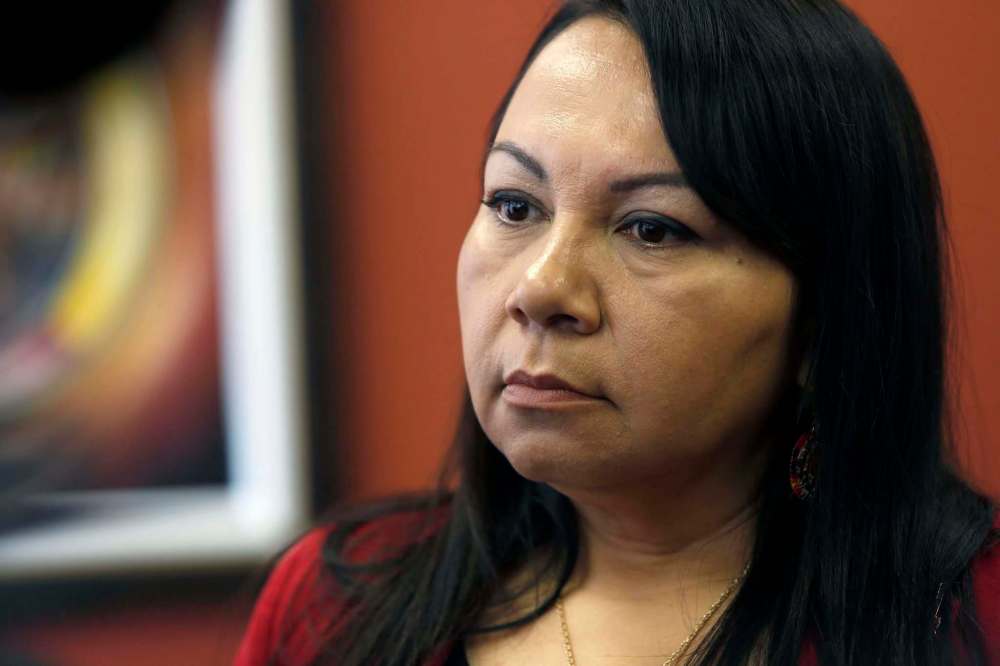
Burton believes that explains why so many CFS wards ultimately end up in jail. The Free Press reported last month that more than 60 per cent of inmates at Manitoba’s youth correctional centre had been in CFS care.
“They get taken away and put in with strangers. That is traumatic to children,” said Burton. “They internalize it, like: ‘what did I do to deserve this; it’s my fault.’ And then if they don’t have the support in place to help deal with that, they will retaliate. And once they retaliate they will be labelled as bad kids.”
Grand Chief Jerry Daniels of the Southern Chiefs Organization calls CFS “a superhighway to the justice system,” one that will only change slowly until broader colonial policies are reversed. “There’s some very deep underlying issues behind where we’re at today.”
Champagne and Burton stress that CFS is vitally needed, especially for high-risk scenarios. Champagne entered the system at birth and was ultimately adopted into a loving home. Burton said CFS workers have become more attentive to children already in care but that they face impossible caseloads.
A funding shortfall?
On Saturday, the Free Press revealed that federal and provincial governments have underfunded First Nations kids in Manitoba care by $104 million a year.
An internal report found an average $12,814.42 gap meant agents effectively had their hands tied, dipping into their prevention budgets to do their legally required operations, like apprehensions and staffing.
Some staff have almost double the 20-child caseload suggested by a historic inquiry on Manitoba’s CFS system four years ago.
But many First Nations advocates say it’s not actually clear whether the system needs more money. Burton said more cash would only continue a commodification of children and employ more CFS workers. “People think that throwing more money at this situation is going to fix the problem; it’s not.”
Champagne said he hopes CFS money can be redistributed to families living in poverty.
Grand Chief Sheila North Wilson, of the Manitoba Keewatinowi Okimakanak (MKO), agrees. She also said provincial housing requirements could be changed because families living in poverty don’t always meet bedroom dimensions, like the number of bedrooms or closets. One child was intercepted when a home lacked a fire extinguisher.
“If it’s based on a lack of resources, then obviously we should reflect on that,” said North Wilson.
Beating the odds
In Ottawa this week, the head of Sandy Bay CFS will show leaders from across Canada how the Manitoba community has reduced the number of children in care by half over the past two years.
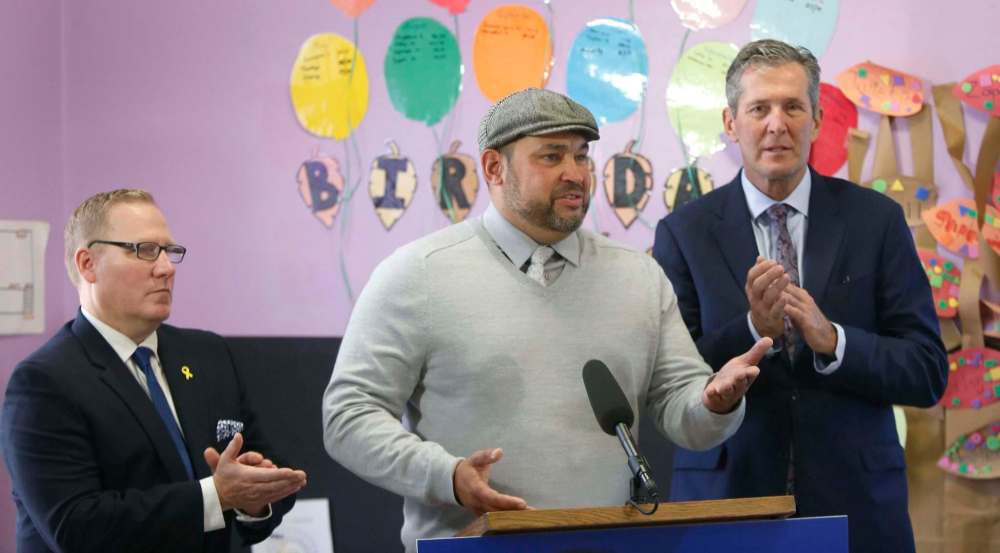
“It’s not rocket science,” said Richard De La Ronde. “It’s having some flexibility with our funding, and maintainable caseloads.”
Sandy Bay is one of four agencies the province is testing through a block-funding pilot project in which money isn’t tied to the number of children in care each day in order to focus on prevention projects shaped by the community.
The funding has helped them keep a staff-child ratio of 1:20, as the 2014 inquiry recommended. Of children in care, 86 per cent are in a parent or relative’s home, a rate he believes is much lower in many part of the province.
Before the pilot, De La Ronde started turning around the numbers in recent years by “bending” the rules. One time, he used funds to buy an air conditioner for a single mom whose child was going to be apprehended simply due to the summer heat.
Now, Sandy Bay has used the block funding for cultural programming, as well as respite weekends, effectively an occasional babysitting service that is already offered to foster families.
Provincial Families Minister Scott Fielding sees block funding as a possible template for all of Manitoba.
Last October, his government announced plans for subsidized guardianship, which would offer subsidies to people seeking care of children, similar to what foster parents receive. Fielding believes that will help people adopt relatives when they wouldn’t normally be able to afford to, but critics fears it would incentivize even more non-Indigenous people to take First Nations kids into care.
Fielding said he won’t table legislation until the advisory council he appointed last month weighs in.
“This needs to be a community-led process,” Fielding said, adding that summits being organized with chiefs will steer the legislation.
The province is also under pressure to end its clawback of the children’s special allowance, the federal “baby bonus” funds that normally goes to parents, but that the province takes for children in CFS care.
Fielding was quick to blame his predecessors for the policy and noted neighbouring provinces have similar policies. “We are most definitely going to review that,” he said.
Philpott suggests provinces look at different models, such as a Prince Edward Island program that holds the money in a trust that wards can access later in life for purposes such as post-secondary education.
Finding solutions
Philpott said she aims to walk away from the Ottawa meeting with “very concrete proposals,” both long and short term.
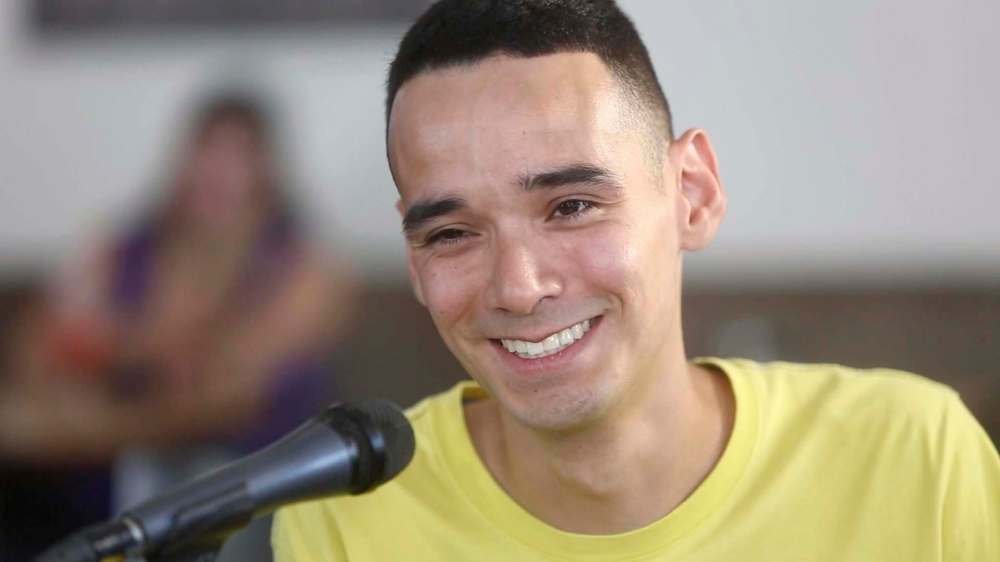
A long-term goal for her is to follow a TRC call for federally legislated standards on Indigenous child apprehension, including culturally appropriate care.
Her short-term goals include more money in this spring’s budget, “a guarantee of due process” for apprehension that includes better explanations to families and attempts at finding alternatives, such as family members.
CFS watchers aren’t sure how much progress they want to see this week in Ottawa.
De La Ronde said there have been too many reforms over the past 15 years and he fears a federal law will add to complicated provincial politics. “There hasn’t been any time for it to stabilize and now we’re in the next round of huge legislative reform.”
He believes there is far too much paperwork and legislated requirements that don’t make sense, such as requiring a full-time human-resources officer for a small CFS group when an IT worker would be more helpful.
He particularly troubled by an American computer assessment called Structured Decision Making. Used widely across the province, its checklist is meant to assess a risk score without bias, yet De La Ronde said decade-old alcohol issues or relatives’ criminal convictions have come up.

The system can be customized, but he doubts many CFS agents have the time. “When you’re carrying 45 cases, I think people rely on that system.”
But Burton said the system needs a complete overhaul. “I don’t see any short-term solutions at all,” she said.
De La Ronde said the stakes are high but so is the optimism.
“I’ve never seen that dialogue in 18 years, where federal, provincial governments, chiefs and agencies are all sitting down. And we’re not pointing fingers; we’re talking about solutions.”
dylan.robertson@freepress.mb.ca