

Activist’s mission: break the food bank
Community food centres aim to end decades-old aid model
Advertisement
Read this article for free:
or
Already have an account? Log in here »
To continue reading, please subscribe:

Digital Subscription
One year of digital access for only $205*
- Enjoy unlimited reading on winnipegfreepress.com
- Read the E-Edition, our digital replica newspaper
- Access News Break, our award-winning app
- Play interactive puzzles
*First annual payment billed as $205.00 + GST for one year. This annual subscription will automatically renew at $233.00 + GST every 52 weeks (10% off the regular annual price of $259.35). Offer available to new and qualified returning subscribers only. Cancel any time.
To continue reading, please subscribe:
Add Free Press access to your Brandon Sun subscription for only an additional
$1 for the first 4 weeks*
- Enjoy unlimited reading on winnipegfreepress.com
- Read the E-Edition, our digital replica newspaper
- Access News Break, our award-winning app
- Play interactive puzzles
*Your next Brandon Sun subscription payment will increase by $1.00 and you will be charged $17.95 plus GST for four weeks. After four weeks, your payment will increase to $24.95 plus GST every four weeks.
Read unlimited articles for free today:
or
Already have an account? Log in here »
Hey there, time traveller!
This article was published 20/06/2013 (4769 days ago), so information in it may no longer be current.
Nick Saul wants to make food banks a thing of the past.
The Toronto-based activist is taking a giant step toward that goal with plans to open 15 community food centres across Canada, including one in Winnipeg’s Gilbert Park neighbourhood.
“The basic response over the last 30 years to hunger is somebody stands in a line, picks up some not-very-healthy food and feels smaller for having gone through that experience,” he said in a recent interview at the Winnipeg Free Press News Caf©.
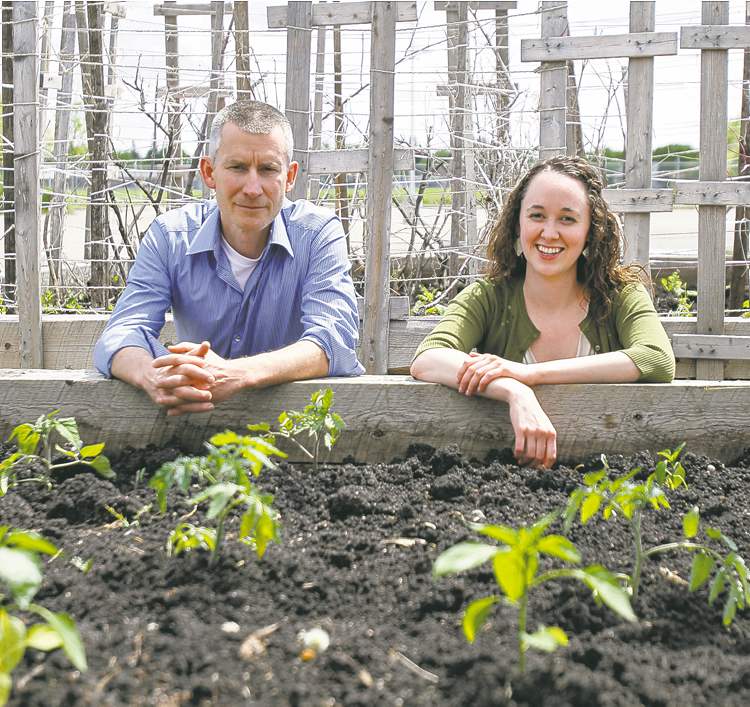
Community Food Centres Canada, which is going to be a joint production with the Norwest Community Health Centre, is in the process of moving into a new 3,000-square-foot space on Tyndall Avenue.
Saul’s goals are ambitious — he wants to create a healthier attitude toward food and help lower-income people be part of the process. A gardening program and a community kitchen will be available to patrons.
He said Canada has increasingly developed a two-tiered health system where “the rich get organic and the poor get diabetes.”
Saul’s brainchild is the result of working in low-income neighbourhoods in Toronto.
He thought there had to be something better than the food-bank model so he talked to as many people as he could to see what was needed.
“They were pretty clear. They wanted to be cooks, gardeners and engaged citizens, all through the power of food. We built a centre (the Stop in Toronto) that is dignified and responsible, and that uses food to build health, hope, skills, community, pleasure and joy, all those great things that come from food,” he said.
Renovations are scheduled to begin on Tyndall this month and be completed by late in the year before a ribbon-cutting next January.
Kristina McMillan, director of the Norwest Co-op Community Food Centre, a health and social-service agency, has started a community consultation to help ensure the programs she develops are appropriate for the neighbourhood. She’ll be directing the cooking classes, the gardening club, the free meal program and peer advocacy training.
She said the community food centre will be a crucial element to the Inkster area.
‘The basic response over the last 30 years to hunger is somebody stands in a line, picks up some not-very-healthy food and feels smaller for having gone through that experience’ — Toronto-based activist Nick Saul
“There are major issues in this community. There are high rates of food-bank usage and high rates of food-related chronic diseases, such as diabetes and hypertension. We have people who want to learn how to garden but don’t know how. This community food centre will be an answer to a lot of these (challenges,” she said.

Saul said poverty isn’t about poor budgeting, character flaws or lifestyle choices; it’s about low minimum wage, inadequate social-assistance rates and a lack of affordable housing.
“We want to be a place where people can find a voice in these larger issues. It’s not that we have a lack of food, there’s tonnes of food out there. It’s about income and people having enough income to participate in the economy,” he said.
Saul is currently in fundraising mode, hoping to pull in $500,000 to cover the cost of the renovations. The cost of ignoring food issues for society, however, is many times that.
“Three million Canadians are food-insecure, which means they’re not sure where their next meal is coming from or they’re missing meals so their kids can eat. Canada spends $12 billion a year on diabetes, which affects the poor at twice the rate of the wealthy,” he said.
geoff.kirbyson@freepress.mb.ca
History
Updated on Thursday, June 20, 2013 4:39 PM CDT: Corrects Kristina McMillan's title.