

Adoptee’s reunion journey finds disappointment
Advertisement
Read this article for free:
or
Already have an account? Log in here »
To continue reading, please subscribe:
Digital Subscription
One year of digital access for only $1.44 a week*
- Enjoy unlimited reading on winnipegfreepress.com
- Read the E-Edition, our digital replica newspaper
- Access News Break, our award-winning app
- Play interactive puzzles
*Billed as $5.77 plus GST every four weeks. After 52 weeks, price increases to the regular rate of $19.95 plus GST every four weeks. Offer available to new and qualified returning subscribers only. Cancel any time.
To continue reading, please subscribe:
Add Free Press access to your Brandon Sun subscription for only an additional
$1 for the first 4 weeks*
- Enjoy unlimited reading on winnipegfreepress.com
- Read the E-Edition, our digital replica newspaper
- Access News Break, our award-winning app
- Play interactive puzzles
*Your next Brandon Sun subscription payment will increase by $1.00 and you will be charged $17.95 plus GST for four weeks. After four weeks, your payment will increase to $24.95 plus GST every four weeks.
Read unlimited articles for free today:
or
Already have an account? Log in here »
Hey there, time traveller!
This article was published 29/11/2021 (1783 days ago), so information in it may no longer be current.
It was supposed to be a reunion of a lifetime.
Katherine Legrange, director of the 60s Scoop Legacy of Canada was finally going to meet her older half-brother.
Legrange started looking for her biological family in 1990, although her search was difficult until 2015, when closed adoption legislation changed in Manitoba. She asked for her father’s name but ended up getting her mother’s name. She learned that her parents had met in Lynn Lake in the 1970s, so she turned to social media to see if she could find any leads.
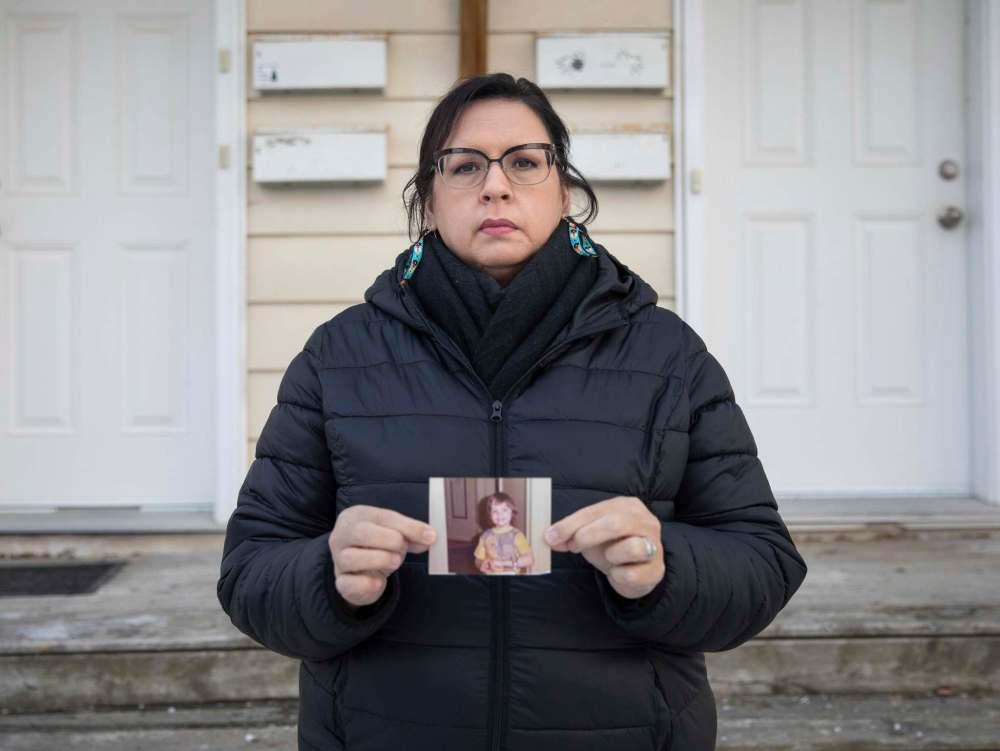
She learned that her mom died by suicide when Legrange was nine years old. Her father died a year later, in 1982, in Vancouver. She discovered her mom had two sons, one of whom she connected with in a Lynn Lake Facebook group in 2015. The pair pieced their lives together quickly, and had been in contact but had never met. He was the only link to a family and a lineage that Legrange had wondered about and been pulled to for as long as she could remember.
Legrange was born in the 1970s in Winnipeg’s Women’s Hospital. Her birth mother was a white woman who already had a son from a previous relationship. The boy was in the care of his grandparents. Her birth father was an Indigenous man from Crane River, who had been in the navy, and had worked as a miner. The pair never wed, and shortly after Legrange was born, her father took off to Vancouver.
Legrange spent the first little while of her life in foster care before she was adopted by a white family in Winnipeg. She is one of thousands of Indigenous children who were part of the ’60s Scoop — the mass removal of Indigenous children from their families from the late 1950s to the early 1980s into the child welfare system, in most cases without the consent of their families or bands.
Legrange grew up in Winnipeg. She was the only daughter to her adoptive parents, who also had two sons. She says her parents gave her a great foundation in life, but something was missing: a deeper sense of herself and a connection to her culture. She felt isolated. She didn’t even know where to begin to try to discover herself and her culture.
During her time at the University in British Columbia, where she studied business administration, she began to learn more about herself and about being an adoptee by working with others who had similar backgrounds.
“I used that foundation that my adoptive parents gave me to speak up for myself and for other survivors,” Legrange explained. “I use my voice for survivors who don’t have the means to speak out.”
She is the volunteer executive director of 60s Scoop Legacy Canada — a national non-profit, support group for adoptees and survivors and family of the child welfare and ’60s Scoop.
She helps survivors access the $50 million set aside by the Sixties Scoop Healing Foundation, and lobbies governments for more resources, such as a safe space to facilitate gatherings and healing ceremonies, access to mental-health support, as well as access for survivors to change their names, which were taken from them in the scoop, free of charge.
Right now, there is an inadequate patchwork of resources, she says.
On Nov. 23, the night before they were to meet, Legrange messaged her brother to firm up details. They would meet at the First Nations Family Advocate Office on Smith Street and invite media to take part in their reunion and traditional ceremony.
She sent out a media release the next morning and texted her brother.
“I said, ‘I just sent out the media release, there’s no turning back now,’” she said.
Her text went unanswered. She texted a couple of more times, and then called him. He didn’t answer. She had a sinking feeling of disappointment. She eventually sent an email to the media.
“Please be advised that unfortunately this event has been cancelled. Apologies for the inconvenience. Katherine.”
Her brother responded to her text nearly half an hour after the reunion was slated to begin.
Legrange can’t talk about what happened, but she felt it was important to get her story out.
“Unfortunately, this is part of it. Relationships break down, even though you think you created a bond,” she said through tears.
“When you hear stories about families reuniting, it’s not always the outcome you want or hope for. I’m glad the First Nations family advocate is there: where else do you go for this? Nobody else is equipped for stuff like this.”
Legrange’s feelings are hurt. She isn’t sure what will happen next, but she knows sharing her experience might help others.

“It feels like a really long journey and it hasn’t gone well,” she said.
Even though it’s not the outcome she’d hoped for, it’s one that many ’60s Scoop adoptees encounter.
shelley.cook@freepress.mb.ca
Twitter: @ShelleyAcook
History
Updated on Monday, November 29, 2021 2:14 PM CST: Changes to "died by suicide" from "committed suicide."