

After a drink or two, drivers could have vehicle impounded
Lawyer says new police powers about saving court costs
Advertisement
Read this article for free:
or
Already have an account? Log in here »
To continue reading, please subscribe:

Digital Subscription
One year of digital access for only $205*
- Enjoy unlimited reading on winnipegfreepress.com
- Read the E-Edition, our digital replica newspaper
- Access News Break, our award-winning app
- Play interactive puzzles
*First annual payment billed as $205.00 + GST for one year. This annual subscription will automatically renew at $233.00 + GST every 52 weeks (10% off the regular annual price of $259.35). Offer available to new and qualified returning subscribers only. Cancel any time.
To continue reading, please subscribe:
Add Free Press access to your Brandon Sun subscription for only an additional
$1 for the first 4 weeks*
- Enjoy unlimited reading on winnipegfreepress.com
- Read the E-Edition, our digital replica newspaper
- Access News Break, our award-winning app
- Play interactive puzzles
*Your next Brandon Sun subscription payment will increase by $1.00 and you will be charged $17.95 plus GST for four weeks. After four weeks, your payment will increase to $24.95 plus GST every four weeks.
Read unlimited articles for free today:
or
Already have an account? Log in here »
Hey there, time traveller!
This article was published 07/11/2019 (2522 days ago), so information in it may no longer be current.
If you’re the kind of driver who hits the road after a tipple or two, consider yourself warned: as of Dec. 16, Manitoba police will have new powers to impound vehicles and issue fines following quick roadside alcohol-screening tests, without laying a charge of impaired driving.
“This will help ensure immediate, significant and clear consequences if you drink and drive,” said Justice Minister Cliff Cullen at Thursday’s announcement at RCMP D Division Headquarters on Portage Avenue. “You will lose your licence, you will lose your vehicle, and you will lose a lot of money.”
The new law enforcement approach, called immediate roadside prohibition (IRP), adds to penalties for registering a “warn” or “fail” result on a roadside alcohol-screening device.
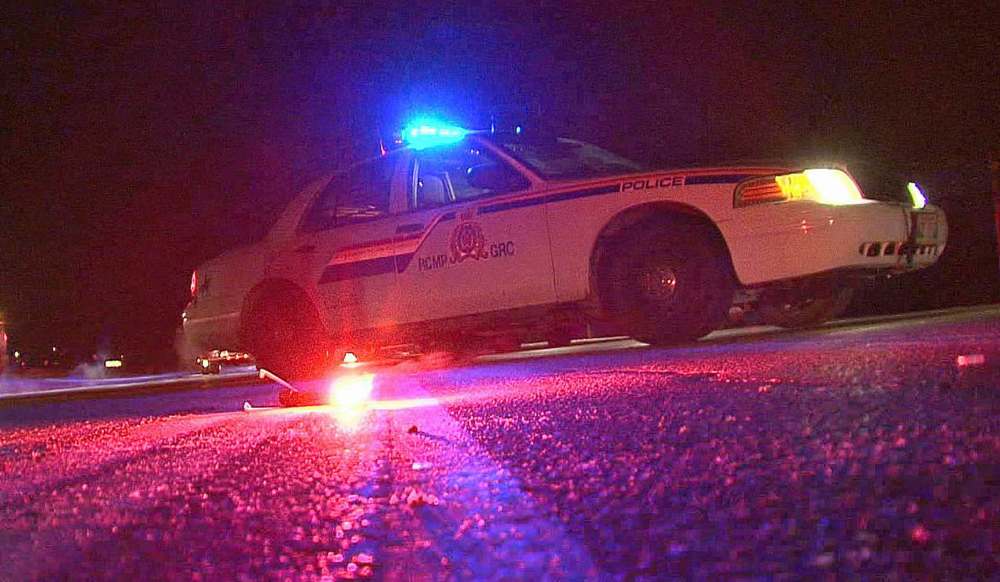
Already, Manitoba drivers whose roadside blood-alcohol tests register a warn — a blood alcohol content between 0.05 per cent and 0.079 per cent — are subject to licence suspensions and referral to compulsory Addictions Foundation of Manitoba programs for repeat violations. The new IRP law adds vehicle impoundments, starting at three days for the first “warn” violation, and longer for subsequent violations, plus fines starting at $400. A driver who registers a “warn” for the third time or more will have to install a mandatory ignition interlock device.
“We’ve done the math,” said Cullen. “When you add up all the administrative sanctions, the cost for a “warn” is approximately $700 for the first offence.”
Stiffer IRP penalties will apply to drivers who fail a roadside blood-alcohol test by registering a blood-alcohol content higher than 0.08 per cent, or who refuse a test. Those drivers can already receive an instant three-month licence suspension, vehicle impoundment and referral to an addictions program. As of Dec. 16, they could also receive a $700 fine and be required to use an ignition interlock for a year, even for a first-time violation. The total cost of failing a roadside test for the first time will exceed $3,500, Cullen said.
The justice minister said criminal charges remain an option for impaired drivers who kill or injure someone, or in cases with aggravating circumstances. Drivers who believe they’ve wrongly received an IRP will be able to appeal to Manitoba Public Insurance to have the case reviewed, he said. MPI will launch a public education campaign to educate drivers about the new penalties.
RCMP Supt. Scott McMurchy said drivers should expect to see the new approach used at holiday impaired-driving checkpoints. Police will be able to test drivers and issue the new roadside prohibitions in less than 10 minutes, he said.
Winnipeg defence attorney Matt Gould thinks Manitoba’s new IRP law is about saving money more than anything else.
“Do not misinterpret this as, quote, ‘Getting tough on impaired drivers,’ unquote — this is going light on impaired drivers. But it’s cutting costs on processing them,” he said.
Gould worries immediate roadside prohibitions will be both less reliable and less accountable than existing approaches to policing impaired driving, describing the process as “a roadside trial — or roadside lack of trial.”
“Look at it from the police perspective… You don’t have to spend as much time with people, you don’t have to go to court… Look at it from the government perspective. They don’t have to pay for the court, they don’t have to pay for that police time. This is all revolving around, ‘How can we process people more quickly,’ and if the cost of that is liberty, then so be it.”
Cullen said Manitoba’s IRP law is based largely on the approach taken by British Columbia, which started using immediate roadside prohibitions in 2010. Mothers Against Drunk Driving Canada, which supports the IRP approach, says B.C.’s law has saved lives and prevented injuries.
“This does not take away from people receiving a criminal charge, but in most cases, at roadside, if you can deter that person with that penalty, loss of vehicle, they’re going to think twice about doing a second time,” said Tracy Crawford, MADD Canada’s regional manager for Western Canada.

Vancouver impaired-driving defence lawyer Kyla Lee says she deals with 15 to 20 IRP cases a week.
“When the law was brought in, the (B.C.) government, I think, had hoped that it would result in a decrease in impaired driving behaviour,” she said.
“The reality is that we don’t see that. We see, every month, relatively consistent numbers of IRPs being issued, which means that there’s no significant deterrent (effect). …There’s been removal of a lot of impaired driving cases from the courts… It frees up a lot of court time.”
solomon.israel@freepress.mb.ca
@sol_israel