

Winnipeg woman guilty of hiding infant remains may have wanted to visit: defence
Advertisement
Read this article for free:
or
Already have an account? Log in here »
To continue reading, please subscribe:

Digital Subscription
One year of digital access for only $205*
- Enjoy unlimited reading on winnipegfreepress.com
- Read the E-Edition, our digital replica newspaper
- Access News Break, our award-winning app
- Play interactive puzzles
*First annual payment billed as $205.00 + GST for one year. This annual subscription will automatically renew at $233.00 + GST every 52 weeks (10% off the regular annual price of $259.35). Offer available to new and qualified returning subscribers only. Cancel any time.
To continue reading, please subscribe:
Add Free Press access to your Brandon Sun subscription for only an additional
$1 for the first 4 weeks*
- Enjoy unlimited reading on winnipegfreepress.com
- Read the E-Edition, our digital replica newspaper
- Access News Break, our award-winning app
- Play interactive puzzles
*Your next Brandon Sun subscription payment will increase by $1.00 and you will be charged $17.95 plus GST for four weeks. After four weeks, your payment will increase to $24.95 plus GST every four weeks.
Read unlimited articles for free today:
or
Already have an account? Log in here »
Hey there, time traveller!
This article was published 12/12/2018 (2817 days ago), so information in it may no longer be current.
WINNIPEG – A woman who stored the remains of six babies inside a U-haul storage locker was not trying to hide or dispose of them, but was instead keeping them — perhaps to continue to visit them, her defence lawyer said Wednesday.
Greg Brodsky told Manitoba’s Court of Appeal that it is not clear what Andrea Giesbrecht’s motivation was, but her conviction and 8- 1/2-year prison sentence should be set aside.
“We contend that her actions do not constitute disposal. Rather, the products of conception were stored, kept and saved,” Brodsky told the three judges hearing the case.
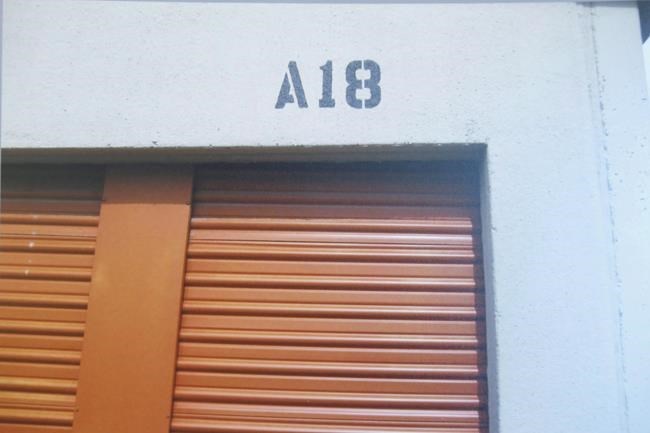
“Why would anyone want to store six bodies?” Justice Christopher Mainella asked at one point.
“She may have had a facetious or a not realistic expectation. She may have wanted to visit. She may have wanted to preserve … she doesn’t have to explain,” Brodsky said.
Giesbrecht is entitled to the presumption of innocence and it’s on the Crown to prove she intended to dispose of the remains rather than simply store them, Brodsky added.
The argument was challenged by Mainella.
“I didn’t see an … authority in your case book that says that you don’t commit this offence by being good at hiding dead bodies. Because essentially … what you’re saying is that you can defeat this charge by burying a body in your backyard (and) you’re still in possession of it.”
“She wasn’t keeping her vinyl record collection here. These lockers were simply for storing dead bodies,” Mainella added later.
The remains were found by U-haul workers in October 2014 after Giesbrecht fell behind on her rental payments. She had previously stored at least some of the remains at another Winnipeg facility before moving them to U-haul.
Giesbrecht, 44, never testified. The trial never heard a motive for her actions, and the remains were too decomposed to determine how the babies died.
The trial was told the babies were Giesbrecht’s, were at or near full term and each child was likely to have been born alive.
Crown attorney Jennifer Mann said Giesbrecht made “extensive efforts” to hide the remains and cover up any smell of decomposition. Some had been placed inside plastic bags and tubs. Others were inside plastic pails covered with detergent or a cement-like compound.

“Surely that can be considered a discarding, when you place infants in that manner,” Mann said.
Giesbrecht was charged under a section of the Criminal Code that forbids the disposal of a child’s dead body with intent to conceal the fact that its mother has delivered it, whether the child died before, during or after birth.
She was given consecutive sentences and Brodsky said the trial judge erred in treating each alleged offence as separate.
“She put them in a locker at U-haul after signing a contract. That’s the offence. It is … one offence.”
The judges reserved their decision and did not indicate when it will be released.
Related Articles
Woman was storing – not disposing of – six infants' remains, lawyer tells Appeal Court justices
Advertisement Advertise With Us
Advertisement Advertise With Us