

Battling those winter blues
Third Monday in January designated for tackling mental-health issues, holiday debt
Advertisement
Read this article for free:
or
Already have an account? Log in here »
To continue reading, please subscribe:
Monthly Digital Subscription
$1 per week for 24 weeks*
- Enjoy unlimited reading on winnipegfreepress.com
- Read the E-Edition, our digital replica newspaper
- Access News Break, our award-winning app
- Play interactive puzzles
*Billed as $4.00 plus GST every four weeks. After 24 weeks, price increases to the regular rate of $19.95 plus GST every four weeks. Offer available to new and qualified returning subscribers only. Cancel any time.
Monthly Digital Subscription
$4.99/week*
- Enjoy unlimited reading on winnipegfreepress.com
- Read the E-Edition, our digital replica newspaper
- Access News Break, our award-winning app
- Play interactive puzzles
*Billed as $19.95 plus GST every four weeks. Cancel any time.
To continue reading, please subscribe:
Add Free Press access to your Brandon Sun subscription for only an additional
$1 for the first 4 weeks*
*Your next subscription payment will increase by $1.00 and you will be charged $16.99 plus GST for four weeks. After four weeks, your payment will increase to $23.99 plus GST every four weeks.
Read unlimited articles for free today:
or
Already have an account? Log in here »
Hey there, time traveller!
This article was published 21/01/2019 (2648 days ago), so information in it may no longer be current.
If you’re feeling down today, you’re probably not alone.
Today is unofficially known as Blue Monday, which is usually the third Monday in January: a short, frigid day with no break in sight and holiday bills filling the mailbox.
Those who can, head south to the sun for a winter break. Everyone else puts up with the cold and figures out how to pay the bills.
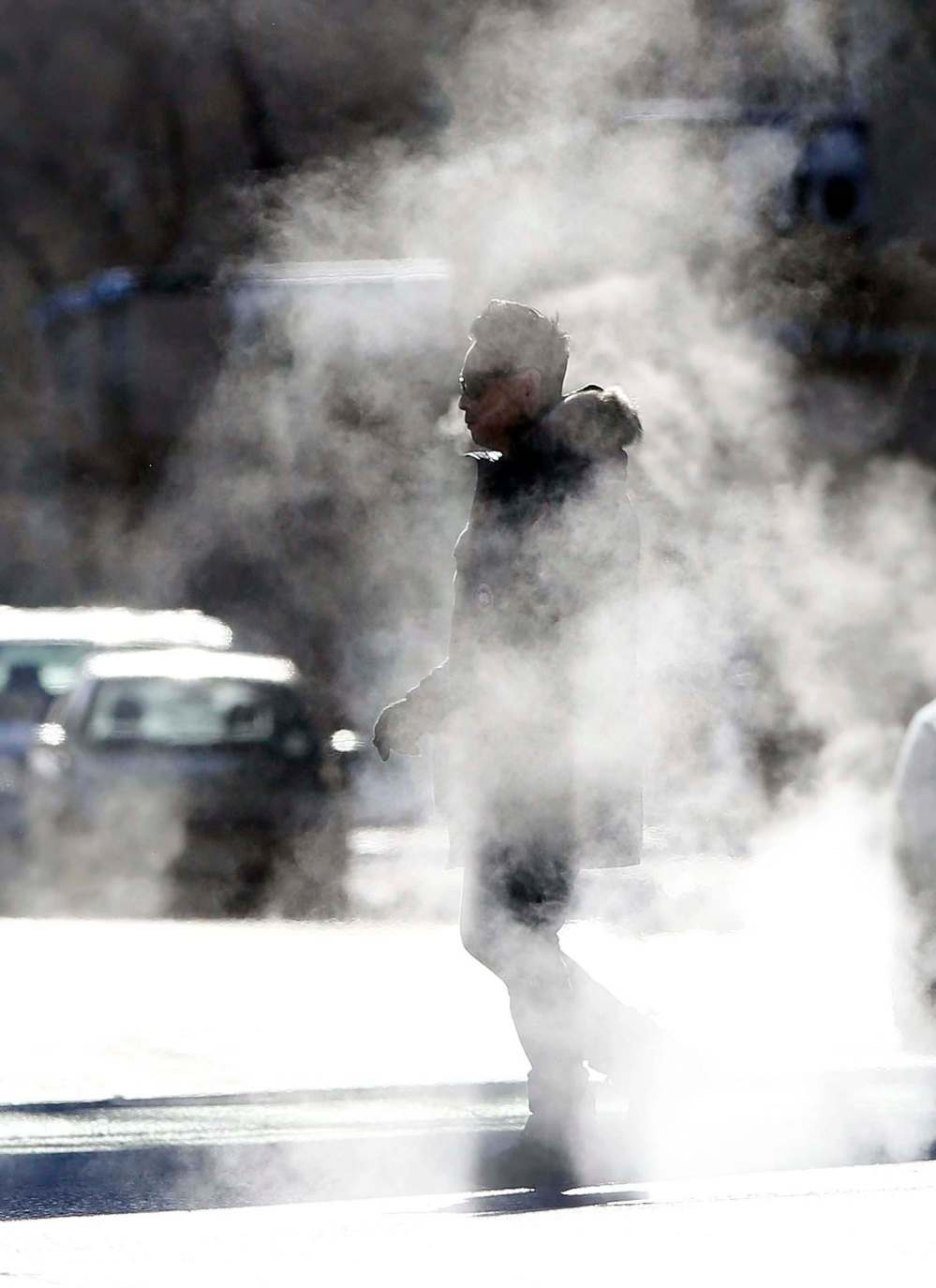
Blue Monday was dreamed up by a travel agent and first floated in a 2005 news release from a holiday company called Sky Travel as a hook to get people to book a winter vacation in the sun.
The agency even published a formula claimed to have been carefully calculated. The formula took into account the weather, at least as it applies to the northern hemisphere, average debt levels since Christmas, failed New Year’s resolutions, low motivational levels and feeling the need to take action.
Some see the notion of Blue Monday as commercial nonsense and others dismiss it as bunk.
The New Brunswick chapter of the Canadian Mental Health Association (CMHA), probably the mostly widely known non-profit public advocate for mental-health awareness in the country, put together an info sheet that dealt harshly with Blue Monday.
It noted the marketing origins of the designation, and also raised the real mental-health issues related to long, cold, dark winters, seasonal affective disorder chief among them.
“Usually when there’s a day promoting mental health and wellness, the CMHA of NB is excited to participate and support the initiative.
“The problem with Blue Monday is that it isn’t based on science and it is a made-up phenomenon that likely does more harm than good,” the agency’s info sheet says.
That said, holiday bills and the depths of a cold, dark winter are a problem for many.
So credit counsellors, some mental-health advocates and lifestyle coaches alike are willing to recognize the day despite its discredited origins.
A Blue Monday panel at The Forks today from noon to 1 p.m. will discuss seasonal affective disorder (SAD), the mental-health issue related to the shorter winter days that leave us deprived of sunlight.
Spending more time outside can make a difference, of course. Outdoor winter activities will also help get you that important dose of sunlight, a source of vitamin D.
Organized by the Manitoba Tomorrow Project, there will be SAD lamps on display for the public to try out; 25 of the lamps will be given away in a prize draw following the event. It’s free of charge and open to the public
Diagnosed in more women than men, and found to be more common in people living in the northern hemisphere, SAD can affect a person’s ability to function normally, cause changes in mood and thinking, and lessen their sense of physical and mental well-being. SAD affects 40,000 Manitobans.
Panelists include University of Manitoba associate professor of kinesiology Shaelyn Strachan, Mood Disorders Association executive director Tara Brousseau Snider and the association’s director of development, Rachel Westman.
Tomorrow Project co-ordinator Lindsay Somers is also a lifestyles coach and a well-known runner. She hosts running groups at The Forks, including events in the winter.
‘Movement always works for me. It takes you out of yourself. When I go running, I see the city, I see nature, I see people I don’t normally cross paths with. It’s very centring and I’m not distracted by anything, which is rare these days’ — Lindsay Somers
Moving is a great way to kick out the blues, Somers said. “If you say you’re blue, as in not feeling awesome, not depression,” she noted, drawing a distinction between feeling down and suffering a mental-health issue.
“Movement always works for me. It takes you out of yourself. When I go running, I see the city, I see nature, I see people I don’t normally cross paths with. It’s very centring and I’m not distracted by anything, which is rare these days,” Somers noted.
Almost any movement works, provided it takes your mind off your problems, once you’ve got a handle on how to tackle them.
Household debt is a major financial problem. The average debt — much of that in mortgages — is 170 per cent of disposable income, which means the average Canadian owes $1.70 for every dollar earned after taxes, a record high that’s soared 100 per cent since 1999. It ranges from province to province. Average household debt in Winnipeg is just under $1.50 for every after-tax dollar earned, according to figures released last month by the Canadian Mortgage and Housing Corp.
Non-profit financial literacy agencies, Credit Canada and the Financial Planning Standards Council see Blue Monday as a convenient date to draw attention to ways Canadians can get a handle on their bills.
“January is a tricky month as it’s time to pay for all the fun you had during the holidays. The average Canadian carries about $4,200 in credit card debt as it is, and Canadians indicated they were planning to spend an average of $1,563 during the 2018 holiday season,” Credit Canada spokeswoman Adriana Molina said by email. “That’s up 3.7 per cent from last year!”

Canadians are stressed out at this time of year as they’ll have to pay for all that extra spending, she said. Many will be tempted to turn to quick solutions, such as high interest loans and payday loans, which will only make things worse.
The best way to tackle mounting credit card debt is “to take a deep breath and open your credit card statements. It’s crucial not to ignore them,” Molina said.
Then put yourself on a budget and stick to it, keep a journal and write down what you’re spending every week.
If you need help, there are credit counsellors, Molina said. Credit Canada offers free, confidential and non-judgmental counselling. The service maintains a website with contact information.
alexandra.paul@freepress.mb.ca
Related Articles
Outdoor fun at -27 C? Winnipeggers say yes
Advertisement Advertise With Us
Advertisement Advertise With Us