

Birth alerts continue during review
Mothers often flagged by CFS without their knowledge

Advertisement
Read this article for free:
or
Already have an account? Log in here »
To continue reading, please subscribe:
Monthly Digital Subscription
$1 per week for 24 weeks*
- Enjoy unlimited reading on winnipegfreepress.com
- Read the E-Edition, our digital replica newspaper
- Access News Break, our award-winning app
- Play interactive puzzles
*Billed as $4.00 plus GST every four weeks. After 24 weeks, price increases to the regular rate of $19.95 plus GST every four weeks. Offer available to new and qualified returning subscribers only. Cancel any time.
Monthly Digital Subscription
$4.99/week*
- Enjoy unlimited reading on winnipegfreepress.com
- Read the E-Edition, our digital replica newspaper
- Access News Break, our award-winning app
- Play interactive puzzles
*Billed as $19.95 plus GST every four weeks. Cancel any time.
To continue reading, please subscribe:
Add Free Press access to your Brandon Sun subscription for only an additional
$1 for the first 4 weeks*
*Your next subscription payment will increase by $1.00 and you will be charged $16.99 plus GST for four weeks. After four weeks, your payment will increase to $23.99 plus GST every four weeks.
Read unlimited articles for free today:
or
Already have an account? Log in here »
Hey there, time traveller!
This article was published 20/09/2019 (2408 days ago), so information in it may no longer be current.
When her daughter was born in February, the joy Jacqueline Rieu felt was matched only by her impending despair.
“It was like the best adrenaline, the best joy, the best thing you could ever think of, and then to go to that (feeling when) they’re telling you they’re going to release you in a couple of hours and CFS is going to come here and the devastation that comes with that,” she says.
Child and Family Services had issued a birth alert. It meant health officials were required to notify social workers that Rieu had given birth. Social workers showed up to take her infant away.
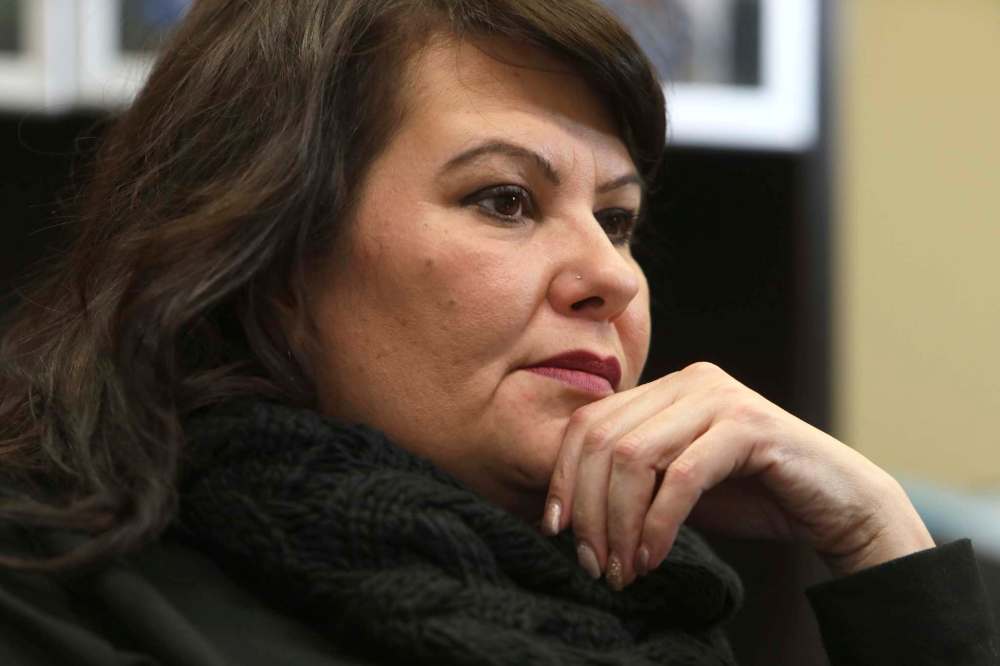
She is one of many Manitoba mothers who has had a child taken into foster care because of a birth alert. The controversial practice has continued despite being under review for a year.
This week, B.C. announced it would stop using birth alerts in response to recommendations from the National Inquiry into Missing and Murdered Indigenous Women and Girls. The issue was raised at a Manitoba hearing held by the inquiry. It was also recommended in a legislative review for the Manitoba government last year, but change has been slow.
Manitoba Families Minister Heather Stefanson declined an interview Thursday. Her department issued a statement saying work is underway to make sure the birth-alert process is only used when “there is a risk of imminent harm or danger.”
Provincial statistics are also being reviewed, a spokeswoman said, so the department could not provide data on the number of birth alerts issued in recent years.
The province says its review of the birth-alert process is a priority, and that it is focused on early intervention and support for expectant mothers.
First Nations family advocate Cora Morgan, who has been in the job for four years, says the provincial government has never consulted her about birth alerts.
“Manitoba should be taking these strides and being the leader in these ways,” Morgan says.
“We put it on the record at the inquiry that there needs to be an (end) to the practice of newborn apprehensions. So even though we put that forward from this province, (in B.C.), they’re implementing it.”
Manitoba has the highest per capita rate of children in CFS care, and the majority of them are Indigenous.
In 2017-18, 282 newborns were taken into care when they were less than four days old, the province said. It’s unknown how many of those apprehensions were prompted by birth alerts.
Morgan says the alerts are usually issued for pregnant women who have had a child or children taken into care, or who have been in CFS care themselves. The women are often flagged without their knowledge, so they don’t necessarily know their child will be taken away.
The process means health-care staff are notified about CFS involvement when a woman gives birth in a hospital. While it is sometimes necessary to remove a child from their mother’s care, Morgan says, the system shuts out the most vulnerable moms who need support and leaves them without hope.
“Our elders say the most violent act you can commit to a woman is to steal her child or children. So when we see women leaving the hospital with empty arms when they’ve spent almost 10 months caring for this child, even if they are struggling with any type of issue, there’s always better ways,” Morgan says.
Rieu agrees. She volunteers with Fearless R2W, a grassroots organization that advocates for families who are trying to navigate the child-welfare system.
She grew up in CFS care. Her eldest child, a boy, had been taken into care three years earlier; he had been diagnosed with autism and CFS officials decided Rieu wouldn’t be able to meet his needs, she says, even though she had passed two parental capacity assessments.
“They stated that because they’ve taken one child, they can take every child from now on. And that’s why I had the birth alert added to me,” Rieu said.

“It took me almost a month before I fully got out of that depression and into what I needed to do in order to get back on track toward getting my daughter back.” It’s been seven months, and she’s still trying to regain custody.
Now, she advocates for other mothers and families who are going through the same thing.
“The biggest thing to do is stay strong,” Rieu says. “If you don’t have supports, start going to community groups, at least get out of the house, that way you can start healing. Because unless you start healing, you’ll never get anywhere. They’ll always use something to keep your kids.”
katie.may@freepress.mb.ca
Twitter: @thatkatiemay
Katie May is a multimedia producer for the Free Press.
Our newsroom depends on a growing audience of readers to power our journalism. If you are not a paid reader, please consider becoming a subscriber.
Our newsroom depends on its audience of readers to power our journalism. Thank you for your support.
PREVIOUS RECOMMENDATIONS
“We call upon provincial and territorial governments and child welfare services for an immediate end to the practice of targeting and apprehending infants (hospital alerts or birth alerts) from Indigenous mothers right after they give birth.”
– National Inquiry into Missing and Murdered Indigenous Women and Girls’ final report, published in June 2019.
Read the full report here
“That the current birth alert process be replaced by community-based and culturally-safe services to identify and assist at-risk parents during and after pregnancies.”
– Recommendation from the provincial legislative review committee on transforming child-welfare in Manitoba, published in September 2018.
Read the full report here
“The Chiefs-in-Assembly call on the Provincial Government to immediately end the practice of apprehending babies from hospitals without the involvement of extended families and supports. Furthermore, cease all apprehensions based only on the fact that the mother had, herself, been in CFS care, and instead conduct full assessments with the best interest of the child and provided required supports for parents to keep their babies in their home…”
– Resolution from the Assembly of Manitoba Chiefs’ Executive Council of Chiefs, issued April 2016.
Read the full resolution here: wfp.to/d3d
Katie May is a multimedia producer for the Free Press.
Our newsroom depends on a growing audience of readers to power our journalism. If you are not a paid reader, please consider becoming a subscriber.
Our newsroom depends on its audience of readers to power our journalism. Thank you for your support.
Advertisement Advertise With Us
Advertisement Advertise With Us