

Cannabis leading cause in youth hospital stays related to substance use
Hospitalization rate lower than national average
Advertisement
Read this article for free:
or
Already have an account? Log in here »
To continue reading, please subscribe:

Digital Subscription
One year of digital access for only $205*
- Enjoy unlimited reading on winnipegfreepress.com
- Read the E-Edition, our digital replica newspaper
- Access News Break, our award-winning app
- Play interactive puzzles
*First annual payment billed as $205.00 + GST for one year. This annual subscription will automatically renew at $233.00 + GST every 52 weeks (10% off the regular annual price of $259.35). Offer available to new and qualified returning subscribers only. Cancel any time.
To continue reading, please subscribe:
Add Free Press access to your Brandon Sun subscription for only an additional
$1 for the first 4 weeks*
- Enjoy unlimited reading on winnipegfreepress.com
- Read the E-Edition, our digital replica newspaper
- Access News Break, our award-winning app
- Play interactive puzzles
*Your next Brandon Sun subscription payment will increase by $1.00 and you will be charged $17.95 plus GST for four weeks. After four weeks, your payment will increase to $24.95 plus GST every four weeks.
Read unlimited articles for free today:
or
Already have an account? Log in here »
Hey there, time traveller!
This article was published 18/09/2019 (2518 days ago), so information in it may no longer be current.
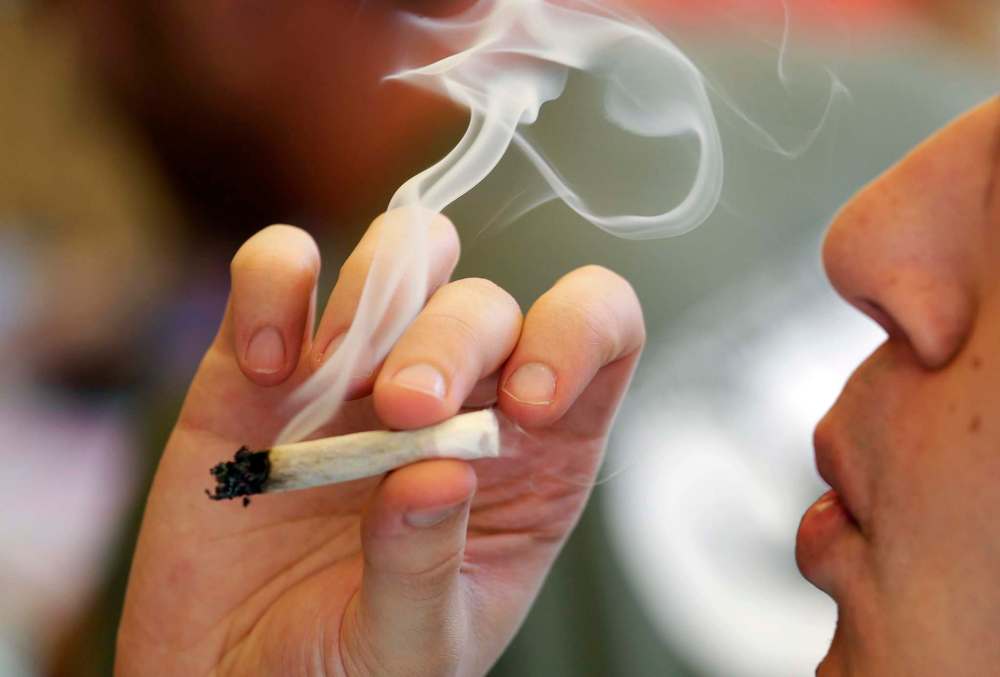
One in 20 youth hospitalizations in Canada is related to substance use, with cannabis the most frequently documented drug, a new national study has found.
The Canadian Institute for Health Information (CIHI) said seven out of 10 hospital stays caused by substance use among youth, aged 10 to 24, involved care for a concurrent mental health condition. That’s nearly double the proportion observed in adults age 25 and older.
Hospitalization rates were higher for youth living in lower-income neighbourhoods or rural and remote areas.
Manitoba youth had a lower hospitalization rate for substance use than the national average, the study found.
In Canada, the rate was 364 per 100,000, with cannabis leading the way at 141, followed by alcohol (95), stimulants (60), cocaine (36) and unknown (97), the latter category used for unidentified or possibly mixed substances.
In Manitoba, the youth hospitalization rate was 294 per 100,000, led by cannabis (93), alcohol (87) and others or unknown (75). A full provincial breakdown was not provided.
Manitoba’s youth substance hospitalization rate was less than half that of neighbouring Saskatchewan (667).
Geoff Hynes, manager of the Canadian Population Health Initiative at CIHI, said the 2017-2018 study is the most up-to-date look at the issue of youth substance use.
The report did not speculate why Manitoba’s hospitalization rate was lower than the national average.
“Just keep in mind that this study is unique in that we’re really focused on a youth population, and what we see for youth may be different than what we see for the overall population for youth and adults,” Hynes cautioned.
However, Marion Willis, founder and executive director of St. Boniface Street Links, says the likely reason is that Manitoba is not very good, compared with other jurisdictions, at intervening with people struggling with addictions.
“It doesn’t surprise me that our (hospital) admission rates are really low because I don’t think that we’ve had a plan in place where we would necessarily be using the hospitals to treat addictions other than perhaps alcohol abuse,” she said.
However, Dr. Ginette Poulin, medical director at the Addictions Foundation of Manitoba, said the lower hospitalization rate in Manitoba could simply reflect the fact that other parts of the medical system play a greater role in the treatment of substance use.
Poulin said she was not surprised that cannabis is the No. 1 drug leading to hospitalizations, as it has replaced alcohol as the substance of choice in today’s youth culture.
She also warned that the public shouldn’t conclude from this study that the meth issue is somehow less serious than it’s been portrayed. She noted that the study dealt only with hospitalizations.
Meth use is likely not showing up as much in youth hospitalization figures because it’s being dealt with in hospital emergency departments, by paramedics and other treatment centres, she said.

In addition to cannabis and alcohol, the CIHI study documented hospitalizations for opioids, depressants, methamphetamine and other substances, including hallucinogens, solvents and unknown or mixed substances.
Harm from substance use documented in the study include drug or alcohol overdoses, severe withdrawal symptoms, injuries caused by intoxication and substance-induced psychosis that requires treatment in a mental health unit. Among youth aged 10 to 24, almost 30 per cent of hospitalizations for substance use involved care for dependence or withdrawal from a substance and 15 per cent were for substance-induced psychotic disorder, the report said.
Nationally, cannabis-related hospital stays were more common than for any other substance, accounting for nearly 40 per cent of hospitalizations for harm from substance use among youths. By comparison, among those aged 25 and older, cannabis was associated with only 11 per cent of hospital stays for harm caused by substance use, and alcohol was associated with 58 per cent.
The proportion of hospitalizations of youth with concurrent mental health conditions — at seven in 10 — was nearly double what’s been observed in adults aged 25, the report said.
larry.kusch@freepress.mb.ca