

Changes too restrictive: immigration advocates
Coalition says 'attacks' such as Bill C-31 nothing new
Advertisement
Read this article for free:
or
Already have an account? Log in here »
To continue reading, please subscribe:
Digital Subscription
One year of digital access for only $1.44 a week*
- Enjoy unlimited reading on winnipegfreepress.com
- Read the E-Edition, our digital replica newspaper
- Access News Break, our award-winning app
- Play interactive puzzles
*Billed as $5.77 plus GST every four weeks. After 52 weeks, price increases to the regular rate of $19.95 plus GST every four weeks. Offer available to new and qualified returning subscribers only. Cancel any time.
To continue reading, please subscribe:
Add Free Press access to your Brandon Sun subscription for only an additional
$1 for the first 4 weeks*
- Enjoy unlimited reading on winnipegfreepress.com
- Read the E-Edition, our digital replica newspaper
- Access News Break, our award-winning app
- Play interactive puzzles
*Your next Brandon Sun subscription payment will increase by $1.00 and you will be charged $17.95 plus GST for four weeks. After four weeks, your payment will increase to $24.95 plus GST every four weeks.
Read unlimited articles for free today:
or
Already have an account? Log in here »
Hey there, time traveller!
This article was published 07/04/2014 (4438 days ago), so information in it may no longer be current.
Canada’s doors are closing to newcomers, a pro-immigration group laments.
The Immigration Matters in Canada Coalition says it is more difficult than ever to immigrate to Canada, claim refugee status or become a citizen.
The coalition members made their opinions known at a panel discussion Sunday that drew about 20 people at the downtown Millennium Library.
Changes implemented in December 2012 by the federal government in the Balanced Refugee Reform Act and the Protecting Canada’s Immigration System Act (Bill C-31) are resulting in fewer immigrants and refugees gaining entry to Canada, more restrictions on bringing over family members and increased standards to meet language requirements, the coalition said.
“We’ve seen the attacks (on the immigration/refugee system) on so many fronts right now that it is almost overwhelming. But it isn’t that it’s new,” said Cindy Coker, a coalition volunteer who was the moderator of the panel organized by the United Jewish People’s Order.
“We know that none (immigrants or refugees) is too many. We know all the ways that it has been done. It’s not that it’s new. It’s just that there have been so many more attacks with this Bill C-31,” said Coker, also the executive director of SEED (Supporting Employment and Economic Development). “We’re just trying to help to people to understand, in a climate where so many other cuts are happening,” she said.
Bashir Khan, a Winnipeg lawyer who practises immigration and refugee law, said the numbers show how stringent the requirements to gain refugee status have become.
“By the end of 2012, and Bill C-31 came into force in December 2012, there were 20,400 or so refugee claims filed in Canada, in the whole country. By the end of 2013… there was only 10,000… refugee claims filed in all of Canada. So that’s a 50 per cent reduction in people making refugee claims or for asylum in Canada.”
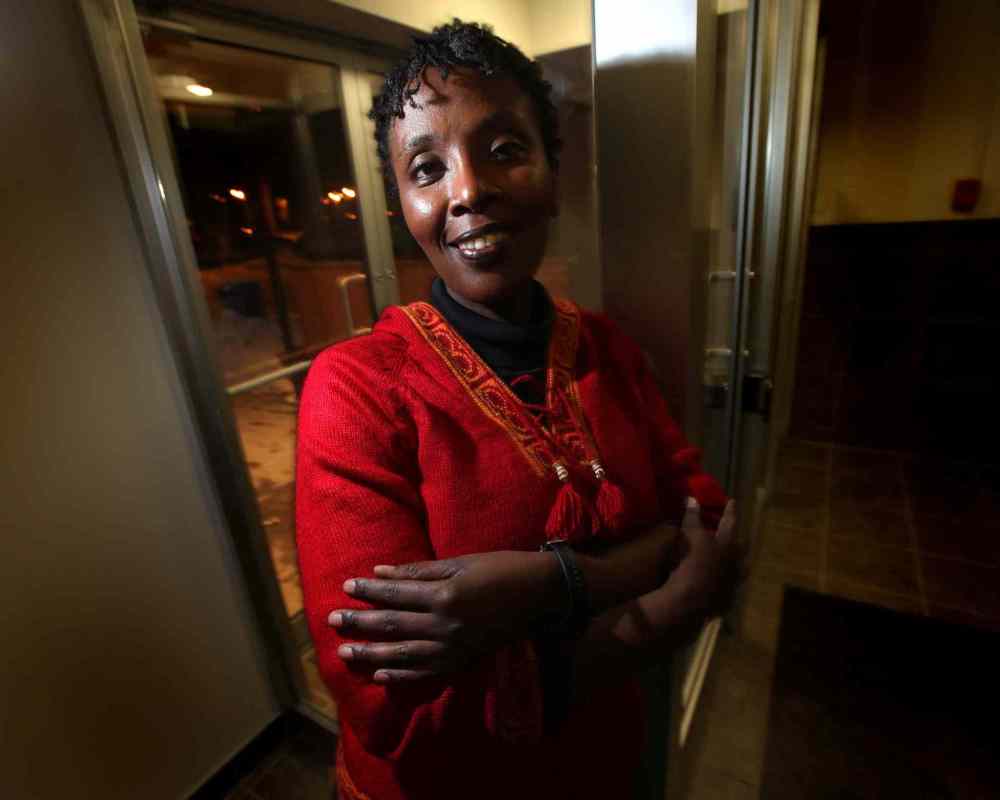
Louise Simbandumwe, a coalition founding member, said language and knowledge-test requirements for Canadian citizenship now apply to applicants 14 to 64 years of age (previously 18 to 54), who must meet the Benchmark 4 (about Grade 4 reading level) minimum.
“It’s something that is disproportionately affecting women, because it is often women who have even less access to education and will have even less access to education here upon arrival,” Simbandumwe said.

Dorota Blumczynska, executive director of the Immigrant and Refugee Community Organization of Manitoba (IRCOM) and a coalition volunteer, said “it rests with everyday Canadians” to try to change attitudes toward immigrants and refugees.
“The debate is playing out in the public, in addition to the work that we do,” Blumczynska said. “The problem is that when the government is setting language which is saying that (refugee) claimants or privately sponsored refugees are getting better health care, the Canadian public is up in arms. ‘How could you give it to those people and not give it to me?’ They’re not ‘those people.’ They’re us.
“It is the smallest and most vulnerable group and it is easy to erode any help that they are being afforded, which is no more than you would give to someone who is on social assistance, also the most vulnerable member of our community.”
The coalition encouraged those interested in learning more or joining the letter-writing and petition campaigns to the federal government to email imincanadacoalition@gmail.com, call 204-475-4565 or visit their imincanadacoalition page on Facebook.
ashley.prest@freepress.mb.ca