

Chicken and the egg: coop becomes living classroom
Advertisement
Read this article for free:
or
Already have an account? Log in here »
To continue reading, please subscribe:
Monthly Digital Subscription
$1 per week for 24 weeks*
- Enjoy unlimited reading on winnipegfreepress.com
- Read the E-Edition, our digital replica newspaper
- Access News Break, our award-winning app
- Play interactive puzzles
*Billed as $4.00 plus GST every four weeks. After 24 weeks, price increases to the regular rate of $19.95 plus GST every four weeks. Offer available to new and qualified returning subscribers only. Cancel any time.
Monthly Digital Subscription
$4.99/week*
- Enjoy unlimited reading on winnipegfreepress.com
- Read the E-Edition, our digital replica newspaper
- Access News Break, our award-winning app
- Play interactive puzzles
*Billed as $19.95 plus GST every four weeks. Cancel any time.
To continue reading, please subscribe:
Add Free Press access to your Brandon Sun subscription for only an additional
$1 for the first 4 weeks*
*Your next subscription payment will increase by $1.00 and you will be charged $16.99 plus GST for four weeks. After four weeks, your payment will increase to $23.99 plus GST every four weeks.
Read unlimited articles for free today:
or
Already have an account? Log in here »
Hey there, time traveller!
This article was published 03/12/2020 (1967 days ago), so information in it may no longer be current.
LEILA North School has welcomed 10 feathered, full-time teaching assistants.
Principal Melissa Delaronde says it isn’t the first time fowl noises have been heard in the Winnipeg school’s classrooms.
“For the last number of years, our foods and nutrition teacher Ashley Taylor has been bringing in a makeshift coop to the school, where we would raise chickens from their eggs,” she said.
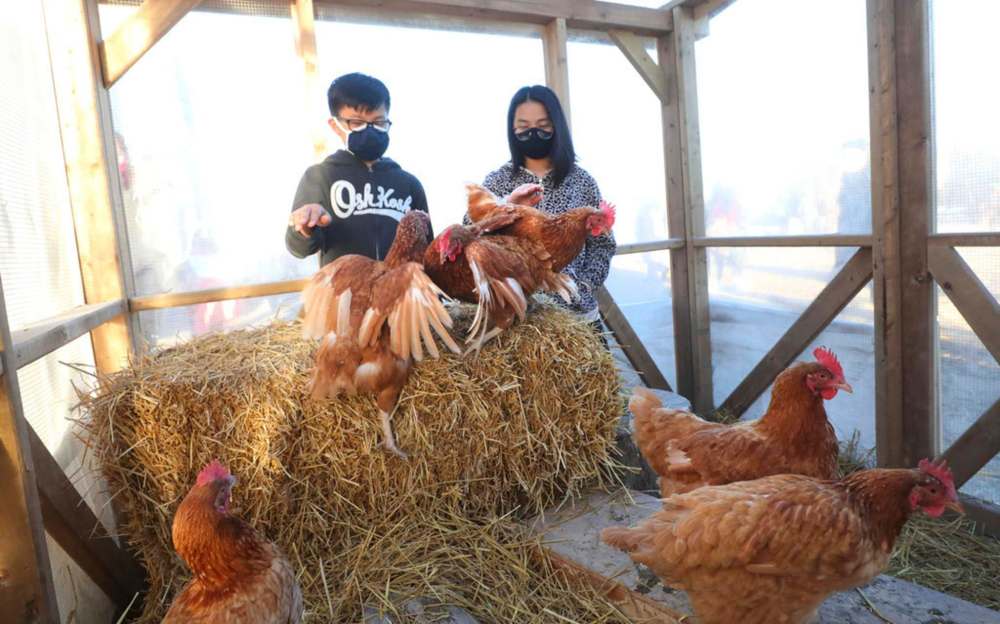
Leila North started the hen program about two years ago. The school would raise the chickens for about five months, then migrate them to a local farm. This year, Delaronde said, educators wanted to branch out and try keeping the chickens year-round.
“We realized there was so much more that we could do than just having them inside the school,” she said.
The hens were adopted by Leila North on Oct. 30, after a friend of a staff member could no longer care for them.
It was fortuitous for the school, as Leila North had partnered with the sustainable energy course at Garden City Collegiate to build an outdoor coop in September. The coop has since been outfitted with extra hay and insulation to make sure the hens stay comfortable amid descending temperatures.
“We’ve made lots of partnerships. There’s quite a few people we’ve been fortunate enough to connect with who’ve helped us along the process and given us tips and guidance. It’s sort of a community of people helping get this project going,” said Taylor.
While some staff already had experience with raising chickens, they also consulted local farms and backyard chicken advocate Natalie Carreiro for additional tips.
Carreiro, a former Leila North student, leads workshops about food security and owns honey dispensary, Bird & Bee.
“She ran a workshop for our staff. She went over the benefits of having flocks and why small flocks are important,” said Taylor. “She was getting us to look at food and where it comes from in a different light.”
Being able to teach students about sustainable food, respecting the land, and how life cycles interact through the hens drive the project, said Delaronde. “It also builds a sense of responsibility for kids. It’s motivating to learn when you get a chance to experience that.”
The hens’ eggs are to be used in the school’s food nutrition classes, breakfast and lunch program.
“It’s a slow-growing process, not everyone is involved yet because they’re still learning. But the kids are the ones who really want to learn it, they are quick to be out there by the coop,” said Delaronde.

Staff members check on the chickens every day, and will continue to visit them over the Christmas holidays, the principal said, but they are unsure how long they’ll be able to keep the birds.
“It really just depends on how the chickens are doing. When it reaches a point when we feel they need to be on a farm or in a retirement home, then we will transition them there. We’re taking our cues from the chickens,” said Delaronde.
city.desk@freepress.mb.ca
History
Updated on Friday, December 4, 2020 6:02 AM CST: Adds missing text