

Legal action filed over detentions in band-owned cells

Advertisement
Read this article for free:
or
Already have an account? Log in here »
To continue reading, please subscribe:
Monthly Digital Subscription
$1 per week for 24 weeks*
- Enjoy unlimited reading on winnipegfreepress.com
- Read the E-Edition, our digital replica newspaper
- Access News Break, our award-winning app
- Play interactive puzzles
*Billed as $4.00 plus GST every four weeks. After 24 weeks, price increases to the regular rate of $19.95 plus GST every four weeks. Offer available to new and qualified returning subscribers only. Cancel any time.
Monthly Digital Subscription
$4.99/week*
- Enjoy unlimited reading on winnipegfreepress.com
- Read the E-Edition, our digital replica newspaper
- Access News Break, our award-winning app
- Play interactive puzzles
*Billed as $19.95 plus GST every four weeks. Cancel any time.
To continue reading, please subscribe:
Add Free Press access to your Brandon Sun subscription for only an additional
$1 for the first 4 weeks*
*Your next subscription payment will increase by $1.00 and you will be charged $16.99 plus GST for four weeks. After four weeks, your payment will increase to $23.99 plus GST every four weeks.
Read unlimited articles for free today:
or
Already have an account? Log in here »
Hey there, time traveller!
This article was published 12/12/2019 (2288 days ago), so information in it may no longer be current.
A proposed class-action lawsuit that claims people in remote communities are being illegally detained in “dangerous, unsanitary and degrading conditions” has been filed against the Manitoba government and six northern First Nations.
The legal action, filed Wednesday in Winnipeg’s Court of Queen’s Bench, takes aim at band-owned detention cells operated under Manitoba’s First Nation Safety Officer program.
First Nation safety officers, formerly known as band constables, have no legal power to detain people, the statement of claim alleges, but have been routinely doing so. At least four people have died in band-owned cells in Manitoba since 1999.
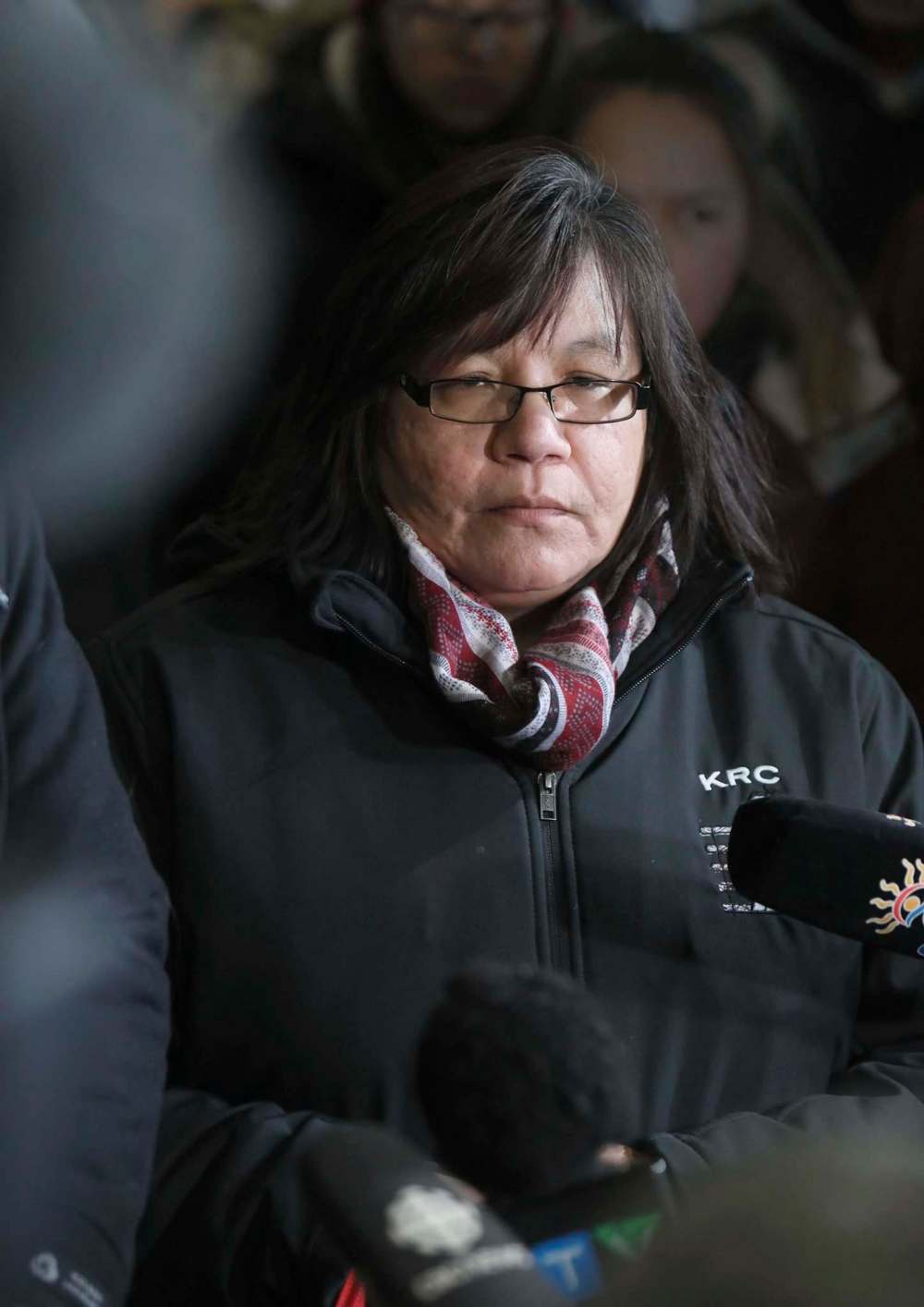
The proposed lawsuit against the provincial government and the First Nations — Tataskweyak Cree Nation (Split Lake), Manto Sipi Cree Nation (Gods River), Garden Hill First Nation, Red Sucker Lake First Nation, St. Theresa Point First Nation and Wasagamack First Nation — claims those communities knew or should have known people were being detained illegally.
At the centre of the claim is Rynelle Jasmine Flett, a 38-year-old woman from Split Lake, who was allegedly detained for 12 or 13 hours on Jan. 21, 2018, after the truck she was driving slid into a ditch. A First Nation safety officer suspected her of impaired driving; the criminal charge against her was later stayed.
Flett wasn’t given access to water or a phone, and she wasn’t told she had the right to talk to a lawyer, the claim alleges. She slept on the floor of the cell, which was inside a building in Split Lake known as the band constables office, until she was released.
“The floor of the cell was muddy and sticky. The toilet in the cell did not flush and was full of urine and feces, which resulted in an overwhelming odour. The water fountain in the cell did not work. The heat inside the cell was stifling,” the claim states.
Flett was eventually told she had been “caught with DUI” and would have to stay in the cell for 12 hours. She later pleaded not guilty to the impaired-driving charge, which was stayed after the First Nation safety officer and another witness failed to show up for the trial.
The legal action claims the provincial government and the six First Nations “either knew or, in the alternative, were recklessly indifferent to the fact that the operation and use of the band-owned detention facilities was both unlawful and dangerous.”
At least a few thousand people may have been held in the cells unlawfully over the years, said Flett’s Thompson-based lawyer, Meagan Jemmett.
“It’s been an ongoing issue for probably decades in at least some of these communities,” Jemmett said.
The claim hasn’t been proven, and it must be certified by the court before it can proceed as a class action.
Split Lake Chief Doreen Spence said Thursday she hadn’t yet been served with the statement of claim and couldn’t comment on it.

Provincial court inquests have been conducted to find out what led to four in-custody deaths inside band-owned detention cells. In 1999, Glenn Fiddler died after he managed to start a fire inside a Wasagamack cell.
In 2003, Rachel Lori Wood killed herself inside a cell at Nelson House Cree Nation. Calvin Waylon McDougall did the same in Garden Hill in 2009. Two years later in Garden Hill, Brian McPherson died of sudden heart failure inside one of the cells.
Lawyers representing the provincial and federal governments have previously argued during inquest hearings that First Nations communities can’t detain people in band-owned cells, the claim states.
katie.may@freepress.mb.ca
Twitter: @thatkatiemay
46490_2019 12 11 Statement of Claim filed
Katie May is a multimedia producer for the Free Press.
Our newsroom depends on a growing audience of readers to power our journalism. If you are not a paid reader, please consider becoming a subscriber.
Our newsroom depends on its audience of readers to power our journalism. Thank you for your support.
Katie May is a multimedia producer for the Free Press.
Our newsroom depends on a growing audience of readers to power our journalism. If you are not a paid reader, please consider becoming a subscriber.
Our newsroom depends on its audience of readers to power our journalism. Thank you for your support.
Related Articles
'Serious matter': second judge demands northern court review
Advertisement Advertise With Us
Advertisement Advertise With Us
History
Updated on Friday, December 13, 2019 6:35 AM CST: Amends headline
Updated on Friday, December 13, 2019 7:47 AM CST: Adds photo
Updated on Friday, December 13, 2019 10:24 AM CST: Amends headline, corrects references to Tataskweyak Cree Nation (Split Lake) and Manto Sipi Cree Nation (Gods River)