

CN justified in firing engineer of speeding train
Advertisement
Read this article for free:
or
Already have an account? Log in here »
To continue reading, please subscribe:

Digital Subscription
One year of digital access for only $205*
- Enjoy unlimited reading on winnipegfreepress.com
- Read the E-Edition, our digital replica newspaper
- Access News Break, our award-winning app
- Play interactive puzzles
*First annual payment billed as $205.00 + GST for one year. This annual subscription will automatically renew at $233.00 + GST every 52 weeks (10% off the regular annual price of $259.35). Offer available to new and qualified returning subscribers only. Cancel any time.
To continue reading, please subscribe:
Add Free Press access to your Brandon Sun subscription for only an additional
$1 for the first 4 weeks*
- Enjoy unlimited reading on winnipegfreepress.com
- Read the E-Edition, our digital replica newspaper
- Access News Break, our award-winning app
- Play interactive puzzles
*Your next Brandon Sun subscription payment will increase by $1.00 and you will be charged $17.95 plus GST for four weeks. After four weeks, your payment will increase to $24.95 plus GST every four weeks.
Read unlimited articles for free today:
or
Already have an account? Log in here »
Hey there, time traveller!
This article was published 12/02/2019 (2722 days ago), so information in it may no longer be current.
OTTAWA — A federal arbitrator has upheld CN Rail’s firing of a Winnipeg locomotive engineer who sent a train careening down a hill after numerous speeding and train-handling violations.
The case surrounds a Winnipeg-bound train that crested a hill in Wade, Ont., about 25 kilometres east of the Manitoba border on April 21, 2018, plunging at a high speed for 79 seconds. At that point, the locomotive engineer, identified in the ruling as John Carson, pulled the emergency brake.
Such a move is only meant to stop a train. Carson had already engaged the train’s throttle, its dynamic brake, as well as its automatic brake, in an attempt to get it to slow down. The company did not allege the train broke speed limits, but rather Carson didn’t adequately control his train.
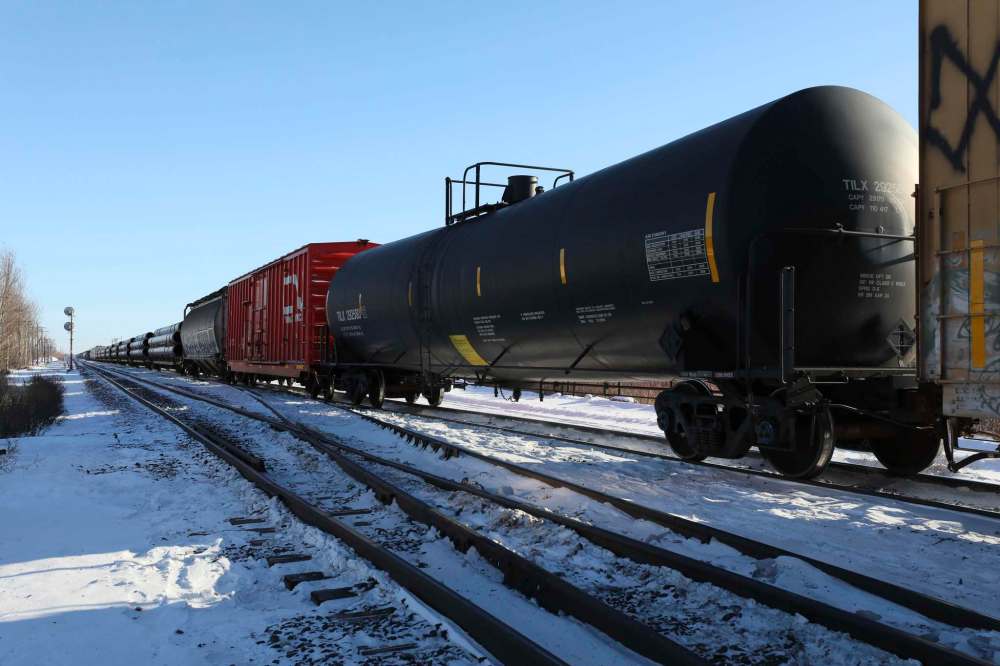
CN fired Carson after nearly 13 years with the company. It noted he’d amassed six reprimands between 2014 until the incident last spring, three involving excessive speed and the rest surrounding train-handling procedures.
Teamsters Canada Rail Conference argued CN did not conduct an impartial investigation by asking leading questions, and by suggesting Carson should’ve had “better forward planning.”
The arbitrator, Graham Clarke, wrote internal probes are more informal than court trials, as they aim to establish what actually took place in an event, instead of what risks people created.
“Laypeople, including inexperienced lawyers, seem to have difficulty formulating open-ended questions. They often fail to start questions with words like ‘who,’ ‘what,’ ‘when,’ ‘where’ and ‘why,’” reads Clarke’s Jan. 24 ruling on behalf of the Canadian Railway Office of Arbitration.
Major railway companies formed the arm’s-length body five decades ago to issue rulings that are considered binding — although companies and unions sometimes cut deals that differ from arbitrators’ decisions.
The Teamsters also argued Carson’s punishment for the April 2018 incident was too harsh.
However, Clarke ruled Carson failed to adequately review train records and plan for the trip’s varied terrain.
His decision to use three slowing measures so quickly could have caused “in-train forces,” Clarke wrote, referring to when a train’s back-end lurches, possibly wearing down equipment or even fish-tailing.

“Proper planning would have eliminated the need to use the emergency brake in this particular case,” wrote Clarke.
CN had attempted “progressive discipline,” such as classroom sessions, simulator and assisted trips in the cabin.
Clarke noted Carson “had been experiencing some serious family challenges in recent years” and “displayed candour and honesty during his investigative interview,” but upheld the firing, because he wasn’t showing an improvement in his performance after CN’s multiple attempts.
The Free Press was not able to contact Carson.
dylan.robertson@freepress.mb.ca
History
Updated on Wednesday, February 13, 2019 8:36 AM CST: Amends that engineer's name was John Carson
Updated on Wednesday, February 13, 2019 12:09 PM CST: Clarifies nature of arbitrators' rulings.