

Committee rejects study on free Transit fare
Advertisement
Read this article for free:
or
Already have an account? Log in here »
To continue reading, please subscribe:

Digital Subscription
One year of digital access for only $205*
- Enjoy unlimited reading on winnipegfreepress.com
- Read the E-Edition, our digital replica newspaper
- Access News Break, our award-winning app
- Play interactive puzzles
*First annual payment billed as $205.00 + GST for one year. This annual subscription will automatically renew at $233.00 + GST every 52 weeks (10% off the regular annual price of $259.35). Offer available to new and qualified returning subscribers only. Cancel any time.
To continue reading, please subscribe:
Add Free Press access to your Brandon Sun subscription for only an additional
$1 for the first 4 weeks*
- Enjoy unlimited reading on winnipegfreepress.com
- Read the E-Edition, our digital replica newspaper
- Access News Break, our award-winning app
- Play interactive puzzles
*Your next Brandon Sun subscription payment will increase by $1.00 and you will be charged $17.95 plus GST for four weeks. After four weeks, your payment will increase to $24.95 plus GST every four weeks.
Read unlimited articles for free today:
or
Already have an account? Log in here »
Hey there, time traveller!
This article was published 11/02/2021 (2043 days ago), so information in it may no longer be current.
Climate change and equity were at the forefront of discussions at city hall Thursday as two sizable transit program changes were considered by the public works committee.
Coun. Vivian Santos had proposed the city study the implications of eliminating transit fares, or charging only $1. The motion was ultimately rejected but generated a great deal of support from community members who advocated for the proposal before the vote.
The committee also received a technical evaluation on what the future electrification of transit could look like in Winnipeg. The evaluation calls on the city to make an initial purchase of 16 zero-emission buses. This would include eight hydrogen fuel cell battery-electric models and eight battery-electric buses. The report proposes studying the use of those buses for up to two years, beginning in 2022, if the proposal receives council approval and secures senior government funding.
The committee discussed these issues one day after the federal government announced that $14.9 billion would be spent in cities across the country over the next eight years. This includes $5.9 billion in short-term funding, as well as a permanent transit fund that would disperse $3 billion per year, starting in 2026, in an effort to lower greenhouse gas emissions.
“Transit is at the fore of urban sustainability,” said Brian Pincott, a resident of Winnipeg and former Calgary city councillor.
Many presenters spoke about how lower fares would benefit low-income Winnipeggers.
“It would be a massive improvement in the quality of life of your lower-income citizens,” said longtime community advocate Sel Burrows.
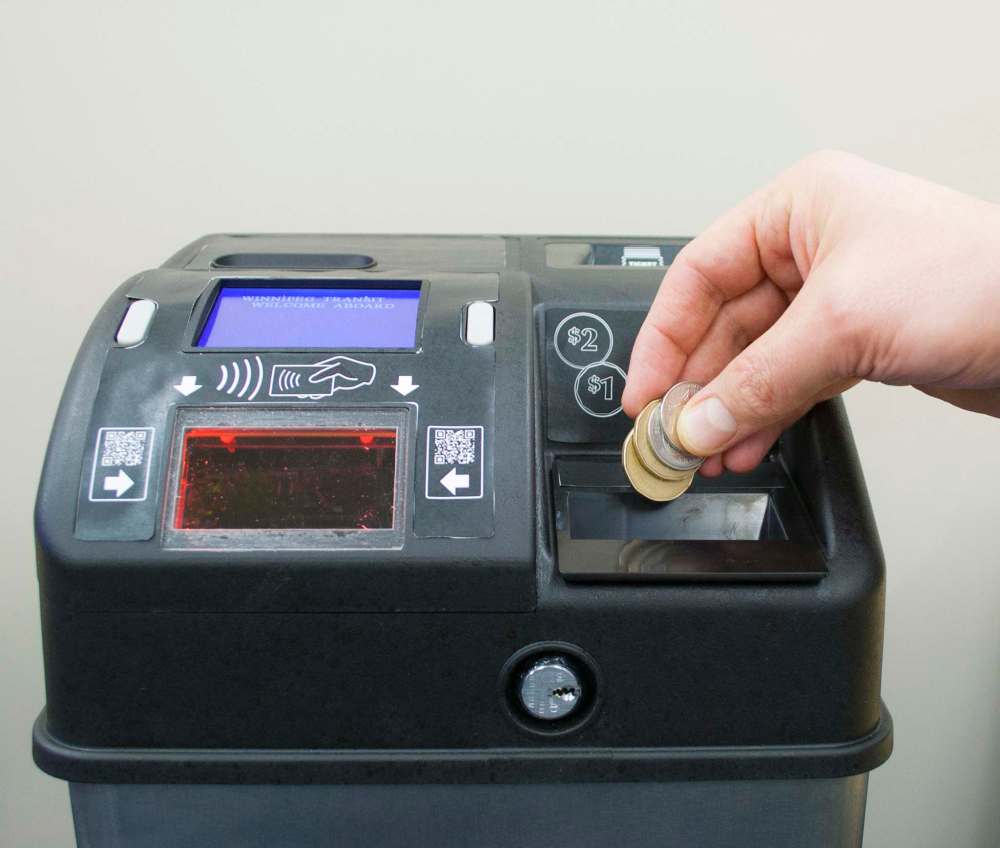
The Amalgamated Transit Union also spoke in favour of Santos’s motion, with a preference for free fares as it would eliminate the need to spend money on fare infrastructure, including collection boxes. Union president Romeo Ignacio said he believes eliminating fares would make it safer for transit drivers.
Speaking about his experience in Calgary, Pincott said when the city introduced a sliding-scale fare in which low-income residents paid only $5 a month, the demand for transit service was incredible.
“The administration came back and said, ‘We anticipate we’re going to see an extra 20,000 riders a month by doing this.’ That was from all the data that they had. It was closer to 70,000 people. We are not aware of the need out there,” Pincott said.
Ultimately these arguments did not sway the committee. Couns. Jeff Browaty and Markus Chambers voted against the motion to explore lower fares while Devi Sharma and Matthew Allard voted in favour, but a tied vote means the motion is rejected.
Browaty and Chambers shared similar concerns about the proposal. First, that transit fares generate roughly $90 million in revenue. Second, that they’d rather see the expansion of transit before cheaper transit is explored.
“Recognizing that we don’t enjoy the same partnership that we had with the province in terms of funding transit, that it would be borne more on Winnipeggers as taxpayers to provide further subsidies for transit to reduce the fees to $1 or to provide free transit here in our city,” Chambers said.
Allard expressed frustration that the committee wouldn’t even instruct the administration to explore and report back on the possible costs and benefits.

The committee unanimously accepted the administration’s report on transit electrification. A full meeting of council will hear more about future electrification plans when the transit master strategy is submitted next month.
Allard noted that while electrification of buses should be a part of the future plans for Winnipeg, it’s more important to increase ridership and get people out of their cars from an emissions perspective.
“The greenest policy, I think, is transit, regardless of how we’re operating them,” he said.
sarah.lawrynuik@freepress.mb.ca