

Conflict-of-interest proposal worth acting on

Advertisement
Read this article for free:
or
Already have an account? Log in here »
To continue reading, please subscribe:
Monthly Digital Subscription
$1 per week for 24 weeks*
- Enjoy unlimited reading on winnipegfreepress.com
- Read the E-Edition, our digital replica newspaper
- Access News Break, our award-winning app
- Play interactive puzzles
*Billed as $4.00 plus GST every four weeks. After 24 weeks, price increases to the regular rate of $19.95 plus GST every four weeks. Offer available to new and qualified returning subscribers only. Cancel any time.
Monthly Digital Subscription
$4.99/week*
- Enjoy unlimited reading on winnipegfreepress.com
- Read the E-Edition, our digital replica newspaper
- Access News Break, our award-winning app
- Play interactive puzzles
*Billed as $19.95 plus GST every four weeks. Cancel any time.
To continue reading, please subscribe:
Add Free Press access to your Brandon Sun subscription for only an additional
$1 for the first 4 weeks*
*Your next subscription payment will increase by $1.00 and you will be charged $16.99 plus GST for four weeks. After four weeks, your payment will increase to $23.99 plus GST every four weeks.
Read unlimited articles for free today:
or
Already have an account? Log in here »
Hey there, time traveller!
This article was published 22/01/2018 (2972 days ago), so information in it may no longer be current.
As first steps go, it was OK.
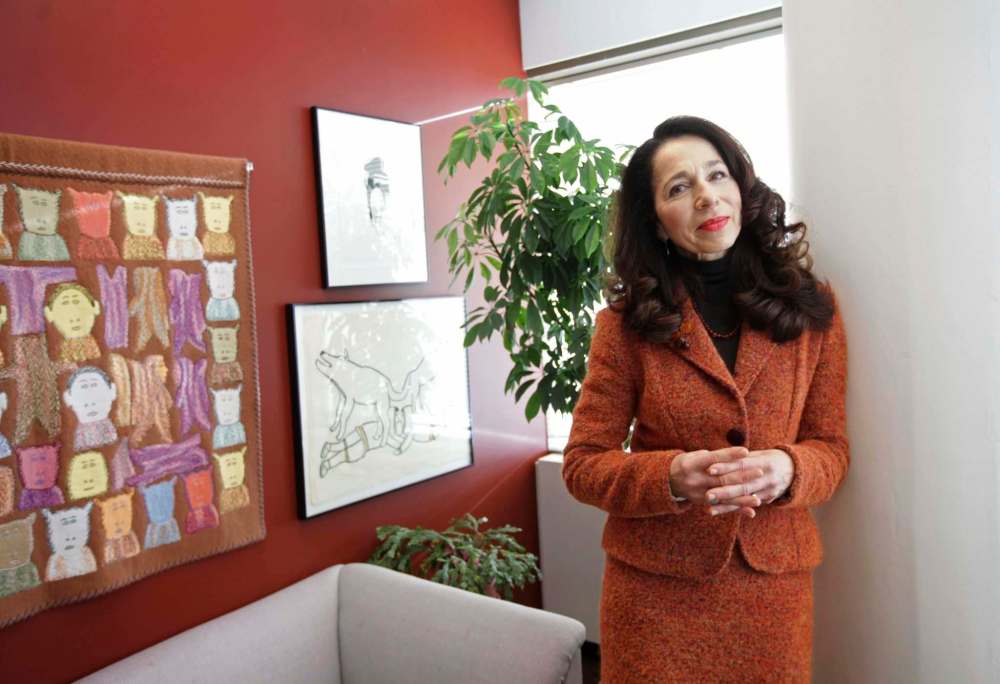
Last week, Winnipeg conflict of interest commissioner Sherri Walsh released a proposed code of conduct for city councillors and a new process for fielding, investigating and reporting on conflicts.
It’s a weighty, complex subject that will test council’s capacity to act. In considering the adoption of Walsh’s proposals, city council should ask itself one important question: would they have provided greater insight into, and oversight of, the activities of former mayor Sam Katz?
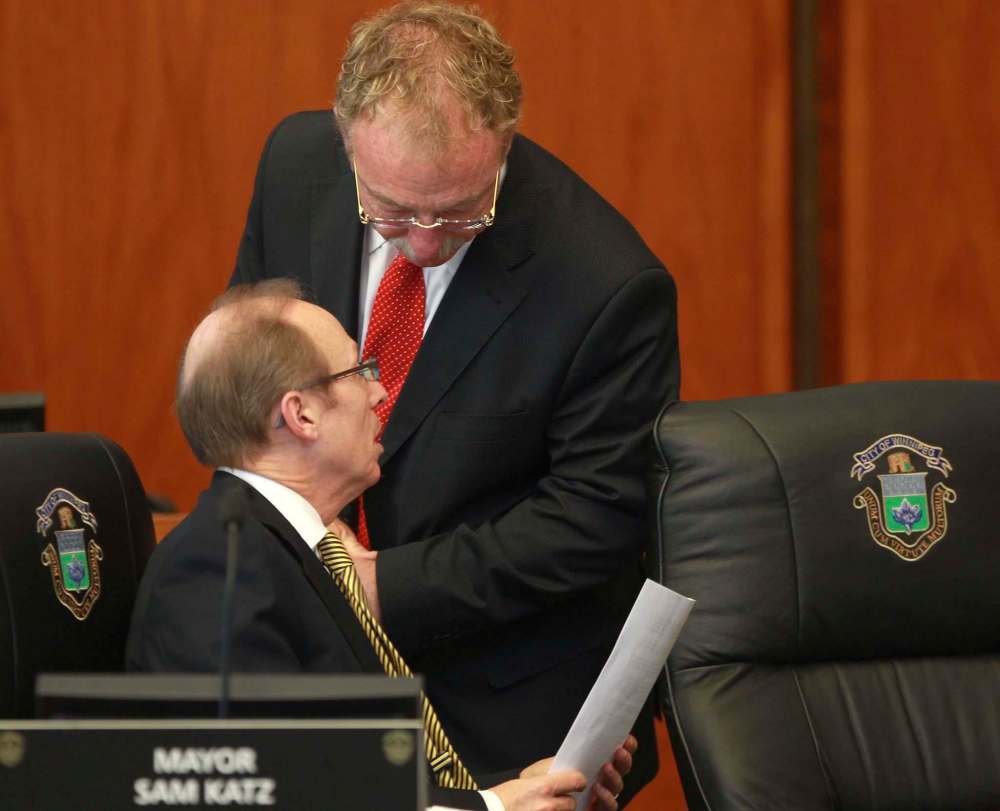
Katz’s time in office was pockmarked with repeated allegations of conflict of interest involving current and former business associates involved in lucrative city business.
The best example of this is the current RCMP investigation into Katz, and lifelong friend and business associate Phil Sheegl, the city’s former chief administrative officer, for sharing in a $200,000 off-the-books commission in 2011 from Caspian Construction in exchange for securing a contract for the new Winnipeg Police Service (WPS) headquarters on Graham Avenue.
The defence that Katz and Sheegl have mounted in the court of public opinion is instructive in assessing any proposed conflict-of-interest legislation.
Robert Tapper, the lawyer for both Sheegl and Katz, said in early 2017 the payment uncovered by the RCMP was not a kickback, but rather an investment made by Caspian owner Armik Babakhanians in an Arizona real estate deal. Tapper said the $200,000 — which was paid to Sheegl shortly after he got authority from council to award the WPS contract to Caspian — was a down payment on that investment. Tapper confirmed a second payment of $127,000 was paid by Babakhanians to a company controlled by Katz in 2012.
To the average person, a transaction such as that, conducted at the same time Sheegl and Katz were involved in awarding a contract to Caspian, seems to represent a conflict of interest. Except under current provincial law, that may not be the case.
Tapper maintained that the real estate transaction was not criminal, and did not violate the terms of the Municipal Conflict of Interest Act.
“Sam said he had no business dealings with (Babakhanians) and that’s true, he didn’t. He’s a co-investor in a real estate transaction,” Tapper said in March 2017.
Tapper is not wrong; the provincial Municipal Conflict of Interest Act is extremely limited, and does not capture transactions such as the one with Babakhanians. There is a possibility, however, that Walsh has found a way to address transactions such as this.
In her proposed guidelines, Walsh has loosened the definition of conflict of interest.
“Members must not act in situations in which they have a real or apparent conflict of interest, whether during a meeting of council or committee of council or at any other time while performing their duties of office… A conflict of interest exists when a member exercises his or her duties of office and at the same time knows that in the performance of those duties there is the opportunity to further his or her private interests.”
The term “private interests” is key. In the existing Municipal Conflict of Interest Act, the focus is on more formal relationships with a person or business entity described as direct or indirect “pecuniary” interests. These include serving as a partner, employer or creditor of an entity doing business with the city. Or the possession of warrants, credit notes, purchase options or stocks.
In its bid to be specific, the existing provincial law excluded a whole range of other transactions and relationships that should in all likelihood qualify as conflicts of interest. Walsh’s use of the term “private interests” may be an antidote to that omission.
We’ll never know if Walsh’s definition of conflict of interest would capture the Katz-Sheegl transactions because the new proposed guidelines can only be applied to complaints dating back to February 2017. Going forward, however, Walsh has created something that would be an upgrade on provincial law.
Walsh may also have created another upgrade with her proposal, for increased powers and resources to conduct investigations.
One of the most glaring holes in the provincial legislation is the complete absence of any investigatory or prosecutorial authority or body. The result is that anyone concerned about a potential conflict of interest had to bear the burden of going to a court and proving it.

That did happen to Katz, on one occasion. A Winnipeg restaurateur argued Katz violated the provincial legislation by catering staff parties at a restaurant he owned at the time. The judge overseeing the case declined to find him guilty of a conflict of interest, but did comment that Katz was guilty of “bad political and ethical behaviour.”
It is unclear whether the city will be willing to give Walsh the authority and resources to investigate these issues. It’s equally unclear whether the province, which must grant investigatory authority to Walsh, is willing to bestow those powers. To date, both the former NDP government and current Tory regime have been indifferent to the issue.
Walsh has provided an important first step in developing a more comprehensive and responsive regime to assess and investigate conflicts of interest. It is now up to the lawmakers that would be subject to the new regime to fill in the blanks.
Failure to act on, and probably improve on, Walsh’s proposals would be catastrophic. As a former mayor and CAO have shown, current laws provide municipal officials with more than enough wiggle room to engage in all manner of private transactions with people doing public business with the city. It’s time to put an end to all that wiggling.
dan.lett@freepress.mb.ca
Dan Lett is a columnist for the Free Press, providing opinion and commentary on politics in Winnipeg and beyond. Born and raised in Toronto, Dan joined the Free Press in 1986. Read more about Dan.
Dan’s columns are built on facts and reactions, but offer his personal views through arguments and analysis. The Free Press’ editing team reviews Dan’s columns before they are posted online or published in print — part of the our tradition, since 1872, of producing reliable independent journalism. Read more about Free Press’s history and mandate, and learn how our newsroom operates.
Our newsroom depends on a growing audience of readers to power our journalism. If you are not a paid reader, please consider becoming a subscriber.
Our newsroom depends on its audience of readers to power our journalism. Thank you for your support.
Dan Lett is a columnist for the Free Press, providing opinion and commentary on politics in Winnipeg and beyond. Born and raised in Toronto, Dan joined the Free Press in 1986. Read more about Dan.
Dan’s columns are built on facts and reactions, but offer his personal views through arguments and analysis. The Free Press’ editing team reviews Dan’s columns before they are posted online or published in print — part of the our tradition, since 1872, of producing reliable independent journalism. Read more about Free Press’s history and mandate, and learn how our newsroom operates.
Our newsroom depends on a growing audience of readers to power our journalism. If you are not a paid reader, please consider becoming a subscriber.
Our newsroom depends on its audience of readers to power our journalism. Thank you for your support.
Advertisement Advertise With Us
Advertisement Advertise With Us
History
Updated on Monday, January 22, 2018 8:12 AM CST: Adds photos