

Councillor calls for police to clear homeless from bus shelters

Advertisement
Read this article for free:
or
Already have an account? Log in here »
To continue reading, please subscribe:

Digital Subscription
One year of digital access for only $205*
- Enjoy unlimited reading on winnipegfreepress.com
- Read the E-Edition, our digital replica newspaper
- Access News Break, our award-winning app
- Play interactive puzzles
*First annual payment billed as $205.00 + GST for one year. This annual subscription will automatically renew at $233.00 + GST every 52 weeks (10% off the regular annual price of $259.35). Offer available to new and qualified returning subscribers only. Cancel any time.
To continue reading, please subscribe:
Add Free Press access to your Brandon Sun subscription for only an additional
$1 for the first 4 weeks*
- Enjoy unlimited reading on winnipegfreepress.com
- Read the E-Edition, our digital replica newspaper
- Access News Break, our award-winning app
- Play interactive puzzles
*Your next Brandon Sun subscription payment will increase by $1.00 and you will be charged $17.95 plus GST for four weeks. After four weeks, your payment will increase to $24.95 plus GST every four weeks.
Read unlimited articles for free today:
or
Already have an account? Log in here »
Hey there, time traveller!
This article was published 04/02/2021 (2006 days ago), so information in it may no longer be current.
A city councillor says his recent public plea for Winnipeg police to do more to evict homeless people from bus shelters was driven by “frustrated” constituents.
“There are (people) in our community that face mental illness and homelessness but (city) shelters have capacity,” Coun. Jeff Browaty (North Kildonan) posted on his official Twitter account Tuesday afternoon.
“What is the WPS doing to ensure the safety of citizens by evicting illegal squatters?”
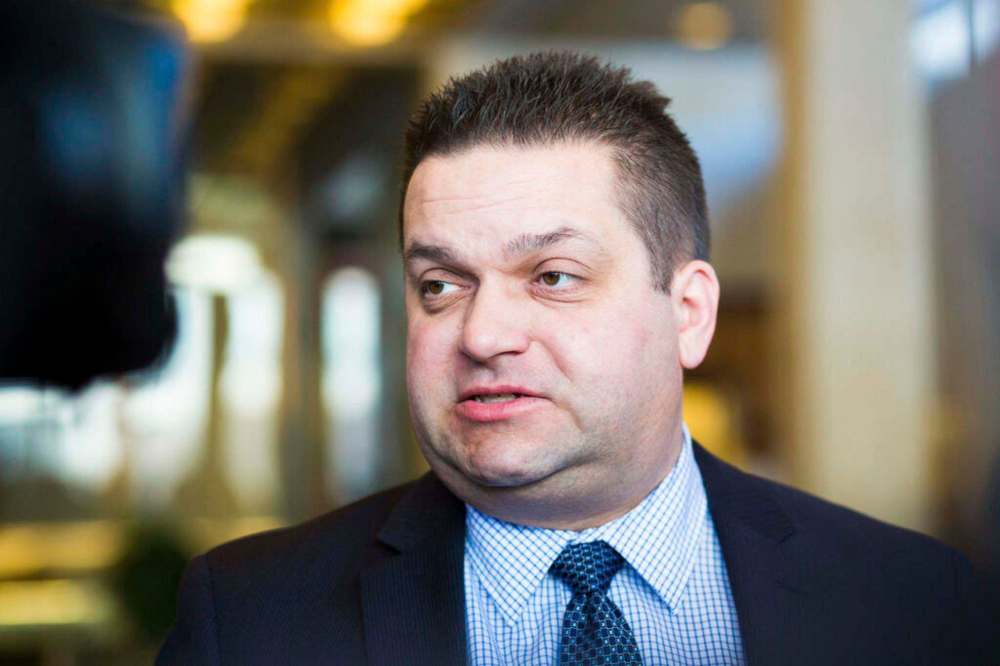
Browaty said the decision to speak out — a message roundly condemned on social media — came out of frustration with a declining level of contact between police and civic committees, especially “considering the rough year that police have had in terms of relationship with the public.”
It also came from complaints received from those who say they’re unable to use the bus shelters for their intended purpose and feel especially unsafe due to the pandemic, Browaty said.
“I’m hearing from constituents, I’m hearing from residents — they’re frustrated,” he told the Free Press on Wednesday.
“They’re all staying home, they’re minimizing their contacts as much as possible. Yet, you go into our downtown core, and you see groups of people in these bus shacks passing around bottles. It’s scary and it’s frustrating.”
Browaty said while he believes increased policing wouldn’t solve the underlying issues that drive homelessness, it is “unacceptable” to allow people to misuse Transit shelters.
“In days past, police would move people along from these shacks,” he said.
“In my ideal world, what would happen is, if you can’t find anywhere else to go… If they keep getting pushed along and can’t party in a bus shack, my hope is that they’ll go to a shelter, get the temporary refuge they need, and hopefully get connected to services that would help them address their underlying issues.”
The Winnipeg Police Service has foot patrol officers that check on Transit shelters in specific areas downtown, but does not “police” such shelters, Const. Rob Carver said in an email Wednesday.
Officers will ask people to leave if there is a specific reason to do so, Carver said, listing civic staff cleaning or maintenance of the structure, or if there is a disturbance — but not loitering — as examples.
Browaty’s tweets were “disappointing,” said West Central Women’s Resource Centre executive director Lorie English, adding the city has a bigger role to play in providing social services.
Winnipeg has begun to transform unused spaces into warming centres (Magnus Eliason Recreation Centre, for example) but it’s only the first step, and more spaces aren’t being used to support homeless people quickly enough, English said.
“While housing may fall directly under the purview of the province, there’s lots of things the city could be doing within its own jurisdiction to support folks who are unsheltered,” she said.
Meanwhile, shelters having capacity doesn’t always mean there’s space available that works for unhoused people, English said. Two of the three biggest facilities turn away those who admit to using drugs, for example.
“We work with women who are deeply entrenched in homelessness who have been trafficked out of shelter spaces, who have been assaulted in shelter spaces. Those shelter spaces also house people who have victimized them in the past,” she said.
“Those spaces aren’t safe for them, so they will look for refuge on the street far before they will access those shelter spaces.”
Relying on police to deal with such alternative shelter situations is dangerous and “further villainizes” homeless Manitobans, English said.
Winnipeg could also be more active in promoting affordable housing, said Molly McCracken, director of the Canadian Centre for Policy Alternatives, Manitoba office.

“I would say the city has municipal tools that it can use and can work with community partners to increase housing options for people now during COVID, and afterwards, that it has not taken action on,” she said.
When asked Wednesday if he feels his messages reveal he is disconnected from homeless constituents, Browaty said he works within his power to advocate for enhanced city services for all people, regardless of status.
“Were my tweets a little over the top and come out a little on the insensitive side? They did,” he said. “That wasn’t my intention.”
malak.abas@freepress.mb.ca
Twitter: malakabas_
Malak Abas is a city reporter at the Free Press. Born and raised in Winnipeg’s North End, she led the campus paper at the University of Manitoba before joining the Free Press in 2020. Read more about Malak.
Every piece of reporting Malak produces is reviewed by an editing team before it is posted online or published in print — part of the Free Press‘s tradition, since 1872, of producing reliable independent journalism. Read more about Free Press’s history and mandate, and learn how our newsroom operates.
Our newsroom depends on a growing audience of readers to power our journalism. If you are not a paid reader, please consider becoming a subscriber.
Our newsroom depends on its audience of readers to power our journalism. Thank you for your support.
Malak Abas is a city reporter at the Free Press. Born and raised in Winnipeg’s North End, she led the campus paper at the University of Manitoba before joining the Free Press in 2020. Read more about Malak.
Every piece of reporting Malak produces is reviewed by an editing team before it is posted online or published in print — part of the Free Press‘s tradition, since 1872, of producing reliable independent journalism. Read more about Free Press’s history and mandate, and learn how our newsroom operates.
Our newsroom depends on a growing audience of readers to power our journalism. If you are not a paid reader, please consider becoming a subscriber.
Our newsroom depends on its audience of readers to power our journalism. Thank you for your support.
Advertisement Advertise With Us
Advertisement Advertise With Us