

Court upholds 2019 fatal shooting conviction, dangerous offender designation

Advertisement
Read this article for free:
or
Already have an account? Log in here »
To continue reading, please subscribe:

Digital Subscription
One year of digital access for only $205*
- Enjoy unlimited reading on winnipegfreepress.com
- Read the E-Edition, our digital replica newspaper
- Access News Break, our award-winning app
- Play interactive puzzles
*First annual payment billed as $205.00 + GST for one year. This annual subscription will automatically renew at $233.00 + GST every 52 weeks (10% off the regular annual price of $259.35). Offer available to new and qualified returning subscribers only. Cancel any time.
To continue reading, please subscribe:
Add Free Press access to your Brandon Sun subscription for only an additional
$1 for the first 4 weeks*
- Enjoy unlimited reading on winnipegfreepress.com
- Read the E-Edition, our digital replica newspaper
- Access News Break, our award-winning app
- Play interactive puzzles
*Your next Brandon Sun subscription payment will increase by $1.00 and you will be charged $17.95 plus GST for four weeks. After four weeks, your payment will increase to $24.95 plus GST every four weeks.
Read unlimited articles for free today:
or
Already have an account? Log in here »
Hey there, time traveller!
This article was published 31/05/2022 (1582 days ago), so information in it may no longer be current.
Manitoba’s appeals court has upheld the conviction of a Winnipeg man who shot two men, killing one, in a drug house in 2017.
A Court of Queen’s Bench jury found Cameron Bounthieng Kinnavanthong guilty of manslaughter, aggravated assault and discharging a firearm with intent following a trial in 2019.
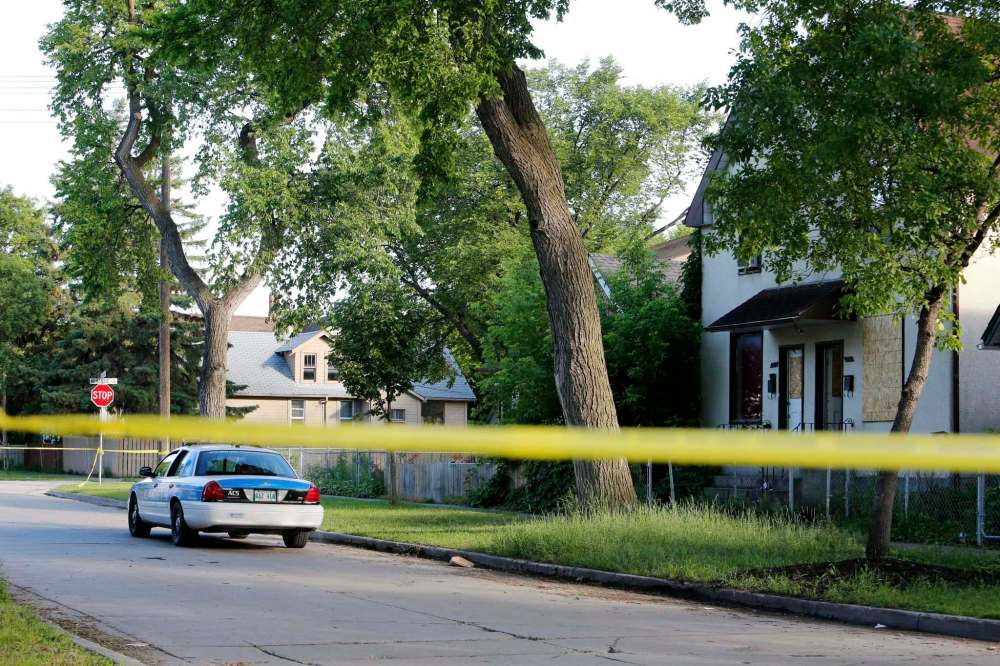
William Sumner, 27, was killed after Kinnavanthong and four other men stormed into a Pritchard Avenue crack house armed with a handgun, machete and bear spray, looking to collect a drug debt on Father’s Day 2017.
After his conviction, Kinnavanthong was designated a dangerous offender in July 2021 — meaning he will remain in prison until parole board officials are satisfied it’s safe to release him.
Following the designation, he attempted to have his conviction and sentencing overturned in the Manitoba Court of Appeal — both attempts were dismissed in a May 19 decision written by Justices Freda M. Steel, William J. Burnett and Karen I. Simonsen.
Kinnavanthong, 36, submitted he had fired the shots in self-defence as a “panicked reaction to being sprayed (with bear spray) in sight of swinging knives… in a dangerous, chaotic and unpredictable environment.”
In his appeal, he argued the trial judge had erred by finding there was no air of reality to his defence of self-defence and by instructing the jury to disregard his claim the shooting was unintentional.
Court heard no evidence a machete was directed anywhere near Kinnavanthong, while neither of the victims were armed or threatening the gunman. Kinnavanthong admitted to police he did not know who sprayed the bear mace or why or whether it was even aimed at him.
The trial judge was correct to decide there was no likelihood a jury would reasonably conclude the presence of the bear spray justified immediately and repeatedly shooting off a pistol, the appeal court judges wrote in their decision.
In arguing the shootings were accidental, Kinnavanthong’s defence said: “Squeezing or clenching is a natural response to being struck in the face at close range with bear repellent.”
The Crown pointed out a witness and the victim were being beaten and didn’t pose a threat — and Kinnavanthong admitted to police he pulled the trigger while pointing the gun downward to avoid killing anyone.
The appeal court judges again agreed with the trial judge’s decision to not consider Kinnavanthong had accidentally pulled the trigger.
Kinnavanthong also argued the judge erred by hearing the dangerous offender application without him being physically present, as well as a failure to consider a sentence other than indeterminate detention that would adequately protect the public.
Given the circumstances that prevailed in January 2021, at the height of the COVID-19 pandemic when all levels of court had restricted hearings, the trial judge properly exercised his discretion when he ordered the accused appear by video at the sentencing hearing, the appeal judges decided.
The judges also decided Kinnavanthong’s dangerous offender designation and subsequent indefinite sentence was reasonable and supported by his record.

Kinnavanthong’s record includes multiple convictions for violence, both in the community and while in custody. He was diagnosed with anti-social personality disorder and resisted treatment and counselling during past stints in custody.
He has more than 40 convictions total, which demonstrated a largely unbroken pattern of criminal activity and violence, the judges wrote.
The appeal judges said a number of risk assessment tools were completed — all of which confirmed he presented a “high risk of violent recidivism.”
erik.pindera@freepress.mb.ca
Twitter: @erik_pindera
Erik Pindera is a reporter for the Free Press, mostly focusing on crime and justice. The born-and-bred Winnipegger attended Red River College Polytechnic, wrote for the community newspaper in Kenora, Ont. and reported on television and radio in Winnipeg before joining the Free Press in 2020. Read more about Erik.
Every piece of reporting Erik produces is reviewed by an editing team before it is posted online or published in print — part of the Free Press‘s tradition, since 1872, of producing reliable independent journalism. Read more about Free Press’s history and mandate, and learn how our newsroom operates.
Our newsroom depends on a growing audience of readers to power our journalism. If you are not a paid reader, please consider becoming a subscriber.
Our newsroom depends on its audience of readers to power our journalism. Thank you for your support.
Erik Pindera is a reporter for the Free Press, mostly focusing on crime and justice. The born-and-bred Winnipegger attended Red River College Polytechnic, wrote for the community newspaper in Kenora, Ont. and reported on television and radio in Winnipeg before joining the Free Press in 2020. Read more about Erik.
Every piece of reporting Erik produces is reviewed by an editing team before it is posted online or published in print — part of the Free Press‘s tradition, since 1872, of producing reliable independent journalism. Read more about Free Press’s history and mandate, and learn how our newsroom operates.
Our newsroom depends on a growing audience of readers to power our journalism. If you are not a paid reader, please consider becoming a subscriber.
Our newsroom depends on its audience of readers to power our journalism. Thank you for your support.
Advertisement Advertise With Us
Advertisement Advertise With Us