

COVID testing scaled down at care homes, hospitals

Advertisement
Read this article for free:
or
Already have an account? Log in here »
To continue reading, please subscribe:

Digital Subscription
One year of digital access for only $205*
- Enjoy unlimited reading on winnipegfreepress.com
- Read the E-Edition, our digital replica newspaper
- Access News Break, our award-winning app
- Play interactive puzzles
*First annual payment billed as $205.00 + GST for one year. This annual subscription will automatically renew at $233.00 + GST every 52 weeks (10% off the regular annual price of $259.35). Offer available to new and qualified returning subscribers only. Cancel any time.
To continue reading, please subscribe:
Add Free Press access to your Brandon Sun subscription for only an additional
$1 for the first 4 weeks*
- Enjoy unlimited reading on winnipegfreepress.com
- Read the E-Edition, our digital replica newspaper
- Access News Break, our award-winning app
- Play interactive puzzles
*Your next Brandon Sun subscription payment will increase by $1.00 and you will be charged $17.95 plus GST for four weeks. After four weeks, your payment will increase to $24.95 plus GST every four weeks.
Read unlimited articles for free today:
or
Already have an account? Log in here »
Hey there, time traveller!
This article was published 14/06/2022 (1565 days ago), so information in it may no longer be current.
The decision to stop testing asymptomatic Manitobans for COVID-19 before they’re admitted to a hospital or personal care home is being met with uncertainty.
In a Shared Health memo dated June 10, chief medical officer Dr. Perry Gray announced the provincial health system will only test people with symptoms. Apart from certain exceptions, such as testing asymptomatic ICU patients and mothers of babies entering the newborn intensive care unit, the change ends precautionary testing in high-risk health-care settings.
The rationale for the policy, which took effect on June 13, is that the testing had contributed to delays in treatment and had stalled patient flow. Asymptomatic COVID-19 infections are on the decline, Gray’s memo stated, and testing requirements must change. In the memo, Gray stated Shared Health made the change after consulting with clinic leaders and infection-prevention officials.
“This change aligns with the known level of transmission of the virus throughout Manitoba in recent months and the observed decrease in infection amongst asymptomatic individuals admitted to health-care facilities,” the memo stated.
Shared Health’s official guidance on the policy uses similar language. No data has been publicly released on the number of positive COVID-19 cases that have been detected via asymptomatic tests upon admission to hospitals or personal care homes.
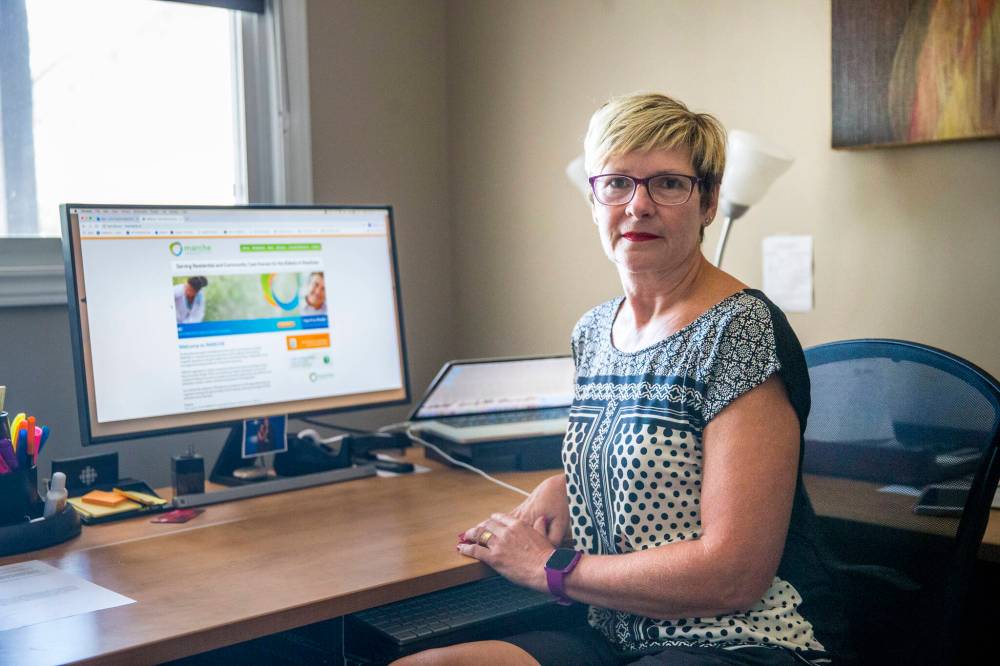
Julie Turenne-Maynard, executive director of the Manitoba Association of Residential and Community Care Homes for the Elderly (MARCHE), said long-term care organizations were informed a testing-policy change was coming.
They don’t yet know how it will affect personal-care home residents and staff, but MARCHE will closely monitor outbreak statistics and case counts that Manitoba personal care homes are still required to compile and publicly release through the provincial government.
Removing asymptomatic testing requirements means new personal-care home residents will no longer have to be “restricted” or isolated while they await results. It will be a more efficient process, but at what cost?
“That’s the golden question, right. At what point do you begin to lessen testing in order to expedite the admission process and hopefully, not end up having individuals coming into the home that are asymptomatic and positive because then it runs through the home or a specific unit fairly quickly,” she said.

It’s clear COVID-19 has spread within care homes because of asymptomatic infections, Turenne-Maynard said, and no one wants to see a return to the death toll and severe illness care homes experienced earlier in the pandemic.
The majority of Manitoba care-home residents have been fully vaccinated and boosted, yet she said many still live under strict rules. It has been three months since Manitoba lifted all public health restrictions, but some homes still don’t allow residents to leave the premises or participate in communal activities. Many visitors still have to wear full protective gear, even though it makes it more difficult for loved ones with dementia to recognize them.
“Most residents that do end up going into personal care have a limited lifespan, and (their families) don’t want them spending the latter part of their life in an environment where they can’t come out,” Turenne-Maynard said. “So we’re seeing more and more people are starting to get upset about it and be vocal about it, and want to take out their loved ones for an afternoon or an overnight (visit) because it’s been too long.”
MARCHE, which represents more than 5,000 personal-care, supportive housing and independent living beds in Manitoba, didn’t voice formal opposition to the no-asymptomatic testing policy, but it and other organizations are advocating for a relaxation of some of the in-home rules.
katie.may@winnipegfreepress.com
Katie May is a multimedia producer for the Free Press.
Our newsroom depends on a growing audience of readers to power our journalism. If you are not a paid reader, please consider becoming a subscriber.
Our newsroom depends on its audience of readers to power our journalism. Thank you for your support.
Katie May is a multimedia producer for the Free Press.
Our newsroom depends on a growing audience of readers to power our journalism. If you are not a paid reader, please consider becoming a subscriber.
Our newsroom depends on its audience of readers to power our journalism. Thank you for your support.
Advertisement Advertise With Us
Advertisement Advertise With Us