

Drug charges against parents dropped

Advertisement
Read this article for free:
or
Already have an account? Log in here »
To continue reading, please subscribe:
Monthly Digital Subscription
$1 per week for 24 weeks*
- Enjoy unlimited reading on winnipegfreepress.com
- Read the E-Edition, our digital replica newspaper
- Access News Break, our award-winning app
- Play interactive puzzles
*Billed as $4.00 plus GST every four weeks. After 24 weeks, price increases to the regular rate of $19.95 plus GST every four weeks. Offer available to new and qualified returning subscribers only. Cancel any time.
Monthly Digital Subscription
$4.99/week*
- Enjoy unlimited reading on winnipegfreepress.com
- Read the E-Edition, our digital replica newspaper
- Access News Break, our award-winning app
- Play interactive puzzles
*Billed as $19.95 plus GST every four weeks. Cancel any time.
To continue reading, please subscribe:
Add Free Press access to your Brandon Sun subscription for only an additional
$1 for the first 4 weeks*
*Your next subscription payment will increase by $1.00 and you will be charged $16.99 plus GST for four weeks. After four weeks, your payment will increase to $23.99 plus GST every four weeks.
Read unlimited articles for free today:
or
Already have an account? Log in here »
Hey there, time traveller!
This article was published 19/01/2018 (3017 days ago), so information in it may no longer be current.
More than a year after a baby boy suffered a suspected opioid overdose in an Aikins Street home, the criminal case against his parents has been dropped.
It’s one of only a handful of drug cases to be dropped by federal prosecutors in Manitoba because of a recent law that gives immunity to people who call for help at the scene of an overdose. The Good Samaritan Drug Overdose Act, implemented last May, says no one can be charged or convicted for simple drug possession if the drugs were discovered as a result of them seeking medical attention or help from law enforcement because of an overdose. The law applies to anyone who calls 911 to get help for themselves or someone else after an overdose.
Manitoba’s chief federal prosecutor says the new legislation is the reason drug charges against the baby’s parents were thrown out after the nine-month-old infant was taken to hospital in October 2016. But drug trafficking charges likely wouldn’t have held up in court regardless, Ian Mahon said, because except for a trace amount of an opiate found nowhere near the baby, the substances seized by police didn’t turn out to be drugs.
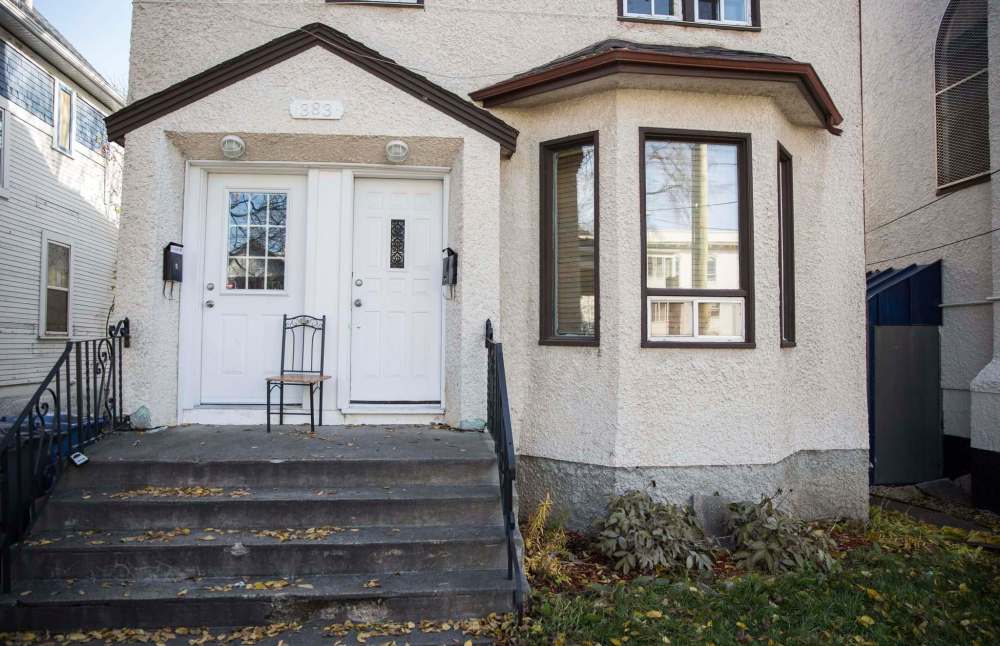
Tests of the items police seized revealed “most were not actually opiates or any controlled items, but a small residue of carfentanil was located on a bowl inside a drawer in the basement,” Mahon said. “Nowhere near where the baby was.”
The baby recovered after being treated with naloxone, an antidote to the highly addictive prescription painkiller fentanyl. At the time, police suspected the infant had ingested fentanyl and overdosed on the drug.
Officers with the Winnipeg Police Service’s clandestine lab team searched the North End home and seized 10 ounces of bagged powder, as well as half an ounce of loose powder, a “cutting agent” and a contaminated bowl and spoon. The baby’s parents, a 33-year-old man and a 32-year-old woman, were arrested. They were each charged with possession for the purpose of trafficking, criminal negligence and failing to provide the necessaries of life to a child, and were later released on bail.
The case attracted public attention after the police service issued a news release that listed the powder they found as “suspected fentanyl.” Two weeks later, the police service again spoke publicly about the case, saying tests didn’t reveal fentanyl but did show carfentanil — an even more potent drug a police spokesman described as being “10,000 times more powerful than morphine.”
By October 2017, however, prosecutors had stayed all of the criminal charges against the parents. The criminal negligence charges were dropped because the Crown couldn’t prove how the baby ingested a drug or what kind of drug it was, said attorney Scott Cooper, who handled the case for the provincial Crown’s office. Tests for the presence of fentanyl in the baby’s blood came back negative.
“We were not able to determine what opioid was in the baby… and part of that was because the comprehensive screening that they had at the time did not screen for derivatives of fentanyl,” he said, saying screening processes are still in development as synthetic drugs evolve. “If there was carfentanil in that baby, they didn’t know.”
There was evidence that other people were going in and out of the house during the same time, so investigators couldn’t pinpoint who may have been in contact with the baby before he got sick, Cooper said.
Mahon said federal prosecutors couldn’t go ahead with the case because of the federal legislation, since the parents had called 911 for the baby, who was taken to hospital in critical condition.
“If someone overdoses and the police attend and they search the place, or they call for help and the police attend and search them or search someone who stayed at the scene, we’re not to proceed on simple possession charges,” he said.
The law doesn’t apply to drug trafficking charges such as the ones the parents faced, but Mahon said the amount of carfentanil found didn’t justify the more serious trafficking charges.
At least three other drug-possession cases have been dropped after reported overdoses in Manitoba, as a result of the Good Samaritan law. One of them involved fentanyl, one involved oxycodone and the third involved an individual charged with five counts of drug possession, including oxycodone and methamphetamine.

The law began as a private member’s bill brought forward by B.C. Liberal MP Ron McKinnon. It was meant to help reduce overdose deaths amid the opioid crisis, which has been declared a public health emergency in B.C., Alberta and in the U.S.
“It was really based on the fact that people weren’t calling 911 when they should have, when their friends and partners were overdosing,” said Michael Crystal, an Ottawa-based criminal lawyer who worked with McKinnon on the bill and spoke about it in the Senate.
“It was to encourage proactive behaviour to get 911 involved when these circumstances presented themselves. It wasn’t meant to be a defence at trial or anything like that. It was to basically create a discretion (for police and the Crown’s office),” he said.
katie.may@freepress.mb.caTwitter: @thatkatiemay
Katie May is a multimedia producer for the Free Press.
Our newsroom depends on a growing audience of readers to power our journalism. If you are not a paid reader, please consider becoming a subscriber.
Our newsroom depends on its audience of readers to power our journalism. Thank you for your support.
Katie May is a multimedia producer for the Free Press.
Our newsroom depends on a growing audience of readers to power our journalism. If you are not a paid reader, please consider becoming a subscriber.
Our newsroom depends on its audience of readers to power our journalism. Thank you for your support.
Related Articles
Opioid policy a life-and-death matter
Advertisement Advertise With Us
Advertisement Advertise With Us
History
Updated on Friday, January 19, 2018 6:46 AM CST: Adds photo