

Enrolment outpaces funding
Provincial government's constraints put pressure on school division finances

Advertisement
Read this article for free:
or
Already have an account? Log in here »
To continue reading, please subscribe:
Monthly Digital Subscription
$1 per week for 24 weeks*
- Enjoy unlimited reading on winnipegfreepress.com
- Read the E-Edition, our digital replica newspaper
- Access News Break, our award-winning app
- Play interactive puzzles
*Billed as $4.00 plus GST every four weeks. After 24 weeks, price increases to the regular rate of $19.95 plus GST every four weeks. Offer available to new and qualified returning subscribers only. Cancel any time.
Monthly Digital Subscription
$4.99/week*
- Enjoy unlimited reading on winnipegfreepress.com
- Read the E-Edition, our digital replica newspaper
- Access News Break, our award-winning app
- Play interactive puzzles
*Billed as $19.95 plus GST every four weeks. Cancel any time.
To continue reading, please subscribe:
Add Free Press access to your Brandon Sun subscription for only an additional
$1 for the first 4 weeks*
*Your next subscription payment will increase by $1.00 and you will be charged $16.99 plus GST for four weeks. After four weeks, your payment will increase to $23.99 plus GST every four weeks.
Read unlimited articles for free today:
or
Already have an account? Log in here »
Hey there, time traveller!
This article was published 05/03/2018 (2969 days ago), so information in it may no longer be current.
Public school enrolment is soaring — unlike the money to teach those children.
Manitoba’s public school population has grown another 0.9 per cent, at a time Premier Brian Pallister’s government is providing the smallest funding increase since the 1990s and capping spending.
Educating those additional 1,647 kids at current per-student rates will cost more than the Pallister government is allowing public schools to increase spending this year.
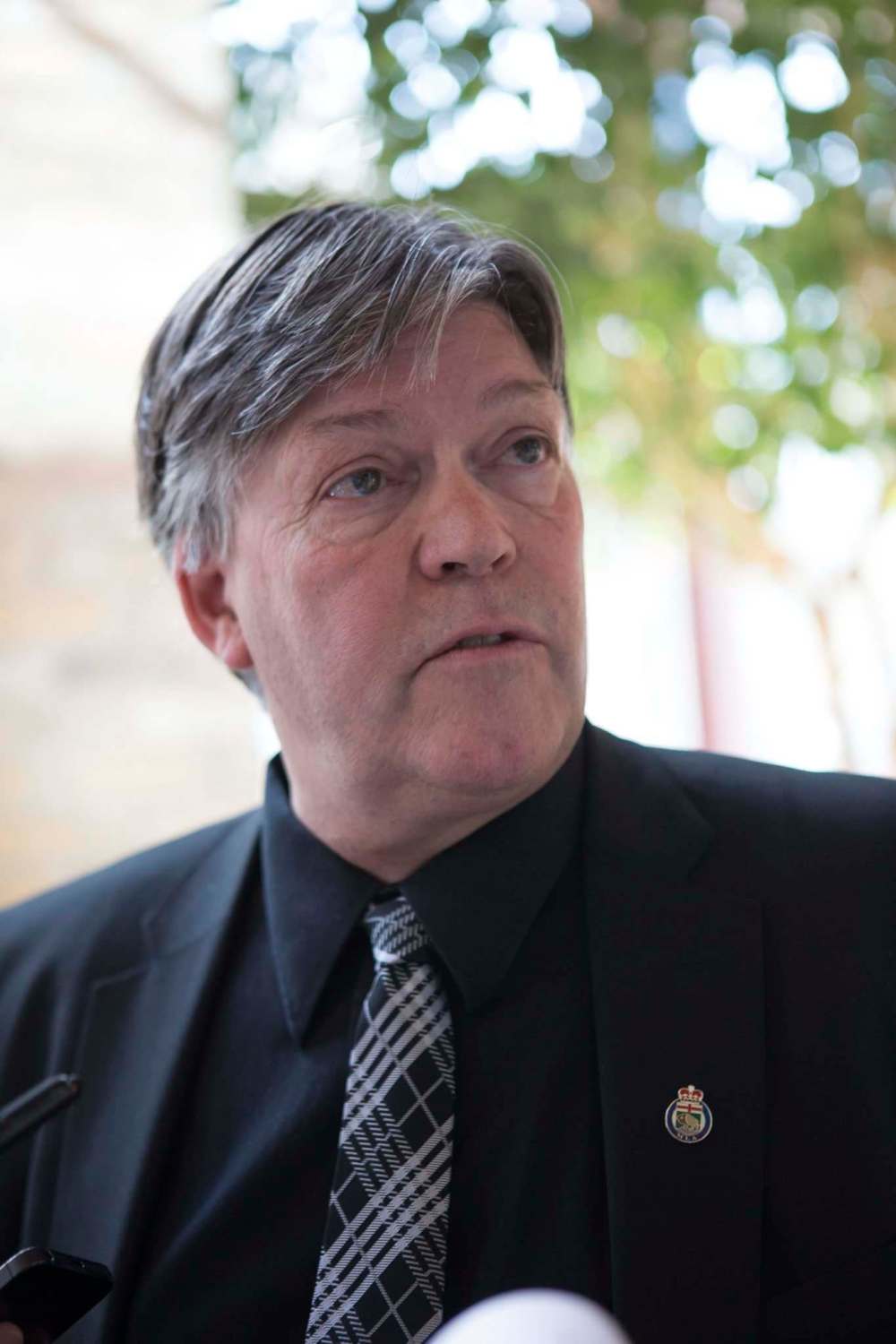
Education Minister Ian Wishart’s caps and controls allow school trustees to increase spending only $18.9 million in their March 15 budgets, money that must cover all rising costs except for teachers’ wages, which have been frozen.
Yet, this year’s provincial average of $13,187 spending per student and ratio of one classroom teacher for every 16.7 students would cost $21.7 million just to cover that same standard for the new kids.
School boards struggling to pass their budgets by March 15 face the possibility of spending less per student and of raising the student-teacher ratio.
After decades of declining enrolment, a recent resurgence of growth is happening across the board in public schools and private schools, both funded and unfunded, and home schooling.
The provincial enrolment report based on students enrolled Sept. 30, 2017, shows Manitoba has 207,158 students, an increase of 2,408 and 1.2 per cent over 2016.
Public schools are up 0.9 per cent, funded private schools 2.9 per cent, unfunded private schools 5.6 per cent and home-schooled kids 7.9 per cent.
A provincial official said the government does not survey or analyze parents’ school choices to find out why they’re not choosing public schools.
Wishart acknowledged through an aide that school boards face a challenge, but did not offer any easy solutions.
“We acknowledge growth is putting pressure on divisions, which government has asked to keep spending and property taxes increases under control,” Wishart said.
“In our recent announcement of public school funding for 2018/19, we announced measures designed to manage divisional costs, such as a two per cent limit to local education property taxes and 15 per cent reduction to administration cost caps. The Manitoba government committed to maintaining a balanced approach to providing students a quality education while creating efficiency and controlling costs within the public education system,” the minister said.
NDP leader Wab Kinew called for more spending, not less.
“With enrolment going up, it makes no sense for Pallister to hand down cuts that will hurt our kids’ education. He’s already asked them to do more with less, and the growth in enrolment will just make things harder,” said Kinew.
“We need real support for teachers and students, and Pallister’s decision to cut funding, eliminate small class sizes for early years, and delay building new schools for Winnipeg and Brandon won’t help us get every kid the good education they deserve. Parents and families want more resources in the classroom, not less, and if Pallister were listening, he would know this already,” Kinew said.
Liberal MLA Jon Gerrard agreed: “The Pallister math does not work. With the increase in enrolment numbers, there is no way that at least some school divisions will not see decreases in per capita funding for students, which will mean a reduction in their payroll and fewer people, including teachers hired,” Gerrard said. “This is bad for students, bad for families, bad for teachers and bad for Manitoba.”
The Manitoba Teachers’ Society and Manitoba School Boards Association declined to comment.
There’s 300-plus growth in Pembina Trails, Louis Riel, and River East Transcona — though the numbers at some older schools are low, and newer suburban schools are at, near, or even above capacity, with many portable classrooms.
The north continues to lose children and northern school divisions’ assessment bases are barely one-third to one-half the provincial average.
The largest percentage decreases occurred north of Winnipeg in Lakeshore School Division with a 6.5 per cent drop, Mountain View School Division with 3.6 per cent and Lord Selkirk School Division with 1.5 per cent.
Winnipeg School Division is down 13 students this school year, despite an influx of Syrian and other refugee children, and Waterford Green and adjoining developments exploding in the northwest with such a pace that WSD has asked the Tories to build a new high school and a kindergarten-to-Grade 8 school.
WSD communications director Radean Carter said the northwest Waterford Green and Castlebury Meadow developments still have 55 per cent of new building lots to come by 2022. “ We are anticipating continued growth in the northwest,” she said.
While Ecole Sir William Osler is now Winnipeg’s smallest school, the French milieu school on Grant Avenue will add grades four to six over the next three years.
Wishart said that the main effect of the influx of Syrian refugees has already happened, though there are still some preschoolers to arrive.

“The main wave of Syrian students are in school, but additional young children will enter school over the next few years. From September 2017 to mid-February 2018, schools have reported approximately 420 new students from refugee backgrounds, approximately 180 fewer than the same time period last year. The number reflects the drop in Syrian registrations and increase in students from other origins,” said Wishart.
Manitoba Catholic schools superintendent Robert Praznik said many newcomer families are choosing to attend Catholic schools.
“Enrolment in Manitoba Catholic Schools increased by 1.7 per cent this year to reach 5,200 students. There were increases in 14 of our 18 schools, which are located throughout the City of Winnipeg,” said Praznik. “The new students are reflective of the diverse communities we serve, and would include students from families new to Winnipeg from Africa, Asia, Central America and Europe.”
nick.martin@freepress.mb.ca
Nick Martin
Former Free Press reporter Nick Martin, who wrote the monthly suspense column in the books section and was prolific in his standalone reviews of mystery/thriller novels, died Oct. 15 at age 77 while on holiday in Edinburgh, Scotland.
Our newsroom depends on a growing audience of readers to power our journalism. If you are not a paid reader, please consider becoming a subscriber.
Our newsroom depends on its audience of readers to power our journalism. Thank you for your support.
More numbers:
Manitoba’s schools continued to grow this year after decades of decline, but this year, every element has increased its numbers, including unfunded independent schools and, once again, home schooling.
Public schools 187,036 (+1,647)
Funded independent schools 14,636 (+415)
Non-funded independent schools 1,833 (+98)
Home schooling 3,643 (+248)
Highest enrolment growth in school divisions:
Pembina Trails 343
Louis Riel 332
River East Transcona 314
Division Scolaire Franco-Manitobaine 140
Garden Valley 136
Hanover 124
Portage la Prairie 91
Highest percentage growth: Swan Lake-based Prairie Spirit and Morris-based Red River Valley 3.5 per cent, Winkler-based Garden Valley 3.1 per cent
Highest enrolment decline in school divisions:
Mountain View 113
Lakehsore 75
Lord Selkirk 62
Border Land 24
Swan Valley 20
The largest funded private school is Linden Christian at 942 students, and the largest unfunded independent school is Morning Glory in Mitchell at 260 children. Unfunded independent schools choose not to accept any public funding, or, in a few cases, are in their first three years of operation and have not yet been approved for public funding.
Education funding isn’t keeping pace with enrolment this year
Education Minister Ian Wishart has increased public school operating grants by $6.6 million, and has capped the increase in money collected through education property taxes to two per cent, which he says is $21.9 million.
Meanwhile, he’s clawed back $7.5 million in tax incentive grants created by the former NDP government and has ordered a 15 per cent reduction in the caps on divisional administration costs, which Wishart estimates at $2.1 million.
That produces a net of $18.9 million for school boards. Yes, teachers’ wages are frozen, but not their annual incremental increases paid to teachers in their first 10 years of work. Many non-teaching employees have existing collective bargaining agreements and have not yet fallen under Bill 28’s wage controls.
There’s about $1.1 billion in the public school system that is not spent on paying teachers — there’s no freeze on the cost of supplies, heating schools, fuel for school buses, maintenance and repairs for schools and buses, insurance, information technology, curriculum materials, debt servicing.
The average per-student spending this year is $13,187, and that would be $21.7 million just to educate all these new additional kids at the current standard.
All those numbers lead to the conclusion that the spending per-student will be lower in September, and the student-teacher ratio higher, and the only realistic way to operate a people-based system in which costs run higher than the dollars to cover them, is to reduce employees on the payroll.
Nick Martin
Former Free Press reporter Nick Martin, who wrote the monthly suspense column in the books section and was prolific in his standalone reviews of mystery/thriller novels, died Oct. 15 at age 77 while on holiday in Edinburgh, Scotland.
Our newsroom depends on a growing audience of readers to power our journalism. If you are not a paid reader, please consider becoming a subscriber.
Our newsroom depends on its audience of readers to power our journalism. Thank you for your support.
Advertisement Advertise With Us
Advertisement Advertise With Us