

Fifty is nifty
These icons hit the half-century club this year
Advertisement
Read this article for free:
or
Already have an account? Log in here »
To continue reading, please subscribe:
Digital Subscription
One year of digital access for only $1.44 a week*
- Enjoy unlimited reading on winnipegfreepress.com
- Read the E-Edition, our digital replica newspaper
- Access News Break, our award-winning app
- Play interactive puzzles
*Billed as $5.77 plus GST every four weeks. After 52 weeks, price increases to the regular rate of $19.95 plus GST every four weeks. Offer available to new and qualified returning subscribers only. Cancel any time.
To continue reading, please subscribe:
Add Free Press access to your Brandon Sun subscription for only an additional
$1 for the first 4 weeks*
- Enjoy unlimited reading on winnipegfreepress.com
- Read the E-Edition, our digital replica newspaper
- Access News Break, our award-winning app
- Play interactive puzzles
*Your next Brandon Sun subscription payment will increase by $1.00 and you will be charged $17.95 plus GST for four weeks. After four weeks, your payment will increase to $24.95 plus GST every four weeks.
Read unlimited articles for free today:
or
Already have an account? Log in here »
Hey there, time traveller!
This article was published 03/07/2021 (1799 days ago), so information in it may no longer be current.
Fifty years ago this fall, Canada took one of the boldest steps in its history — becoming the first country in the world to adopt multiculturalism as an official policy.
In a statement to the House of Commons on Oct. 8, 1971, Prime Minister Pierre Trudeau announced multiculturalism wasn’t just some vague ideal, but an official government policy.
The lofty goal was to preserve the cultural freedom of all individuals and provide recognition of the cultural contributions of diverse ethnic groups to Canadian society.
This bit of history is more significant than ever as Canada faces a national reckoning over the deadly legacy of residential schools.
In his 1971 speech to the House of Commons, Trudeau stated that no singular culture could define Canada and that the government accepted “the contention of other cultural communities that they, too, are essential elements in Canada.”
Last Sunday, Prime Minister Justin Trudeau paid homage to his late father in a statement issued on Canadian Multiculturalism Day. “The tragic events of the past several weeks are painful reminders that Canada has not always lived up to its ideals, and that many Canadians continue to feel fear and insecurity simply because of the colour of their skin, their background, or their faith,” the PM said.
But Canada’s multiculturalism policy isn’t the only item vying for our attention this year, as we see from today’s golden list of Five Five Famous 50th Anniversaries in 2021:
5) The golden anniversary: Starbucks
Five decades ago: The iconic coffee retailer with the mermaid logo was founded in 1971 by three 28-year-old java-loving academics named Jerry Baldwin, Gordon Bowker and Zev Siegl, who opened their first store near the historic Pike Place Market in Seattle.
Back then, the notion of grabbing a cup of coffee was nothing like it is today. Thanks to Starbucks, that lukewarm cup of Joe sitting all day on a burner has been transformed into everything from from the iced white chocolate mocha and pumpkin-spice latte to the cinnamon roll frappuccino and decaf oat-milk flat white. Its ubiquitous name comes from Starbuck, the first mate character in Herman Melville’s most famous novel, Moby Dick.
Today, that one outlet in Seattle has grown into a global empire with almost 33,000 coffee bars in 83 countries employing 349,000 people.
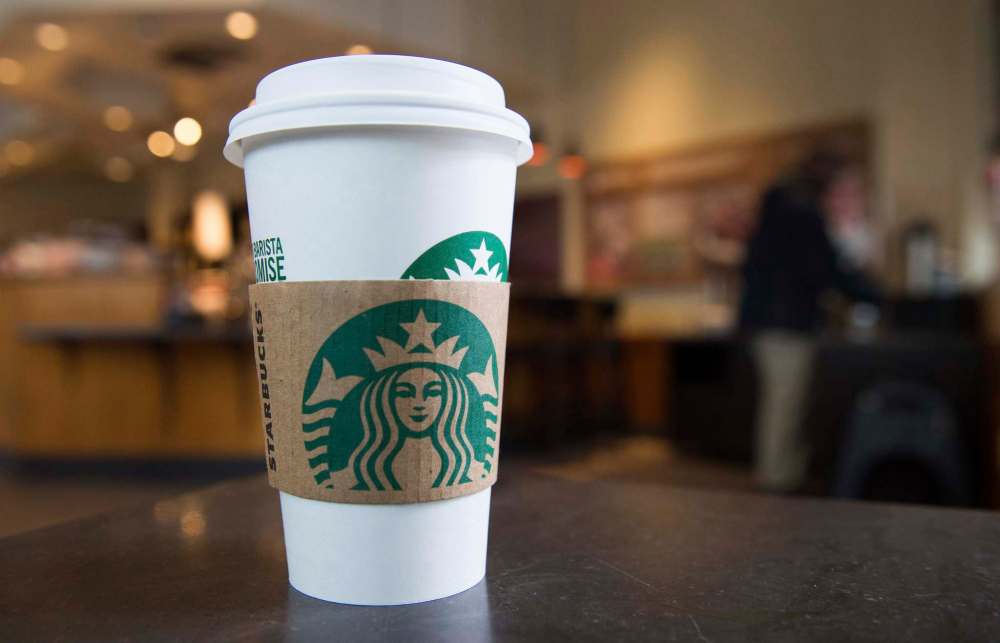
“Over the past 50 years, we have built a company that’s about more than coffee,” Kevin Johnson, Starbucks CEO, said this year. “It’s about the human experience, connection and community, and we need that now more than ever.”
For the first decade, Starbucks sold only coffee beans, and the equipment to grind and serve them, rather than the actual drink. But in 1982 it started offering brewed coffee. It wasn’t until the store was taken over by former manager Howard Schultz in 1987 that it truly started on its path to becoming the largest coffee chain in the world.
By 1999, the brand was so well known that the Brad Pitt movie Fight Club had a Starbucks coffee cup in every scene, because director David Fincher said: “When I first moved to L.A. in 1984, you could not get a good cup of coffee to save your life. Then Starbucks came out, and it was such a great idea: good coffee.”
Today, Starbucks is valued around US$128 billion, but, the original trio — Jerry, Zev and Gordon — sold out long before the big bucks came in.
4) The golden anniversary: McDonald’s Quarter Pounder
Five decades ago: Just three years after the birth in 1968 of its signature sandwich, the Big Mac, McDonald’s struck gold again with the invention of its iconic Quarter Pounder. The famously simple four-ounce burger with ketchup, mustard, slivered onions, and two dill pickles was born in 1971 and added to the food giant’s national menu just two years later.
The mastermind behind the Quarter Pounder was Al Bernardin, a former McDonald’s vice-president of product development who bought two franchises in Fremont, Calif. In a 1991 interview, Bernardin explained that he “felt there was a void in our menu vis-à-vis the adult who wanted a higher ratio of meat to bun.” So he came up with a hefty burger with a pre-cooked weight of just over four ounces.
“He called it the Quarter Pounder. Which was much better than his other option — the big Four Ouncer,” noted Terry O’Reilly, host of CBC’s popular advertising focused radio show Under the Influence.
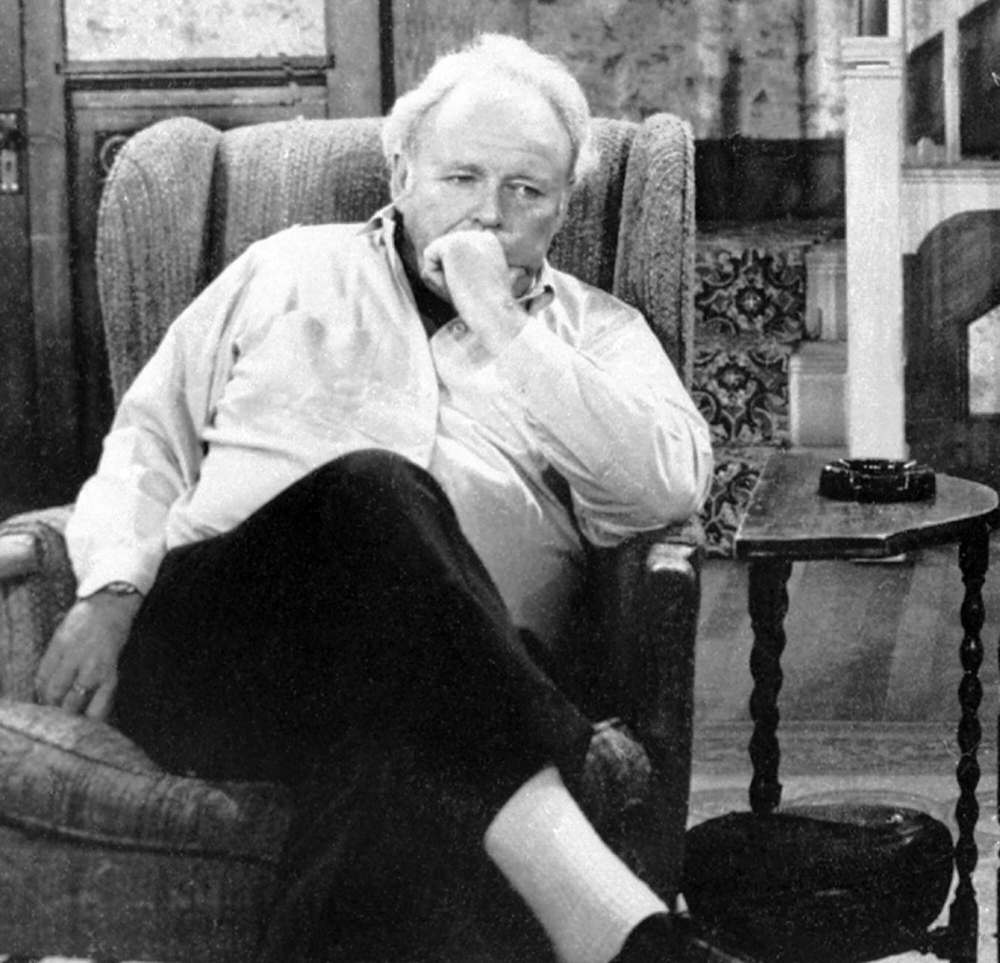
In 1971, Bernardin introduced the first Quarter Pounders at his McDonald’s stores in Fremont with signs boasting, “Today Fremont, tomorrow the world.” He could not have been more correct, as the sandwich went nationwide just two years later.
Not all of his ideas became menu staples. McDonald’s corporate office nixed the The Lite Mac — a one-fifth pounder consisting of 15 per cent less beef fat — and the McGobbler, a sandwich made of ground turkey meat.
“He always wanted to make things better,” Bernardin’s son, Mark, who owns three McDonald’s in Fremont, said after his father died in 2009. “He spent two years making prototypes to spread butter on corn-on-the-cob.”
In the 1980s, A&W tried to compete with the Quarter Pounder by introducing its “Third-of-a-Pound Burger,” which didn’t sell because Americans were reportedly so bad at math they wrongly assumed a third of a pound of meat was less than a quarter of a pound, and they felt cheated.
3) The golden anniversary: All in the Family
Five decades ago: For many hardcore viewers, this was nothing less than the greatest TV series of all time. It debuted on CBS on Jan. 12, 1971, and the television landscape was altered forever.
At the time, CBS was looking to move away from its rural-themed image (The Beverly Hillbillies, Green Acres and Mayberry R.F.D.) and find something a touch more contemporary. With All in the Family, the network essentially lobbed a hand grenade into prime time TV.
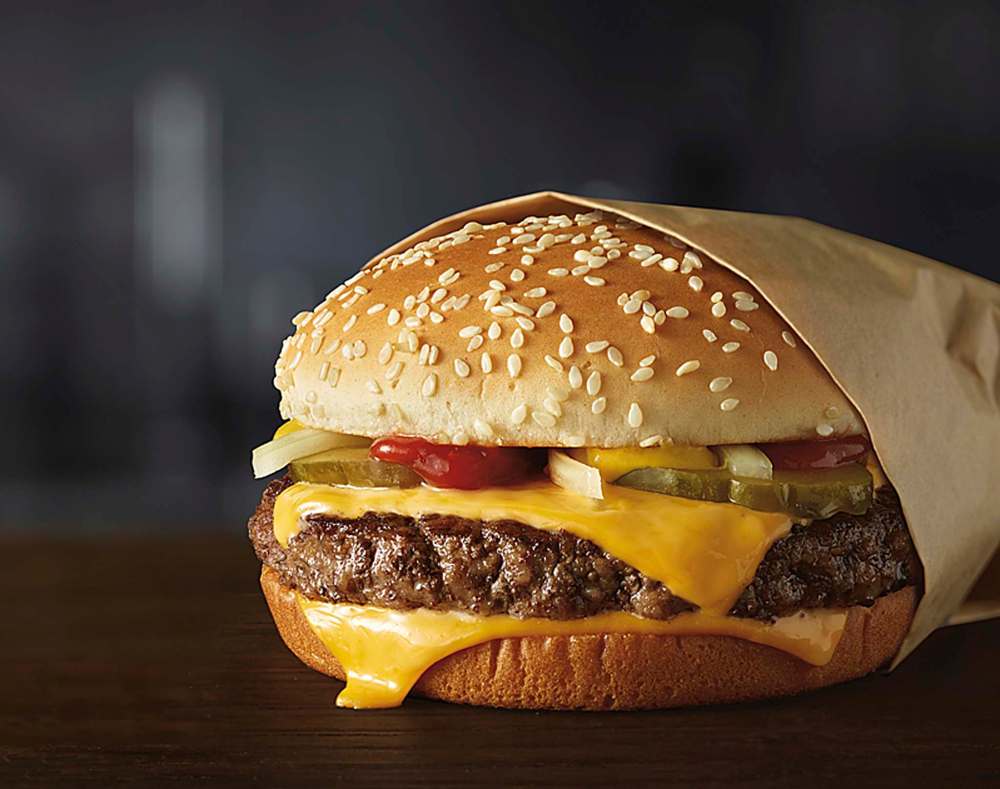
In that first telecast, it was accompanied by a disclaimer: “The program you are about to see is All In The Family. It seeks to throw a humorous spotlight on our frailties, prejudices, and concerns. By making them a source of laughter, we hope to show — in a mature fashion — just how absurd they are.”
It would be an understatement to say the show broke new ground for its depiction of issues never addressed on television before. It shone a searing spotlight on racism, antisemitism, homophobia, women’s liberation, abortion, infidelity, menopause, poverty, and the Vietnam War.
It focused on the Bunker clan, headed by narrow-minded, prejudiced Archie Bunker (Carroll O’Connor); his quavery-voiced “dingbat” wife Edith (Jean Stapleton); adored “little girl” daughter Gloria (Sally Struthers)’ and her liberal, hippy-ish husband, college student Mike Stivic (Rob Reiner) — who Archie dubbed “Meathead.”
“We didn’t know Archie Bunker, but we felt we did,” series creator Norman Lear, 98, told The New York Post on the show’s 50th anniversary. “He was so American, but a specific type of American… There was an Archie Bunker that lived next door to me, and my father had a little bit of Archie in him — he would say ‘Jeanette, stifle!’ to my mother. If you didn’t live with Archie, he was up the street, down the street or across the street. The fact that he was on television was a surprise — but it wasn’t like we didn’t know him.”
The public lapped it up, and it became TV’s top-rated show for five consecutive seasons.
2) The golden anniversary: Greenpeace
Five decades ago: In 1971, a dozen long-haired, flute-playing environmental activists set sail from Vancouver in an old fishing boat to make the world a little more green and peaceful.
Their goal was to protest underground nuclear testing by the U.S.military at Amchitka, a tiny volcanic island off western Alaska. “Amchitka was four thousand kilometres north of Vancouver. The island was the last refuge for 3,000 endangered sea otters and home to a plethora of other wildlife. And it was situated in one of the most earthquake-prone regions in the world.
All along the Pacific coast people were concerned that the nuclear blast could “trigger a giant tidal wave,” according to a CBC report. On board that tiny ship was a humble crew of idealistic activists — some argued they were extremists — who gave birth to an environmental movement that took the world by storm.
In 1970, a Vancouver activist, Marie Bohlen, proposed a novel idea: “Why doesn’t somebody just sail a boat up there and park right next to the bomb? That’s something everybody can understand.” So that’s what they decided to do.
A year later, a small Vancouver group called Don’t Make a Wave rented a beat-up fishing boat which they renamed The Greenpeace. Then the group went searching for volunteers to sail to Alaska to protest the scheduled nuclear test.
Before Greenpeace arrived at Amchitka, the boat was intercepted by a U.S. navy ship and forced to turn back. When the activists returned to Vancouver, they learned their inaugural action had sparked a public outcry. The U.S. still detonated the bomb, but their voices were heard. Nuclear testing on Amchitka ended that same year, and the island was later declared a bird sanctuary.
Today, Greenpeace is easily the most visible — and most controversial — non-governmental environmental organization with offices in 55 countries around the world.
“We may have just looked like a little old fish boat but in fact we were cranking away at our typewriters and with our tape recorders,” Vancouver journalist and activist Robert Hunter later said. “In a sense, we were a media warship.”
1) The golden anniversary: The first email
Five decades ago: It was 50 years ago that Ray Tomlinson, a bearded computer scientist hunched between two cabinet-sized computers in a windowless room in Cambridge, Massachusetts, did something no one else had ever done — send the world’s first email.
At the time, working in Boston at Bolt, Beranek, and Newman (BBN), a company that was instrumental in the development of a very early version of the internet, called ARPANET, Tomlinson didn’t think it was such a big deal. In hindsight, all he did that day — and even he couldn’t remember the exact date — was revolutionize modern communications, changing the way the world shops, banks and stays in touch.
“I’m often asked ‘Did I know what I was doing?’ “ Tomlinson said at his induction into the Internet Hall of Fame in 2012. “The answer is: ‘Yeah. I knew exactly what I was doing. I just had no notion whatsoever about what the ultimate impact would be.’”
No one asked him to invent email; it was simply a side project to his commissioned work. Tomlinson came up with the “SNDMSG” command. Unlike what came before it, SNDMSG actually sent mail files to the recipient’s computers — the first networked messaging program.
“The invention of email came out of a personal desire for a more convenient and functional way to communicate,” Tomlinson, who died in 2016 at age 74 of a heart attack, said. “Basically, I was looking for a method that did not require the person to be there when the message was sent and enabled the receiver to read and answer communications at their convenience.”
It was Tomlinson who decided to use the now-ubiquitous “@” symbol to separate the recipient’s name from their location — to indicate that the user was “at” some other host rather than being local.
The content of the historic first email to a computer in the same room as him? “The test messages were entirely forgettable and I have, therefore, forgotten them.” It was something banal, something like “QWERTYUIOP,” the first row of letters on the keyboard. Or: “ =‘Testing 123’ or something innocuous like that.”
doug.speirs@freepress.mb.ca