

First Nations communities bracing for variant
One year after COVID-19 vaccinations reached communities, many First Nations under lockdown, facing restrictions

Advertisement
Read this article for free:
or
Already have an account? Log in here »
To continue reading, please subscribe:

Digital Subscription
One year of digital access for only $205*
- Enjoy unlimited reading on winnipegfreepress.com
- Read the E-Edition, our digital replica newspaper
- Access News Break, our award-winning app
- Play interactive puzzles
*First annual payment billed as $205.00 + GST for one year. This annual subscription will automatically renew at $233.00 + GST every 52 weeks (10% off the regular annual price of $259.35). Offer available to new and qualified returning subscribers only. Cancel any time.
To continue reading, please subscribe:
Add Free Press access to your Brandon Sun subscription for only an additional
$1 for the first 4 weeks*
- Enjoy unlimited reading on winnipegfreepress.com
- Read the E-Edition, our digital replica newspaper
- Access News Break, our award-winning app
- Play interactive puzzles
*Your next Brandon Sun subscription payment will increase by $1.00 and you will be charged $17.95 plus GST for four weeks. After four weeks, your payment will increase to $24.95 plus GST every four weeks.
Read unlimited articles for free today:
or
Already have an account? Log in here »
Hey there, time traveller!
This article was published 08/01/2022 (1730 days ago), so information in it may no longer be current.
It’s been a year and a day since the first vaccines were administered amongst Manitoba First Nations, but COVID-19 case counts in much of northern Manitoba remain unstable.
Many First Nations communities are bracing for the Omicron variant to reach their front doors, and some are already under lockdown or restrictions as a result of spiking COVID-19 cases.
According to Manitoba Keewatinowi Okimakanak, at least 11 First Nations are currently under either a lockdown or some sort of restrictions. Among those communities affected are Bunibonibee Cree Nation in Oxford House, Nisichawayasihk Cree Nation in Nelson House and Pimicikamak Cree Nation in Cross Lake.
In just the past week, there have been 1,388 new cases in First Nations people, with 777 of those coming from people on reserves, despite many First Nations having some of the highest vaccination rates in the province.
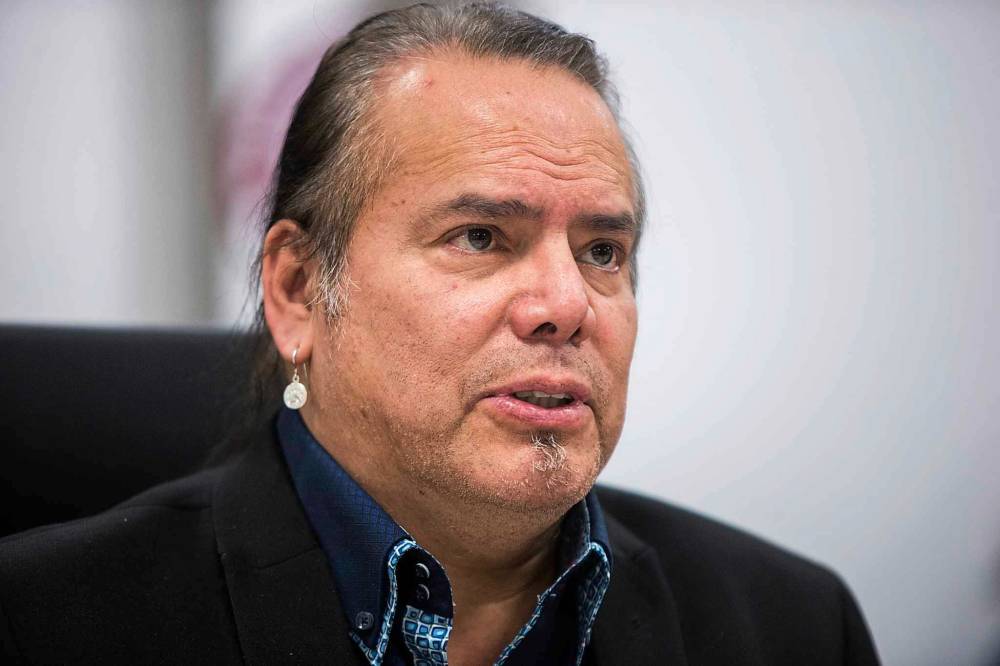
MKO Grand Chief Garrison Settee said he met with MKO leaders Friday and while the group hasn’t seen confirmed cases of Omicron spreading into First Nations, they’re assuming the variant has already seeped into communities.
“Our leaders are raising the alarm over the need to ensure planning is done now to ensure our communities have access to sufficient health care staff as well as essential service workers … We expressed our concern to the province about the closures of hospitals that serve our communities along with a potential lack of access to timely medical services once COVID-19 cases begin rising in our communities,” Settee said in a release.
Three of the four Island Lake First Nations communities —Red Sucker Lake, Garden Hill and St. Theresa Point First Nation — are under lockdown. The fourth, Wasagamack First Nation, is under restrictions, allowing just one member of every household to run errands.
In these four communities, there were 138 active cases as of Thursday, with 83 active cases in St. Theresa Point First Nation alone.
Those are the most recent numbers Alex McDougall has, but the executive director of Four Arrows Regional Health Authority Inc., an organization that provides regional health programming for the four First Nations that make up Island Lake, suspects the case count Saturday was “significantly” higher.
“They’ve been doing what they can to control the transmission of the (Omicron) variant … those travelling are essentially medical patients,” he said.
He believes the Omicron variant has already arrived in Island Lake and said Four Arrows had been anticipating a spike in COVID-19 cases. Next week, Four Arrows will be distributing its own supply of rapid tests — 250 rapid tests for each First Nation — across Island Lake for those who have to travel.
An MKO spokesperson said each First Nation will get 100 rapid test kits from the federal government, but didn’t know how many tests would be in every kit.
There have been serious cases in Island Lake through this outbreak as well, McDougall said, noting a patient from St. Theresa Point was transported to Winnipeg and hospitalized last week.
Looking back on the past year, McDougall said he was reminded of the province’s response to COVID-19 and the vaccine roll-out, which he said was “challenging.”
“Having the provincial government coming onsite and providing supports where it can is something I’ll be certainly looking out for,” he said.
“With the Pallister government and the PCs and their platform for Manitoba, it really didn’t include First Nations-specific initiatives. Pallister always identified our region as northern Manitoba and was very hesitant to even mention First Nations in that area. I’m hoping that changes with the new leadership at the helm.”
In Bunibonibee Cree Nation, no one is allowed to enter the community without proof of a negative rapid test, regardless of if they’re coming through by plane or the winter road that has recently opened to travellers.
“Before we had this (rule), people could come in and you never knew — it’s just one more tool, or another line of defence for the community we can use,” Chief Richard Hart said Saturday.
There were nine active cases identified through rapid testing a week ago. PCR tests from those individuals have been sent to Winnipeg, but it’s likely they’ll have recovered by the time the First Nation knows if they’re Omicron cases or not.
“We have to take every precaution and we’re treating it as they’re new cases, and we’re treating it as the Omicron variant,” Hart said.
And with good reason — despite the community being one of the most vaccinated in the province, the Delta variant hit Bunibonibee Cree Nation hard, and a spike in cases that began in October didn’t end until around Christmas.
Looking back at the past year, Hart is both mournful of what his community lost and comforted by the proof that vaccines are successful in reducing the severity of the virus.

“The previous December was very devastating for us in terms of cases, an outbreak at that time, and we actually lost some individuals in our personal care home, some elders,” he said.
“We’re very familiar with COVID outbreaks and the devastation that it can cause families and community spirit as well.”
It’s been “a grind” facing new outbreaks in the past year, he said, but even in the more recent spikes in cases there have been fewer hospitalizations.
“This year, we’re seeing even if people are getting sick, that the serious medical outcomes have greatly decreased and we haven’t had very many people have medical complications arising from a COVID infection,” he said. “Whereas a year ago, we were having people flown out with respiratory problems, hospitalized, we had deaths as well.”
Malak.abas@freepress.mb.ca
Malak Abas is a city reporter at the Free Press. Born and raised in Winnipeg’s North End, she led the campus paper at the University of Manitoba before joining the Free Press in 2020. Read more about Malak.
Every piece of reporting Malak produces is reviewed by an editing team before it is posted online or published in print — part of the Free Press‘s tradition, since 1872, of producing reliable independent journalism. Read more about Free Press’s history and mandate, and learn how our newsroom operates.
Our newsroom depends on a growing audience of readers to power our journalism. If you are not a paid reader, please consider becoming a subscriber.
Our newsroom depends on its audience of readers to power our journalism. Thank you for your support.
Malak Abas is a city reporter at the Free Press. Born and raised in Winnipeg’s North End, she led the campus paper at the University of Manitoba before joining the Free Press in 2020. Read more about Malak.
Every piece of reporting Malak produces is reviewed by an editing team before it is posted online or published in print — part of the Free Press‘s tradition, since 1872, of producing reliable independent journalism. Read more about Free Press’s history and mandate, and learn how our newsroom operates.
Our newsroom depends on a growing audience of readers to power our journalism. If you are not a paid reader, please consider becoming a subscriber.
Our newsroom depends on its audience of readers to power our journalism. Thank you for your support.
Advertisement Advertise With Us
Advertisement Advertise With Us