

Give red-light cameras the green light

Advertisement
Read this article for free:
or
Already have an account? Log in here »
To continue reading, please subscribe:
Monthly Digital Subscription
$1 per week for 24 weeks*
- Enjoy unlimited reading on winnipegfreepress.com
- Read the E-Edition, our digital replica newspaper
- Access News Break, our award-winning app
- Play interactive puzzles
*Billed as $4.00 plus GST every four weeks. After 24 weeks, price increases to the regular rate of $19.95 plus GST every four weeks. Offer available to new and qualified returning subscribers only. Cancel any time.
Monthly Digital Subscription
$4.99/week*
- Enjoy unlimited reading on winnipegfreepress.com
- Read the E-Edition, our digital replica newspaper
- Access News Break, our award-winning app
- Play interactive puzzles
*Billed as $19.95 plus GST every four weeks. Cancel any time.
To continue reading, please subscribe:
Add Free Press access to your Brandon Sun subscription for only an additional
$1 for the first 4 weeks*
*Your next subscription payment will increase by $1.00 and you will be charged $16.99 plus GST for four weeks. After four weeks, your payment will increase to $23.99 plus GST every four weeks.
Read unlimited articles for free today:
or
Already have an account? Log in here »
Hey there, time traveller!
This article was published 03/12/2019 (2334 days ago), so information in it may no longer be current.
If the province really wants to ensure photo radar improves road safety, then perhaps it would considering helping the City of Winnipeg install more cameras.
It seems like a crazy thing to do — particularly since it seems obvious the recently-announced review by the government of Premier Brian Pallister is looking for ways of diminishing, not enhancing, photo radar.
Look at the data and peruse the wide array of studies from other jurisdictions, and you will see comprehensive use of photo radar — intersection safety cameras (ISC) or mobile — ultimately makes the streets safer. We know this because speed is the No. 1 cause of traffic collisions and the No. 1 factor in determining the severity of those collisions; when applied correctly, photo radar forces drivers to ease off the gas pedal.
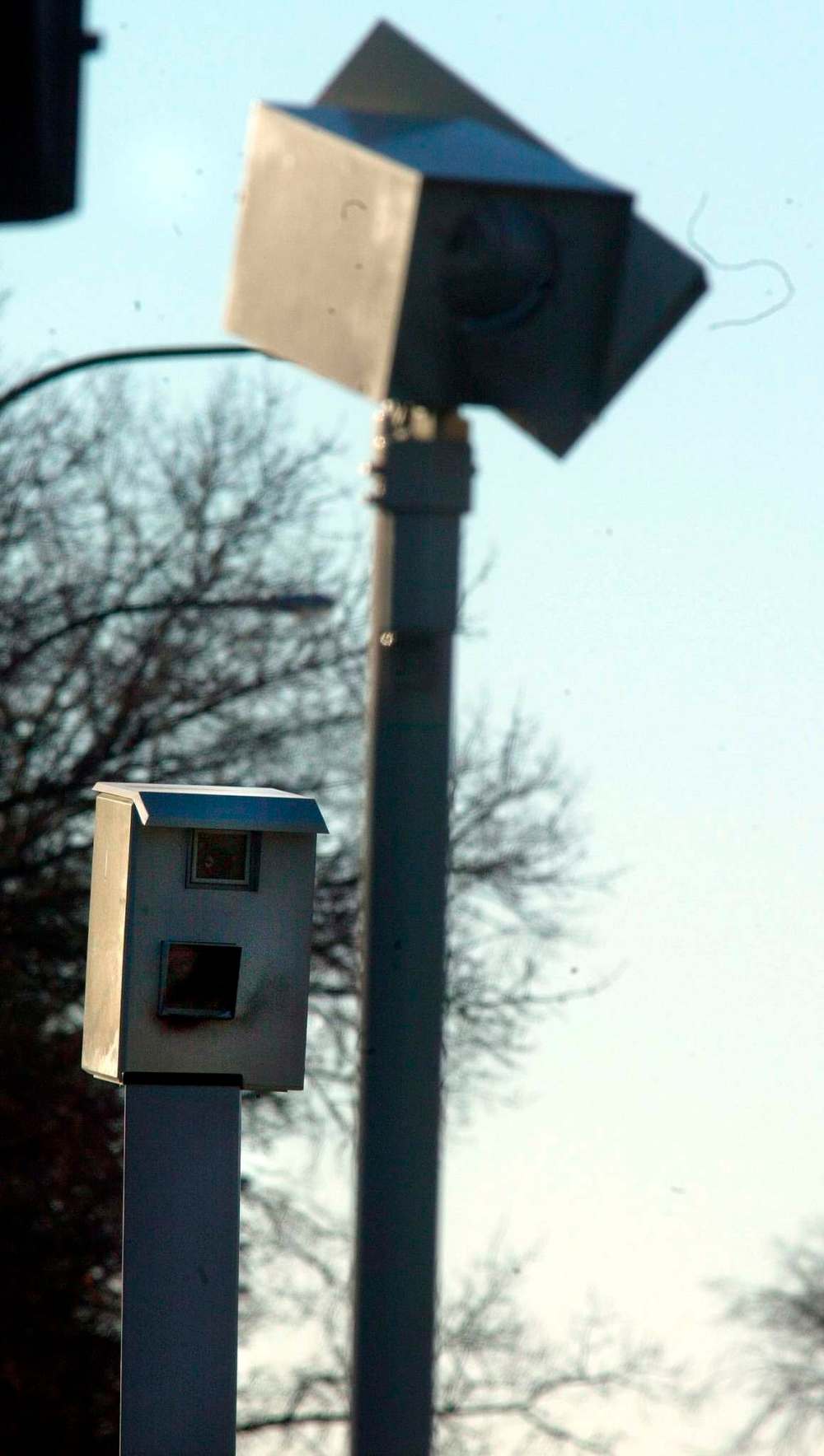
However, in announcing the review late last month, Manitoba Infrastructure Minister Ron Schuler suggested there wasn’t enough accessible data showing whether the city’s program promoted road safety.
Schuler simply isn’t looking hard enough.
The Winnipeg Police Service (relying heavily on data from Manitoba Public Insurance) publishes an annual report that shows the original 12 intersections with ISC have seen a decrease in collisions over the 16 years they have been in operation.
In the most recent traffic collision report, the WPS compares the first three years of the ISC program with the most recent three years. Although the total number of collisions at those locations has gone up 17 per cent, when calculated on a per capita basis, it represents a seven per cent decrease per 100,000 vehicles.
That is important because while the city’s population has gone up 10 per cent since the program began in 2002, the number of registered vehicles has gone up by more than 30 per cent.
There are still concerns. Overall, tickets being handed out at the 49 ISC locations have increased at a rate far in excess of the influences of population and registered vehicle growth, and there are still too many dangerous right-angle collisions.
Missing from the discussion, however, is how limited the city’s photo radar program is. Of the 49 ISC locations, only a handful have been installed in the intersections that record the most collisions.
The disconnect is rather striking.
According to MPI, of the 50 Winnipeg intersections with the most accidents from 2014-18, only seven featured ISC. Even worse, only one of the 20 worst intersections (McGillivray Boulevard and Pembina Highway) has an ISC.
WPS Insp. Gord Spado, head of the city’s traffic division, said he is aware of and concerned about the absence of ISC at the high-volume, high-collision intersections. However, any change to the number and how they are deployed cannot be made until Schuler finishes his high-level review of photo radar.
“We are interested in locating ISC at higher-collision locations, and with our current contract nearly completed, that is the plan moving forward,” Spado said via email, “but again, it is dependent on the results of the provincial review.”
Before empirical data can be considered, the WPS plan will likely find itself at the mercy of a political debate that will no doubt impact the final results of the provincial review.
The use of remote technology to enforce speed and traffic-light rules has long been a source of concern for conservative or populist politicians. Even premier Gary Doer, a Prairie populist deep down, was reluctant to bring in legislation allowing municipalities to use photo radar because many Manitobans see it as simply unfair and opportunistic.
It may be opportunistic, but those who call photo radar a “cash grab” seem to neglect a fundamental truth: it is a tax on stupidity.
Excessive speed, or risky decisions to run amber or red lights, constitute unacceptable social behaviour. Levying a fine on people who deliberately exceed the speed limit, or who disregard the importance of respecting traffic lights, is likely one of the most fair and accountable forms of taxation in the civilized world.
Photo radar is also a technology made for modern policing.
Early in its deployment, many critics complained photo radar was “depersonalizing” policing and eliminating opportunities to use traffic stops to uncover other crimes. In the age of methamphetamine, mental illness and gang activity, few taxpayers would argue cops should be spending their time pulling over drivers for unsafe lane changes rather than responding to more urgent calls.
Still, political ideology often trumps empirical logic.

Currently, New York City is engaged in a massive increase in the number of photo radar units it is deploying, after determining it has a real and significant impact on speeding, particularly around schools, playgrounds and hospitals. At the same time, however, states such as Texas are going in the opposite direction; last summer, Gov. Greg Abbott banned all use of ISC in his state.
As for the cash grab, Winnipeggers who are watching with interest as the Pallister government conducts its review should consider one potential dilemma.
The city earns about $10 million net off its photo radar operations. If that money disappears, and is not replaced with some other stream of revenue, the city will have to cut services or increase property taxes.
Tax on stupidity, or increased taxes on property. It puts the issue into context.
dan.lett@freepress.mb.ca
Dan Lett is a columnist for the Free Press, providing opinion and commentary on politics in Winnipeg and beyond. Born and raised in Toronto, Dan joined the Free Press in 1986. Read more about Dan.
Dan’s columns are built on facts and reactions, but offer his personal views through arguments and analysis. The Free Press’ editing team reviews Dan’s columns before they are posted online or published in print — part of the our tradition, since 1872, of producing reliable independent journalism. Read more about Free Press’s history and mandate, and learn how our newsroom operates.
Our newsroom depends on a growing audience of readers to power our journalism. If you are not a paid reader, please consider becoming a subscriber.
Our newsroom depends on its audience of readers to power our journalism. Thank you for your support.
Dan Lett is a columnist for the Free Press, providing opinion and commentary on politics in Winnipeg and beyond. Born and raised in Toronto, Dan joined the Free Press in 1986. Read more about Dan.
Dan’s columns are built on facts and reactions, but offer his personal views through arguments and analysis. The Free Press’ editing team reviews Dan’s columns before they are posted online or published in print — part of the our tradition, since 1872, of producing reliable independent journalism. Read more about Free Press’s history and mandate, and learn how our newsroom operates.
Our newsroom depends on a growing audience of readers to power our journalism. If you are not a paid reader, please consider becoming a subscriber.
Our newsroom depends on its audience of readers to power our journalism. Thank you for your support.
Advertisement Advertise With Us
Advertisement Advertise With Us
History
Updated on Tuesday, December 3, 2019 7:59 PM CST: Fixes typo.