

HSC to revamp old school into $8.8-M clinic
Advertisement
Read this article for free:
or
Already have an account? Log in here »
To continue reading, please subscribe:

Digital Subscription
One year of digital access for only $205*
- Enjoy unlimited reading on winnipegfreepress.com
- Read the E-Edition, our digital replica newspaper
- Access News Break, our award-winning app
- Play interactive puzzles
*First annual payment billed as $205.00 + GST for one year. This annual subscription will automatically renew at $233.00 + GST every 52 weeks (10% off the regular annual price of $259.35). Offer available to new and qualified returning subscribers only. Cancel any time.
To continue reading, please subscribe:
Add Free Press access to your Brandon Sun subscription for only an additional
$1 for the first 4 weeks*
- Enjoy unlimited reading on winnipegfreepress.com
- Read the E-Edition, our digital replica newspaper
- Access News Break, our award-winning app
- Play interactive puzzles
*Your next Brandon Sun subscription payment will increase by $1.00 and you will be charged $17.95 plus GST for four weeks. After four weeks, your payment will increase to $24.95 plus GST every four weeks.
Read unlimited articles for free today:
or
Already have an account? Log in here »
Hey there, time traveller!
This article was published 06/10/2017 (3272 days ago), so information in it may no longer be current.
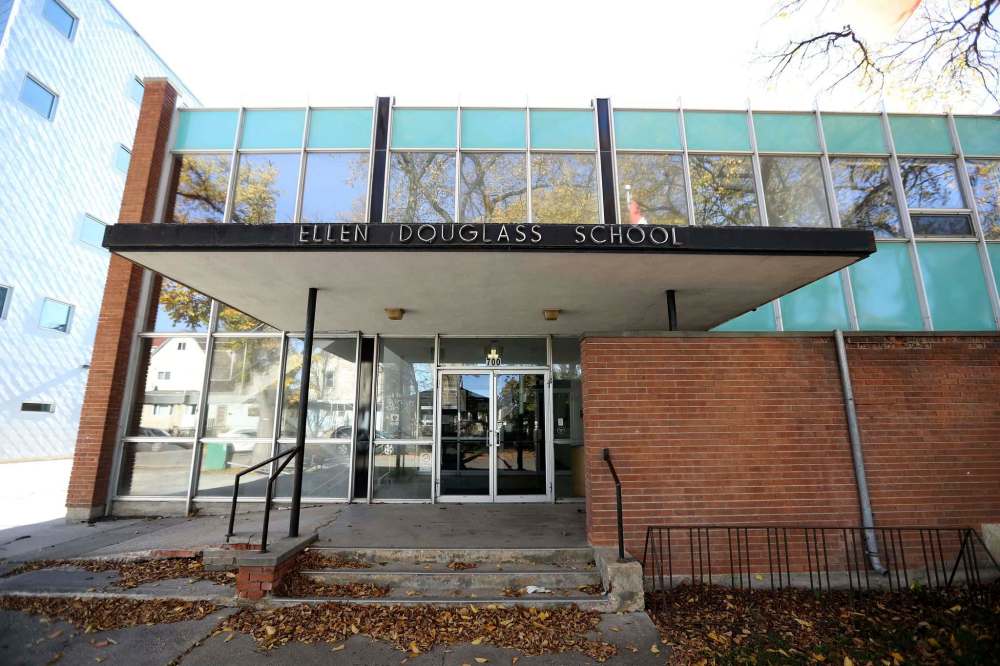
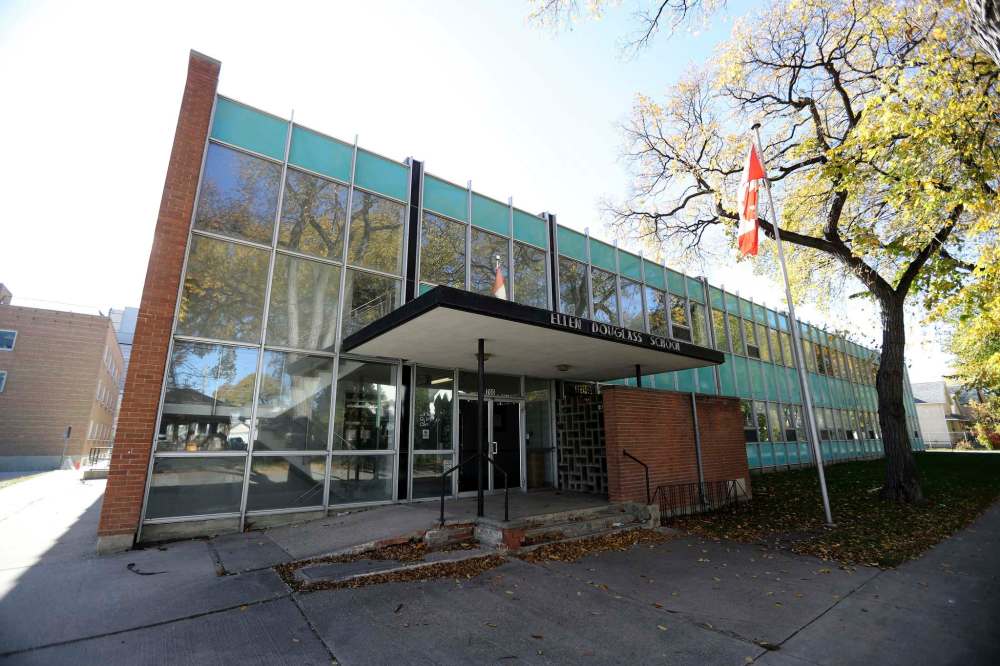
The Winnipeg Regional Health Authority plans to spend $8.83 million to create an expansive ambulatory care clinic in what once was the Ellen Douglass School.
The WRHA purchased the old school house north of William Avenue for $1.35 million earlier this year. As is typical when news of fresh space breaks, Health Sciences Centre’s chief operating officer, Dr. Perry Gray, was inundated with proposals.
But it was one from Dr. Eberhard Renner, head of the department of internal medicine and director of the WRHA’s medicine program, that struck Gray as the most opportune.
Currently, 13 clinics are crammed into 73 rooms surrounding the HSC emergency department. Some have spilled out to Grace Hospital and other small, leased spaces where people go to see endocrinology, gastroenterology, infectious diseases, diabetes, kidney and liver diseases experts.
The specialists see nearly 380 patients each day, some 100,000 people a year. Patients can wait months to be seen; almost always the beds are full and the appointment slots filled.
“They’re kind of disjointed,” Renner said, “many of them are small exam rooms that are not very efficient.”
He proposed taking all the clinics and shifting them north to the two-storey, 1960s structure at 700 Elgin Ave. It would be much more effective, Renner argued, to put more than a dozen specialists together into one building with extra bed capacity.
Not only would they have more space to operate, Renner said, but he expects the move will have a positive impact on both quality of care and wait times.
His logic? By putting all the specialists into the same space, not only does it become easier for them to work together, but it becomes possible for patients who need treatment across multiple specialties to book appointments all in one day instead of spread over many months.
Consider a patient with diabetes, Renner said. “That patient would come once. He would see his eye doctor, he would see the nephrologist, he would see the neurologist, he would see the endocrinologist and, after a day, he would walk out with a plan and maybe wouldn’t have to come in for the next year.”
The advantages aren’t just for people coming in to access the clinic, Gray said. Moving the clinics means more space around the ER to add capacity if necessary when the city’s overhaul to health-care delivery is finalized and HSC is one of only three Winnipeg ERs (down from six).
By adding extra beds, Gray said, emergency room doctors will actually be able to divert patients who need specialist care out of the ER. People often go to an ER because they’ve hit their limit of living with persistent pain and waiting for an appointment.
They don’t actually need emergency care or to be admitted, Renner said, “but they need to have a follow-up… If I can guarantee that they’re seen the next day at the outpatient clinic, then they don’t need to be admitted and they don’t need to stay in the ER.”

That’s standard practice already for some of HSC’s surgical clinics. Currently, if a person injures a hand, they can be patched up and sent home with a referral to the plastic surgeon’s clinic for the following day.
That tends to keep more than 10 patients a day out of the ER, Gray said, but that’s not currently possible for ambulatory care. “There isn’t a free slot anywhere,” he said, and it’s “very difficult to do when all your clinics are booked to the max.”
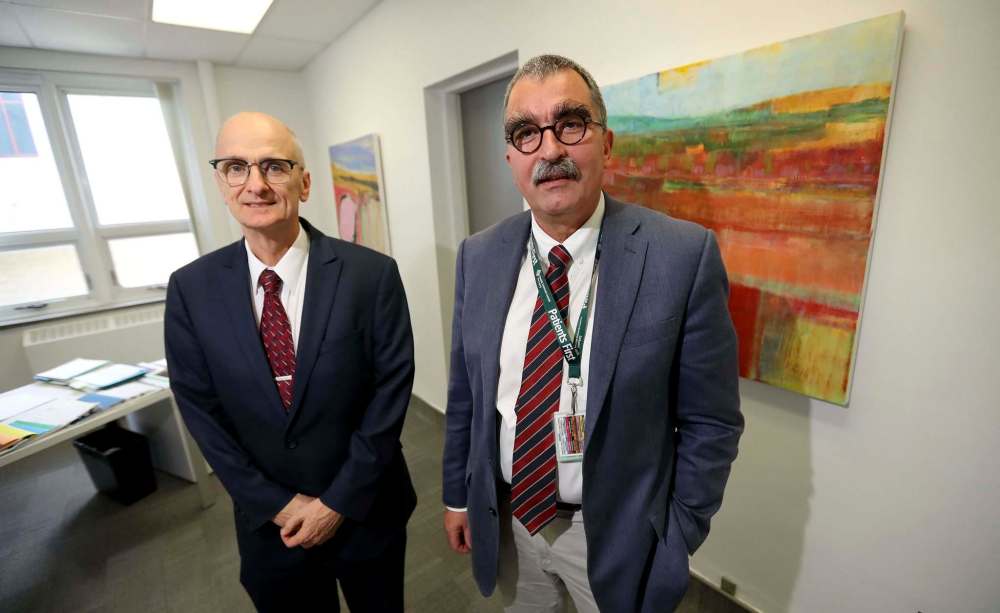
Both doctors are hoping that will change once the former Ellen Douglass School is fully converted. The school, designed for special-needs children and sharing space with the Child Guidance Clinic, was closed to students in 1980.
Demolition work is set to begin in December, with construction to begin in earnest next summer. The WRHA seeks to have the clinic operational by September 2019.
jane.gerster@freepress.mb.ca