

If you can’t pay the fine, don’t do the crime: judge
Court tosses appeal of stiff penalties for tobacco-smuggling

Advertisement
Read this article for free:
or
Already have an account? Log in here »
To continue reading, please subscribe:

Digital Subscription
One year of digital access for only $205*
- Enjoy unlimited reading on winnipegfreepress.com
- Read the E-Edition, our digital replica newspaper
- Access News Break, our award-winning app
- Play interactive puzzles
*First annual payment billed as $205.00 + GST for one year. This annual subscription will automatically renew at $233.00 + GST every 52 weeks (10% off the regular annual price of $259.35). Offer available to new and qualified returning subscribers only. Cancel any time.
To continue reading, please subscribe:
Add Free Press access to your Brandon Sun subscription for only an additional
$1 for the first 4 weeks*
- Enjoy unlimited reading on winnipegfreepress.com
- Read the E-Edition, our digital replica newspaper
- Access News Break, our award-winning app
- Play interactive puzzles
*Your next Brandon Sun subscription payment will increase by $1.00 and you will be charged $17.95 plus GST for four weeks. After four weeks, your payment will increase to $24.95 plus GST every four weeks.
Read unlimited articles for free today:
or
Already have an account? Log in here »
Hey there, time traveller!
This article was published 23/08/2021 (1861 days ago), so information in it may no longer be current.
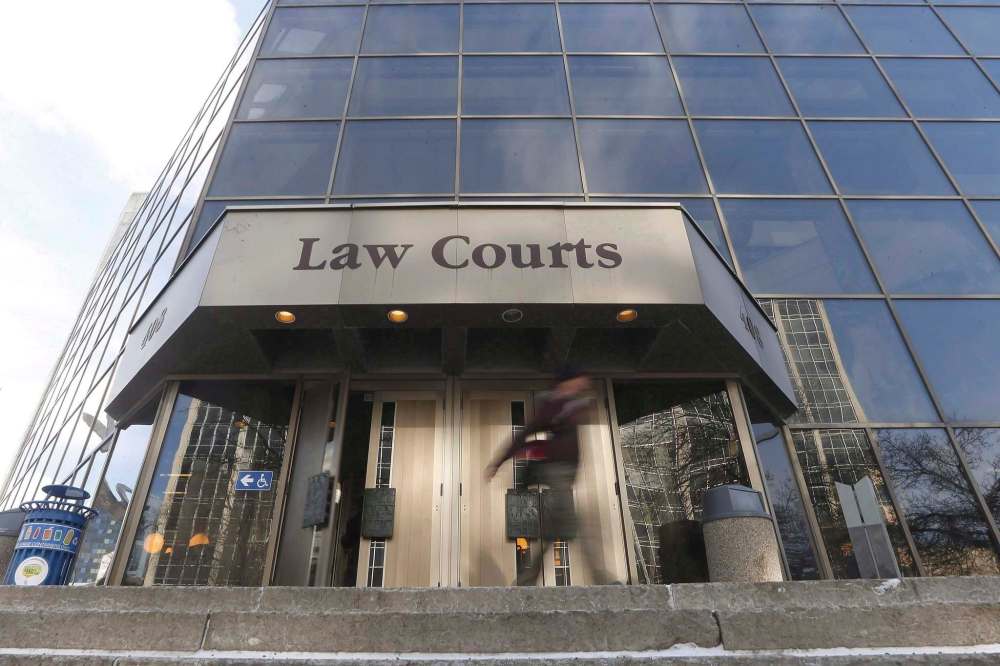
A Manitoba judge has upheld hefty tobacco tax fines against a group of low-income Manitobans, dismissing a charter challenge launched by University of Manitoba law students who argued the fines could amount to “cruel and unusual punishment.”
Provincial court Judge Timothy Killeen ruled last week that while the fines were harsh, they did not violate the group’s charter rights. The three Manitoban residents had imported untaxed cigarettes to the province from a First Nation just across the Ontario border.
“I think there’s disappointment certainly, but we all went into this knowing that what we’re asking for was going to be difficult,” said Brayden McDonald, a recent law school graduate now working with the university’s Community Law Centre (known as the Legal Aid clinic).
Back in May 2020, McDonald and fellow students Dan Jr Patriarca and Larissa Campbell started to notice a pattern of clients from low-income backgrounds facing steep fines for smuggling large amounts of tobacco over the Ontario border without paying the mandatory taxes.
For each of these clients, fines ranged between $7,000 and $14,000, which the students thought could be defined as “cruel and unusual” given both their clients’ dire financial circumstances and the absence of an option to allow offenders to pay off fines with community service.
Through a year-long effort, the students worked to compile a constitutional challenge, asking the court to consider other options to the mandatory fines that would take into account each client’s existing financial need. Though the fines had been determined to be fair in court more than 20 years ago, the students argued the recent loss of a community-service payment program created an opportunity to reconsider the law.
“They argue that the mandatory penalties are financially devastating. They argue that the penalties are grossly disproportionate in their particular circumstances and amount to a breach of their rights under section 12 of the Charter of Rights and Freedoms not to be subject to cruel and unusual punishment,” Killeen wrote in his decision.
“The impact of the penalty would be significant on each, given the limited resources and income.”
While Killeen acknowledged the fines would have a significant impact on the three offenders — all of whom have monthly expenses that exceed their income — he ultimately decided the fines were necessary to deter other Manitobans from cigarette smuggling.
“Courts routinely impose harsh sentences where the facts call for it. While the personal circumstances of these offenders are difficult, those circumstances do not reduce their responsibility for what they did,” the judge wrote.
“In each case, the mandatory penalty is harsh. It is not disproportionate because it will either be paid in small amounts over time, or not paid at all with little in the way of consequences.”
Instead of reducing the dollar-value of the fine, Killeen offered long windows for each client to pay off their debt, noting there is no minimum monthly payment and no requirement for debt collectors to get involved.
The issue of disproportionate tobacco fines has come up repeatedly at the legal aid clinic, McDonald explained, and the judge’s final decision has at least brought new clarity to the law.

“I think it’s fairly common and I think it’s understandable why, you have this addictive substance, you have crazy prices, so you’re naturally going to have a lot of people out there who are trying to find ways to afford it,” said McDonald.
The students’ supervisor, Michael Walker, added the issue may not have been addressed at all had it not been for students’ work, as fine cases rarely get the support of legal aid lawyers.
“This case is an excellent example of law students putting the knowledge and the skills they learned in the faculty of law into practise, and by doing so helping people who otherwise would not have had legal representation,” Walker said in an interview Thursday. “Going forward it just settles it for everyone that is the punishment and people are just going to have to deal with it.”
julia-simone.rutgers@freepress.mb.ca
Twitter: @jsrutgers
Julia-Simone Rutgers is an investigative reporter who joined the Free Press in 2020. Read more about Julia-Simone.
Every piece of reporting Julia-Simone produces is reviewed by an editing team before it is posted online or published in print — part of the Free Press‘s tradition, since 1872, of producing reliable independent journalism. Read more about Free Press’s history and mandate, and learn how our newsroom operates.
Our newsroom depends on a growing audience of readers to power our journalism. If you are not a paid reader, please consider becoming a subscriber.
Our newsroom depends on its audience of readers to power our journalism. Thank you for your support.
Julia-Simone Rutgers is an investigative reporter who joined the Free Press in 2020. Read more about Julia-Simone.
Every piece of reporting Julia-Simone produces is reviewed by an editing team before it is posted online or published in print — part of the Free Press‘s tradition, since 1872, of producing reliable independent journalism. Read more about Free Press’s history and mandate, and learn how our newsroom operates.
Our newsroom depends on a growing audience of readers to power our journalism. If you are not a paid reader, please consider becoming a subscriber.
Our newsroom depends on its audience of readers to power our journalism. Thank you for your support.
Advertisement Advertise With Us
Advertisement Advertise With Us