

Ignoring meth crisis a sign of heartless government

Advertisement
Read this article for free:
or
Already have an account? Log in here »
To continue reading, please subscribe:
Monthly Digital Subscription
$1 per week for 24 weeks*
- Enjoy unlimited reading on winnipegfreepress.com
- Read the E-Edition, our digital replica newspaper
- Access News Break, our award-winning app
- Play interactive puzzles
*Billed as $4.00 plus GST every four weeks. After 24 weeks, price increases to the regular rate of $19.95 plus GST every four weeks. Offer available to new and qualified returning subscribers only. Cancel any time.
Monthly Digital Subscription
$4.99/week*
- Enjoy unlimited reading on winnipegfreepress.com
- Read the E-Edition, our digital replica newspaper
- Access News Break, our award-winning app
- Play interactive puzzles
*Billed as $19.95 plus GST every four weeks. Cancel any time.
To continue reading, please subscribe:
Add Free Press access to your Brandon Sun subscription for only an additional
$1 for the first 4 weeks*
*Your next subscription payment will increase by $1.00 and you will be charged $16.99 plus GST for four weeks. After four weeks, your payment will increase to $23.99 plus GST every four weeks.
Read unlimited articles for free today:
or
Already have an account? Log in here »
Hey there, time traveller!
This article was published 24/09/2018 (2737 days ago), so information in it may no longer be current.
IT was clear from the language used in her news release and subsequent interviews that Children’s Advocate Daphne Penrose was concerned.
Last Friday, as politicians and the journalists that follow their every move already had one eye on the weekend, Penrose sounded an alarm about the Progressive Conservative government’s failure to provide adequate and effective treatment for youth with methamphetamine addictions, and their inability to embrace all possible harm-reduction options on what appear to be ideological grounds.
“We have to set aside our own comfort levels as adults and service providers and listen to the voices of young people,” Penrose wrote. “They don’t want to be dying from their addictions — they want our help.”
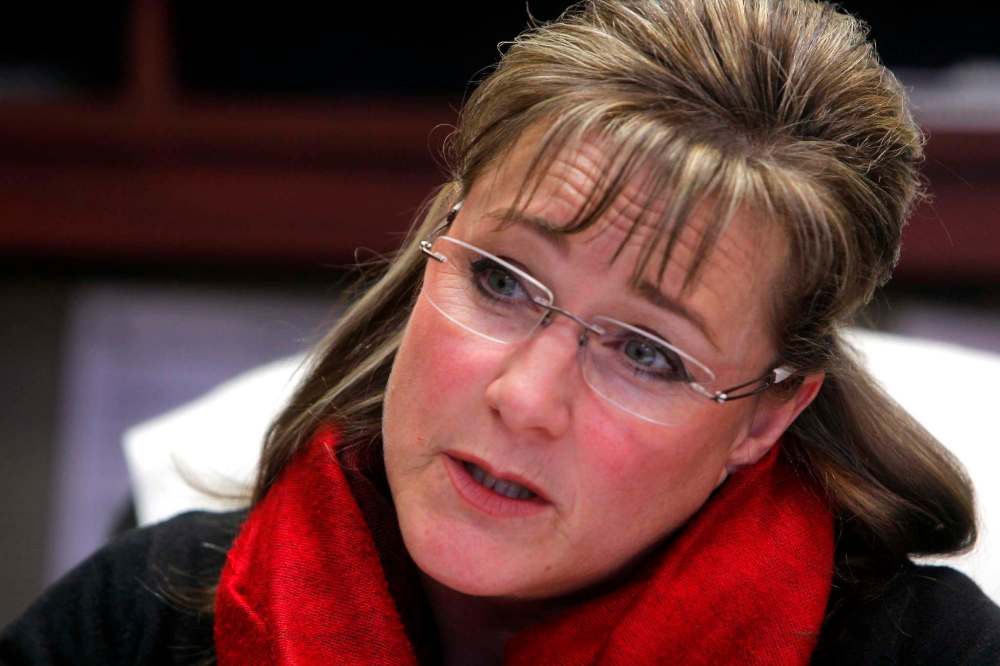
The statement was prompted by a meeting Penrose said she had recently with the deputy ministers from the provincial Health and Families departments to see what measures were being taken to address the problem of youth meth addiction. Penrose said neither department had any concrete plans, despite the fact the province released a blueprint for the overhaul of mental-health and addiction treatment — the so-called Virgo report — more than four months earlier.
The province did open five Rapid Access to Addictions Medicine (RAAM) clinics in May, but those facilities only treat adults, a situation that drew a sharp rebuke from Penrose, who believes more beds and treatment options need to be created specifically for children and youth.
However, she said the PC government seems “stuck in an ideological debate” that has prevented it from considering any and all options for treating addicted youth, such as supervised injection sites.
There is a lot to be concerned about in Penrose’s statement. But here’s something even more worrisome that she didn’t mention: this isn’t the first time she has raised this alarm.
In October 2017, Penrose raised her concerns about the lack of treatment options for addicted youth. And again, in January 2018, she told a legislative committee that the government’s response is simply not good enough given the gravity of the situation. “Families are devastated and asking why no one has figured out how to help a child,” she said at that time.
Taken together, Penrose’s diligent attention to the problem reveals two inescapable facts: first, that the children’s advocate is doing her job; and second, that the province is virtually ignoring her attempts to call attention to what easily qualifies as a crisis.
According to the Office of the Manitoba Advocate for Children and Youth, more than 10 per cent of all children aged six through 12 have experienced a significant mental-health or addictions issue. That rises to 17 per cent of youth aged 13 to 19. And since 2009, 143 young people have committed suicide, including eight in August 2018.
These figures describe just one small aspect of the meth crisis that’s gripping Manitoba.
The Free Press reported last week that the number of people seeking medical attention at Winnipeg emergency departments has risen by 1,200 per cent in the last five years. The rise in meth use is overwhelming a mental-health and addictions system that was inadequate before this latest scourge took hold.
Even if you lack a shred of empathy for the plight of the mentally ill and addicted, the image of thousands of children suffering these brutal diseases without adequate treatment should be enough to flood your eyes with angry tears. It certainly should be enough to prompt this and all governments to act with extreme urgency.
And what about the government’s response to Penrose’s concerns?
As has been the custom for this government, no cabinet minister was made available to respond directly. A statement issued on behalf of Health Minister Cameron Friesen suggested additional resources and programs for mental-health and addictions treatment would be coming “later this fall.”
This has become standard operating practice for the government of Premier Brian Pallister. Cabinet ministers are kept well away from journalists, particularly when a critical or embarrassing story is the topic of the day.
And while that may prevent ministers from inadvertently making the problem worse, it also inevitably makes them look like they don’t care, particularly when someone such as Penrose raises a life-and-death issue.
It should be noted the lack of attention to mental health and addictions is hardly a Tory-made phenomenon. All governments, at all levels and in all provinces, have failed profoundly to provide the resources necessary to deal with the magnitude of the problem.
And if previous Manitoba governments of other stripes had a children’s advocate of Penrose’s commitment, they, too, would have had to deal with the allegation that they are ignoring a problem of epidemic proportions.
Most governments, and certainly a good portion of the public, have less sympathy for mental health and addictions than nearly any other area of health services. Despite a constantly growing body of evidence that points out that both are fairly represented as bona fide diseases, far too many politicians and voters treat the people who suffer from them as weak links in society’s chain.

The result is a level of funding tragically out of step with the magnitude of the problem. Manitoba spends more than $500 million a year on mental health and addictions, a number that represents just 5.1 per cent of total health-care funding. That is well below the national average for provinces of about 7.2 per cent.
Even though they did not create this problem, Pallister and his ministers still have a moral obligation to act and, as Penrose has revealed, they are falling well short of that obligation. The prevalence of meth — a phenomenon that has risen to prominence on Pallister’s watch — has further underlined his government’s underwhelming response.
There is no doubt that Pallister, a politician with a notoriously thin skin, will bristle at the suggestion that he and his government do not care about Manitobans who suffer from mental health and addictions.
However, when you ignore repeated warnings, hide your key ministers behind feeble prepared statements and continue to underfund a problem that has grown in size and severity under your watch, you certainly don’t get to call yourself caring.
dan.lett@freepress.mb.ca
Dan Lett is a columnist for the Free Press, providing opinion and commentary on politics in Winnipeg and beyond. Born and raised in Toronto, Dan joined the Free Press in 1986. Read more about Dan.
Dan’s columns are built on facts and reactions, but offer his personal views through arguments and analysis. The Free Press’ editing team reviews Dan’s columns before they are posted online or published in print — part of the our tradition, since 1872, of producing reliable independent journalism. Read more about Free Press’s history and mandate, and learn how our newsroom operates.
Our newsroom depends on a growing audience of readers to power our journalism. If you are not a paid reader, please consider becoming a subscriber.
Our newsroom depends on its audience of readers to power our journalism. Thank you for your support.
Dan Lett is a columnist for the Free Press, providing opinion and commentary on politics in Winnipeg and beyond. Born and raised in Toronto, Dan joined the Free Press in 1986. Read more about Dan.
Dan’s columns are built on facts and reactions, but offer his personal views through arguments and analysis. The Free Press’ editing team reviews Dan’s columns before they are posted online or published in print — part of the our tradition, since 1872, of producing reliable independent journalism. Read more about Free Press’s history and mandate, and learn how our newsroom operates.
Our newsroom depends on a growing audience of readers to power our journalism. If you are not a paid reader, please consider becoming a subscriber.
Our newsroom depends on its audience of readers to power our journalism. Thank you for your support.
Advertisement Advertise With Us
Advertisement Advertise With Us