

Immigrants start from scratch in the kitchen
Centre teaches nutrition, how to cook western food
Advertisement
Read this article for free:
or
Already have an account? Log in here »
To continue reading, please subscribe:

Digital Subscription
One year of digital access for only $205*
- Enjoy unlimited reading on winnipegfreepress.com
- Read the E-Edition, our digital replica newspaper
- Access News Break, our award-winning app
- Play interactive puzzles
*First annual payment billed as $205.00 + GST for one year. This annual subscription will automatically renew at $233.00 + GST every 52 weeks (10% off the regular annual price of $259.35). Offer available to new and qualified returning subscribers only. Cancel any time.
To continue reading, please subscribe:
Add Free Press access to your Brandon Sun subscription for only an additional
$1 for the first 4 weeks*
- Enjoy unlimited reading on winnipegfreepress.com
- Read the E-Edition, our digital replica newspaper
- Access News Break, our award-winning app
- Play interactive puzzles
*Your next Brandon Sun subscription payment will increase by $1.00 and you will be charged $17.95 plus GST for four weeks. After four weeks, your payment will increase to $24.95 plus GST every four weeks.
Read unlimited articles for free today:
or
Already have an account? Log in here »
Hey there, time traveller!
This article was published 03/01/2015 (4255 days ago), so information in it may no longer be current.
Ayoola Sabitu has become a walking and talking (and cooking and eating) food encyclopedia.
Since immigrating from Nigeria 3-1/2 years ago, he has avoided the temptation to frequent fast-food joints and has instead found African grocery stores in Winnipeg and learned how to cook western food.
He credits much of his knowledge to the Immigrant Centre, a not-for-profit settlement organization in Winnipeg, where he took cooking classes last year.
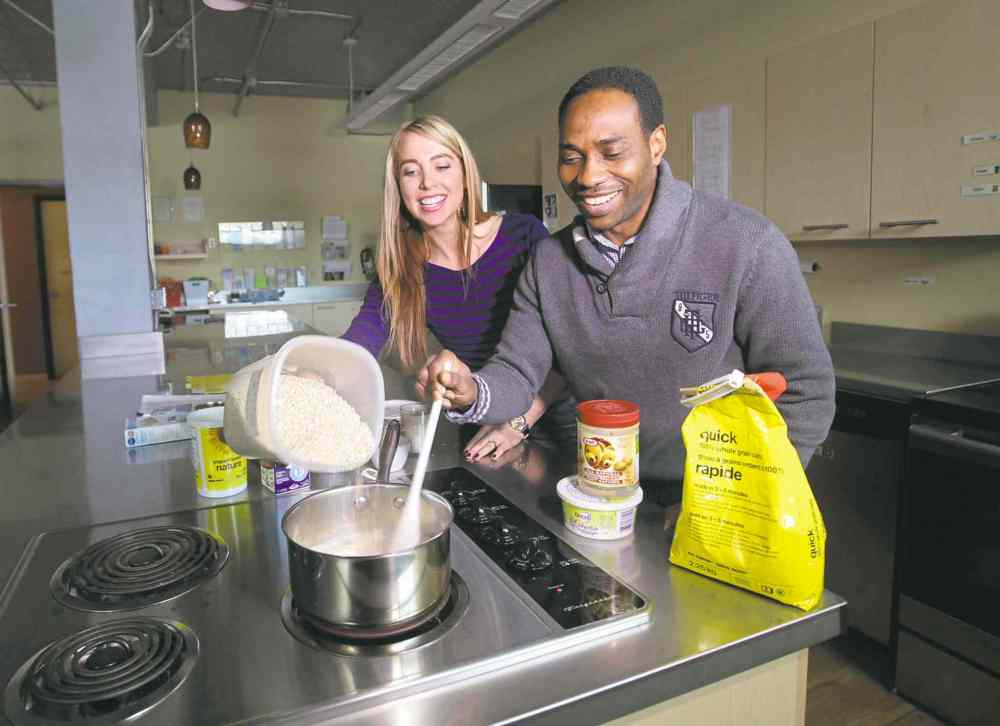
Service at the Immigrant Centre is free of charge.
He and fellow students were not only shown their way around the kitchen but were taken to a grocery store to learn how to comparison-shop and select healthy food options, such as spinach and other vegetables, as well as nuts and meat.
“I know the quantity of what I should eat, I understand the measurements and what is good and bad for my health,” he said.
Nutrition and food are big issues around the Christmas holidays, but they typically fall off the radar once the new year arrives, said Valerie Broeska, manager of nutrition services at the Immigrant Centre. That’s when donations of both volunteer time and money tend to fall off.
A lot of newcomers experience “food insecurity” — a lack of affordable and culturally acceptable food — for them and their families, she said.
That could be because the closest grocery store to their home might not stock food they were familiar with back home in the Philippines, India, Nigeria and China (the top four sources of newcomers to Winnipeg).
“For refugee-status immigrants, our food supply is very foreign. They don’t know what many of the foods are in our grocery stores. As a result, they don’t know how to prepare them or identify if that food is healthy or unhealthy,” she said.
Food-insecurity risk usually improves with time as people get more settled in their new surroundings, become better accustomed to the culture, find various grocery stores in their neighbourhoods and get connected with government programs.
Perhaps ironically, the health of many newcomers often regresses the longer they’ve been in Canada, Broeska said.
‘For refugee-status immigrants, our food supply is very foreign. They don’t know what may of (our) foods are’
“Canada likes educated and generally younger populations and they tend to be people who are in good health. The exception is government-assisted refugees. But the longer they live in Canada, the more their health tends to decline as a result of adopting our typically less-healthy westernized diet and participating in less physical activity,” she said.

Sabitu said he would like to see the Immigrant Centre’s nutrition programming become mandatory for at least one member of each new family to Winnipeg.
“When people are eating what they’re not used to, they start eating junk food. They don’t know what to do,” he said.
But not all of the credit for Sabitu’s success is due to the Immigrant Centre. He said his sporting background in Nigeria also helped prepare him to learn about food.
“I want to maintain my athletic look,” he said.
geoff.kirbyson@freepress.mb.ca