

‘Important part of Canada’s safety net’
O’Regan to meet with provincial counterparts in bid to implement 10 days of paid leave
Advertisement
Read this article for free:
or
Already have an account? Log in here »
To continue reading, please subscribe:

Digital Subscription
One year of digital access for only $205*
- Enjoy unlimited reading on winnipegfreepress.com
- Read the E-Edition, our digital replica newspaper
- Access News Break, our award-winning app
- Play interactive puzzles
*First annual payment billed as $205.00 + GST for one year. This annual subscription will automatically renew at $233.00 + GST every 52 weeks (10% off the regular annual price of $259.35). Offer available to new and qualified returning subscribers only. Cancel any time.
To continue reading, please subscribe:
Add Free Press access to your Brandon Sun subscription for only an additional
$1 for the first 4 weeks*
- Enjoy unlimited reading on winnipegfreepress.com
- Read the E-Edition, our digital replica newspaper
- Access News Break, our award-winning app
- Play interactive puzzles
*Your next Brandon Sun subscription payment will increase by $1.00 and you will be charged $17.95 plus GST for four weeks. After four weeks, your payment will increase to $24.95 plus GST every four weeks.
Read unlimited articles for free today:
or
Already have an account? Log in here »
Hey there, time traveller!
This article was published 22/02/2022 (1670 days ago), so information in it may no longer be current.
OTTAWA — The federal government will press Manitoba to implement 10 days of paid sick leave, while moving ahead with its own COVID-19 vaccination mandate for some agricultural workers.
Federal Labour Minister Seamus O’Regan said his government wants to shore up Canada’s defences against COVID-19 in case a worse variant emerges, and make it easier for people to phone in sick post-pandemic.
“We feel this is an important part of Canada’s social safety net,” O’Regan told the Free Press.
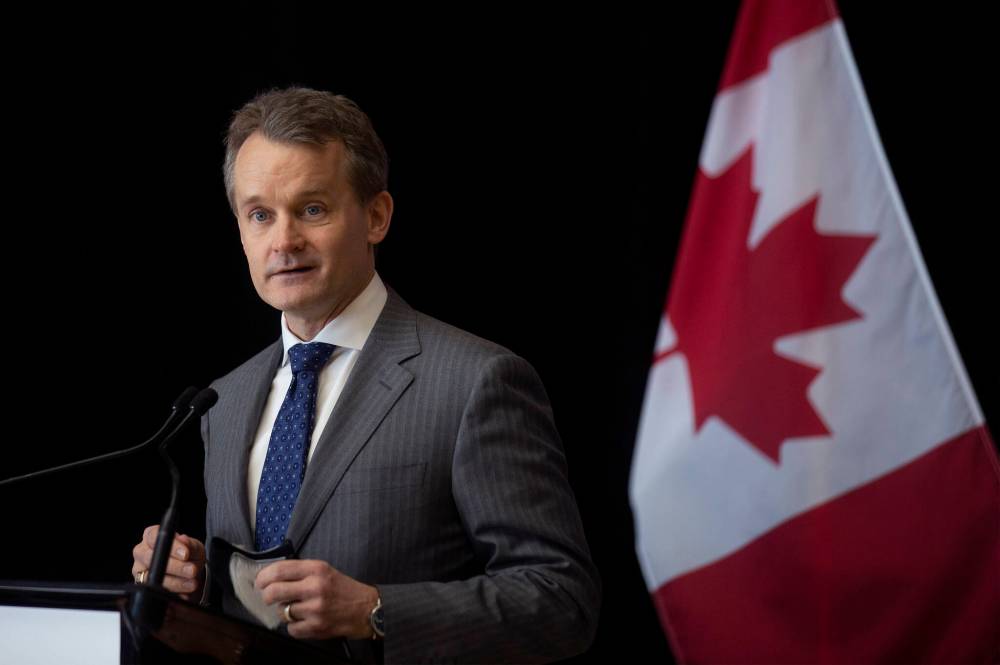
He’ll meet Feb. 25 with his provincial counterparts, in part to touch base on Ottawa’s pledge to implement 10 days of paid leave for all federally regulated workspaces.
Those jobs account for just six per cent of Canada’s workforce, and O’Regan has no clear sense of when paid leave will actually come into place, despite Parliament passing legislation last December.
The Liberals will only formally launch consultations next month, after hearing from business and union groups.
“We’ll move absolutely as quickly as we can (but) we want to take the time to do it right,” said O’Regan, predicting it will take months before Ottawa drafts the rules.
“Where bad regulation can take place and rear its head is in the details; in the weeds.”
While his team sorts out specifics, O’Regan will be asking provinces to broaden their own labour rules to include 10 days of paid sick leave.
Those 10 days originally reflected the time it takes to isolate after a COVID-19 exposure, but he argues that could in future prevent staff from spreading other infectious diseases, which put companies at risk of multiple absences.
“We’ve got to make sure we don’t overburden a lot of businesses that are already feeling the pain,” he said.
“At the same time, we recognize that we have to ensure workers have the rights that they need, not only to look after themselves but … their workplaces, and the country.”
Statistics Canada data shows 58 per cent of Canadian workers didn’t have access to paid sick leave, including 55 per cent of Manitobans, as of 2016. The agency is still processing more recent data from the General Social Survey.
Manitoba is among the stingiest provinces for those who do qualify for sick leave, offering just three days of unpaid leave for anything from illness to bereavement, though employers and union contracts can offer more than that.
Most provinces only offer unpaid leave, while Quebec is the most generous of the 10, with up to 130 paid sick days.
In May 2020, Manitoba’s PC government was among the first to call for a national paid sick leave program, but only related to COVID-19. The province now offers just five days of paid leave through a pandemic program that labour groups argue is hard to access.
O’Regan says Ottawa will share its homework from the ongoing consultations, which could make it easier for provinces to craft their paid-leave policies.
“There’s a difference between being respectful of jurisdiction and getting caught up in it, and how allowing it to be an obstacle, to doing things that we need to do,” he said.
Meanwhile, O’Regan said the Liberals are pushing ahead with their plans to expand a federal vaccination mandate beyond the public service to include private workplaces that are regulated by Ottawa.
That would mean COVID-19 vaccination would be mandatory for people working in ports, phone companies, railways and certain agricultural tasks.
“If we’re going to finish the fight against COVID, Canadians have got to get vaccinated,” said O’Regan, who argued that having passed the Omicron peak doesn’t mean another variant won’t hit Canada hard.
“We have some breathing room to make sure we get this right, and that whatever we put into place is effective and the least intrusive as possible.”
While firms have already implemented vaccine mandates in white-collar workplaces that Ottawa regulates — such as banking and broadcasting — agricultural groups have warned of pushback among those working in grain elevators, seed mills and feed warehouses, all of which are federally regulated.
The Winnipeg-based Western Grain Elevator Association has asked for Ottawa to compensate employers who face staffing drops when the mandate is applied, and to assume all liability for human-rights and privacy complaints.
O’Regan wouldn’t give a hint as to how Ottawa might navigate those concerns.

Some Conservative MPs, such as Ted Falk of Provencher, have argued these mandates are unnecessarily punitive, when Canada already has one of the highest immunizations rate in the world.
That’s a common point raised in trucker-led convoys seen this month on Parliament Hill, the Manitoba Legislative Building in Winnipeg and the Emerson border crossing.
O’Regan said those protests won’t dissuade his government.
“What would be hurtful to workplaces and the competitiveness of the country is people actually getting COVID … not necessarily mandates, or anything like that.”
dylan.robertson@freepress.mb.ca