

MMIWG draft ready after one hearing
Advertisement
Read this article for free:
or
Already have an account? Log in here »
To continue reading, please subscribe:

Digital Subscription
One year of digital access for only $205*
- Enjoy unlimited reading on winnipegfreepress.com
- Read the E-Edition, our digital replica newspaper
- Access News Break, our award-winning app
- Play interactive puzzles
*First annual payment billed as $205.00 + GST for one year. This annual subscription will automatically renew at $233.00 + GST every 52 weeks (10% off the regular annual price of $259.35). Offer available to new and qualified returning subscribers only. Cancel any time.
To continue reading, please subscribe:
Add Free Press access to your Brandon Sun subscription for only an additional
$1 for the first 4 weeks*
- Enjoy unlimited reading on winnipegfreepress.com
- Read the E-Edition, our digital replica newspaper
- Access News Break, our award-winning app
- Play interactive puzzles
*Your next Brandon Sun subscription payment will increase by $1.00 and you will be charged $17.95 plus GST for four weeks. After four weeks, your payment will increase to $24.95 plus GST every four weeks.
Read unlimited articles for free today:
or
Already have an account? Log in here »
Hey there, time traveller!
This article was published 22/08/2017 (3325 days ago), so information in it may no longer be current.
Despite holding just one hearing, the National Inquiry into Missing and Murdered Indigenous Women and Girls has a report ready for Prime Minister Justin Trudeau — months ahead of Ottawa’s deadline.
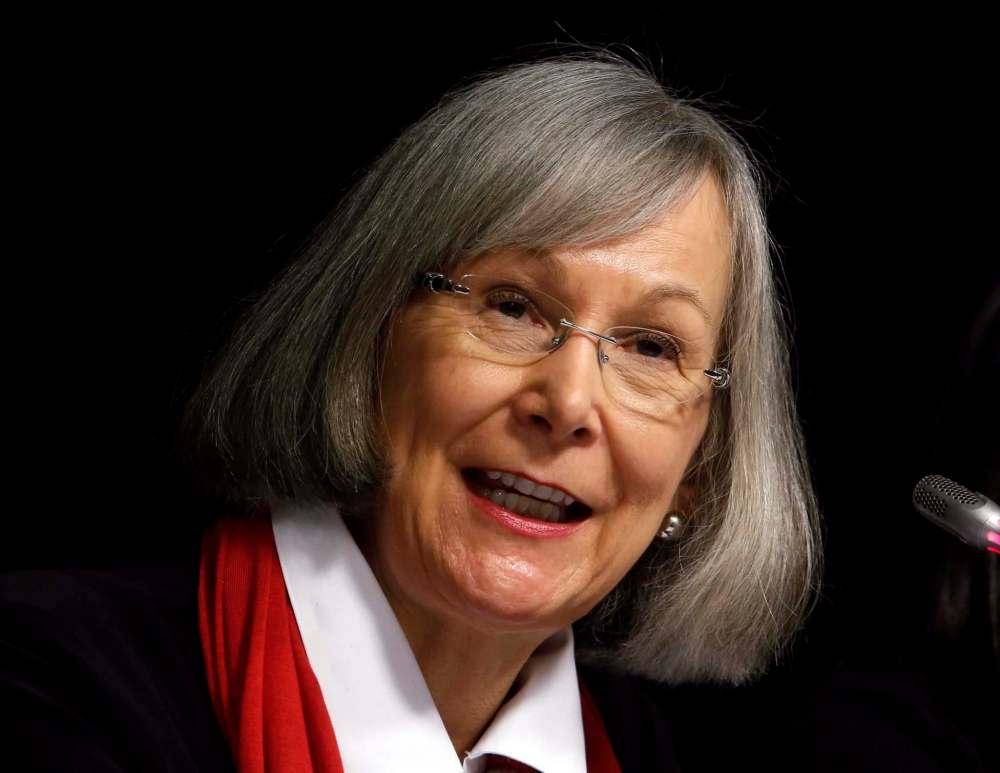
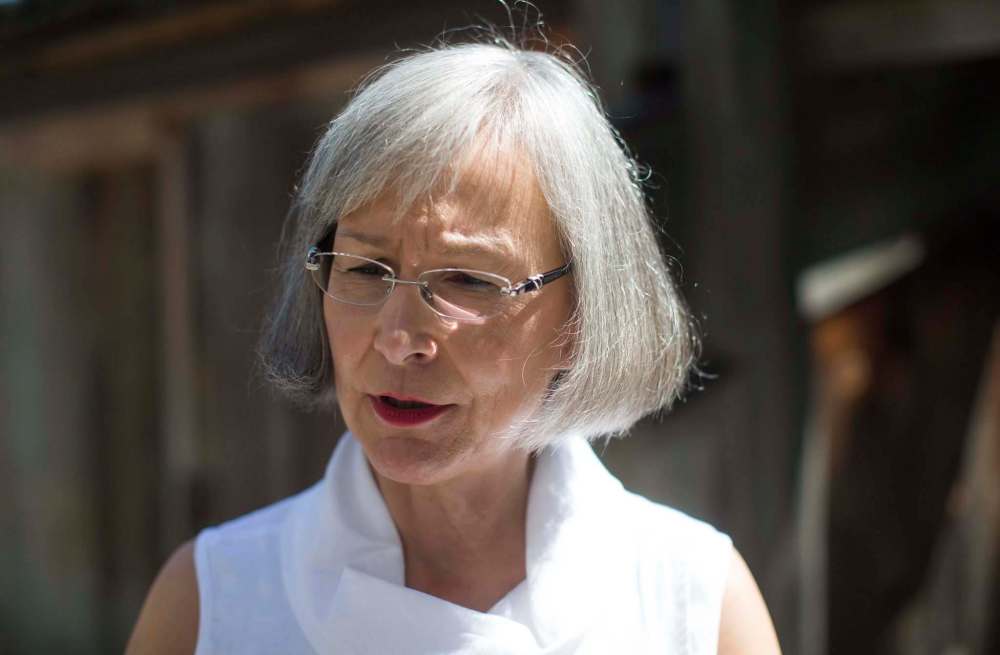
Inquiry chief commissioner Marion Buller disclosed the update Tuesday in Winnipeg.
“We’ve pretty much completed the first draft of our interim report,” Buller said. “It’s pretty much done. It has to be translated, of course. The body of it is pretty much done.”
Ottawa ordered the inquiry to produce two reports — an interim report in November and a final one in November 2018 — after the federal Liberals set up the commission last year with a $53.8-million budget to probe the root causes of violence against Indigenous women and girls.
The inquiry has thus far held just one set of hearings: gathering testimony from victims’ relatives in Whitehorse this spring.
It is set to roll out a series of hearings starting in September in Thunder Bay. The inquiry will be active Oct. 16 in Winnipeg. The city has been considered an epicentre of the issue after searchers pulled the body of 15-year-old Tina Fontaine from the Red River in 2014, igniting a national firestorm about the abuse of Indigenous women.
Some 600 relatives have registered with the inquiry to share their family stories, but the process has been the focus of criticism.
Families have taken to social and mainstream media to denounce the process for its lack of transparency and communication flaws. There have been series of high-profile resignations from the inquiry, including one of the appointed commissioners. Twice this summer, Indigenous leaders and advocates have insisted Ottawa reset the process by releasing the remaining commissioners and appointing new ones.
Through it all, the inquiry moves forward.
The commissioners, along with invited elders and others, were in Winnipeg to participate in a three-day forum featuring a number of academics, lawyers and experts on the fundamentals of Indigenous law and decolonization.
When one critic mused openly the Winnipeg forum might be used to generate a report in the absence of witness testimony, Buller ready with a response.
“Don’t forget,” she said, “there’s a whole side of the work we’re doing that isn’t visible. We have a research team that has already started reviewing documents, reports and other (earlier) work. They form part of our terms of reference.”
Experts panels are part of a three-part process the inquiry is using, but not much is known about them; the Winnipeg forum is one of the first to be open to the public.
The second part of the process is testimony from family at hearings.
The final part of the inquiry’s work is to probe institutional factors, with witnesses to be drawn from police, social workers, government officials and professionals (such as coroners) at hearings expected in 2018.
The disappearances and murders go back decades; RCMP in 2014 put the number of the missing and murdered at nearly 1,200. British Columbia held its own inquiry into missing and murdered Indigenous women along a 720-kilometre stretch of highway known as the Highway of Tears.
Tuesday’s meeting in Winnipeg encapsulated the state of confusion that usually accompanies the inquiry.
In this case, the focus was to learn about various forms of Indigenous law in Canada and what decolonization might look like for Canadians. It was a class for the commission and the public was welcome to take it in — but it wasn’t publicized as a class for the commission. However, relatives of missing and murdered loved ones attended, believing the forum was for them.

Assembly of First Nations Manitoba vice-chief Kevin Hart said the forum was where lawyers for groups such as the AFN posed questions about traditional Indigenous systems of law to a panel of experts.
Commissioners, inquiry staff and groups following the inquiry listened in on the responses. Meanwhile, family members in attendance openly questioned the usefulness of the exercise.
“This is for academics, mostly,” said Maggie Cywink, whose relative, Sonya Nadine Mae Cywink, disappeared near London, Ont., in 1994. Her body was found four days later; no one has been charged in her homicide.
“It’s certainly not useful for families. Families weren’t notified about this and there was no formal invitation. They hear the word ‘hearing’ and they think, ‘Oh, it’s my turn to tell my story,’ but then they come and feel shut out of the process.”
alexandra.paul@freepress.mb.ca