

Indigenous students thrive with cultural support
Advertisement
Read this article for free:
or
Already have an account? Log in here »
To continue reading, please subscribe:

Digital Subscription
One year of digital access for only $205*
- Enjoy unlimited reading on winnipegfreepress.com
- Read the E-Edition, our digital replica newspaper
- Access News Break, our award-winning app
- Play interactive puzzles
*First annual payment billed as $205.00 + GST for one year. This annual subscription will automatically renew at $233.00 + GST every 52 weeks (10% off the regular annual price of $259.35). Offer available to new and qualified returning subscribers only. Cancel any time.
To continue reading, please subscribe:
Add Free Press access to your Brandon Sun subscription for only an additional
$1 for the first 4 weeks*
- Enjoy unlimited reading on winnipegfreepress.com
- Read the E-Edition, our digital replica newspaper
- Access News Break, our award-winning app
- Play interactive puzzles
*Your next Brandon Sun subscription payment will increase by $1.00 and you will be charged $17.95 plus GST for four weeks. After four weeks, your payment will increase to $24.95 plus GST every four weeks.
Read unlimited articles for free today:
or
Already have an account? Log in here »
Hey there, time traveller!
This article was published 03/11/2019 (2489 days ago), so information in it may no longer be current.
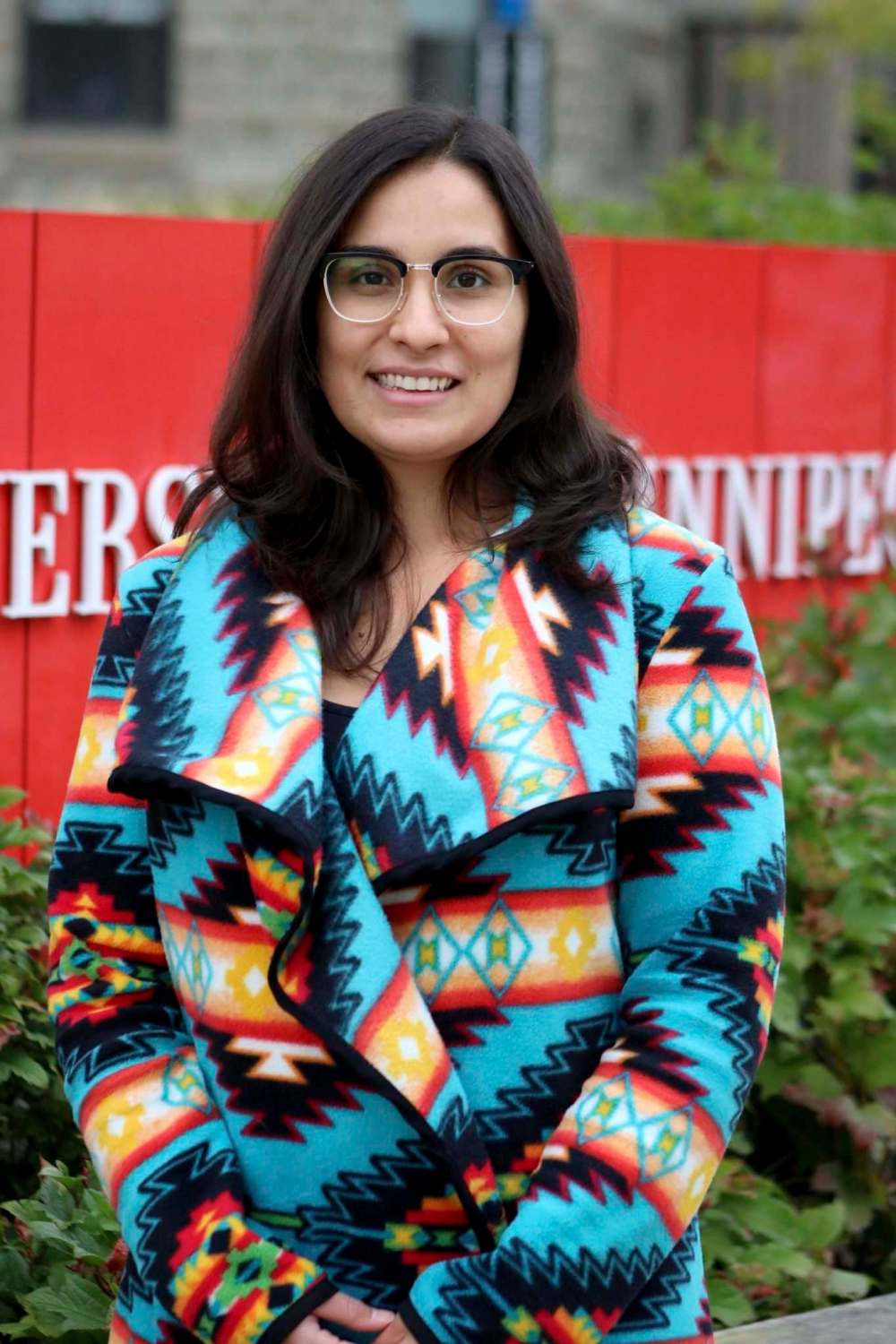
Gabby Glowatsky learned the hard way why it was essential for her to get a high school diploma.
As a 15-year-old, Glowatsky dealt with an abusive boyfriend and alcoholism.
She tried to take her own life — then spent two weeks recovering at St. Boniface Hospital.
When Glowatsky returned to school, she said officials told her she needed extra help — help they couldn’t give to her and that she should find elsewhere.
She didn’t, and wound up dropping out in Grade 11.
It wasn’t unfamiliar territory. Almost everyone in her family had dropped out too, she said.
But Glowatsky’s story isn’t the only of its kind in Manitoba.
The government of Manitoba’s website shows only 48.5 per cent of Indigenous students graduated from high school in 2018.
That number was 87.9 per cent for non-Indigenous students. Schools submit their graduation data to the government each year so it can publish the results.
It’s extremely difficult to get a job without a high school diploma and there can be serious economic and social consequences for people as a result.
A 2017 Statistics Canada report shows that without a diploma, the most common job for men is construction work and for women it’s cleaning.
A year after dropping out, Glowatsky decided she wanted to become a veterinarian.
But without graduating high school, she couldn’t achieve the life she wanted. She went to the Winnipeg Adult Education Centre and got her diploma in 2013, a year late.
Glowatsky is now taking pre-veterinary medicine at the University of Winnipeg.
“I didn’t even know I could have a career,” said Glowatsky, now 25. “I always viewed myself as a working-class person rather than someone with potential.”
Child and Family Services (CFS) works with a lot of Indigenous children who have been in situations similar to Glowatsky’s.
Janel Fiddler, a 25-year-old early intervention worker, said Indigenous students deal with the effects residential schools have on their families. On top of this, the schools these students go to often aren’t equipped to deal with the intergenerational trauma they face.
A youth’s trauma, Fiddler said, can stem from mental and physical abuse and substances are used to cope. In Glowatsky’s case, she used alcohol.
Fiddler said most Indigenous students she works with come from small reserves and have to make the transition to a large urban student population.
The transition, she said, along with their trauma, draws out social anxiety and mental-health problems.
“I think a lot of stuff just goes unresolved and it’s eating away at the students,” Fiddler said.
But one British Columbia school district’s work on Indigenous education seems to be showing some success after restructuring its school system to focus around correcting historical wrongs.
Sea to Sky School District in the Squamish area of B.C. graduated just 39 per cent of its Indigenous students in 2009.
When Supt. Lisa McCullough went to the board a year later, she pledged to address what she referred to as the “Indigenous learner crisis.”
The board hired her and began a school system transformation. Today, the district now graduates close to 98 per cent of its Indigenous students.
In Manitoba, students are generally expected to finish high school in four years.
But in Sea to Sky, officials pushed it to six and tracked their graduation starting at Grade 8 instead of Grade 9 as Manitoba does.
Susan Leslie, the district director of instruction, said they built the system with reconciliation as the driving force.
They sought help from Reconciliation Canada’s ambassador, Gwawaenuk First Nation Hereditary Chief Dr. Robert Joseph, to craft the plan.
Leslie said they started by inviting elders from local communities to tell their stories of the hardships they’ve faced in a student-facilitated meeting that was treated as a traditional ceremony. Leslie said every single person in the school district who works with students was invited to the meeting.
“In order to do this work, we have to open the hearts to the people to understand what our people have gone through,” Leslie said.
More than 40 teachers, community members and the school district board at Sea to Sky worked on gathering the strategic plan they use today. An elder said there needed to be balance like there is in the medicine wheel. So, with the First Nation’s support, Leslie said they built the plan around the wheel.
The medicine wheel is a circle with four coloured quadrants — yellow, red, black and white. It teaches the four directions, the four seasons, the four elements, the four spirit animals, smudging plants, heavenly bodies and the four stages of life. These seven teachings create balance and Leslie said they used it as a construct, so people understand the importance of a balanced life in education.
Sea to Sky School District’s new system does morning announcements, assemblies and gatherings in the language of the territory. Students have opportunities to learn outside and study natural resources through an Indigenous perspective, the schools have Indigenous cultural events and there are tracked graduation plans for every Indigenous student in the district.
Success advisors support the Indigenous students through challenges, tutor them, train their teachers and families and create plans for those not passing the course. If a student misses school without reason, Leslie said she goes to their house to meet with the family and bring the student back to school.
The Winnipeg School Division (WSD) has Indigenous graduation coaches, but not every Indigenous student uses one.
Division spokeswoman Radean Carter said students use a grad coach based on three levels of need. Indigenous students who “really need” a coach have one all the time, those who “kind of” need one meet with their coach to check in, and some students, Carter said, are “self-directed” and don’t have a grad coach.
Sea to Sky School District’s plan has drastically improved its Indigenous graduation rates but it is still dealing with some challenges.
Leslie said Indigenous students’ literacy and numeracy scores are also well below where they need to be when graduation time comes, so most students often take an extra year of upgrading in those areas before they graduate.
Students in the school district took vulnerability assessments.
Results showed Indigenous students were the most vulnerable, meaning they have the most barriers to success, Leslie said.

The WSD also has Indigenous education initiatives, including a powwow, Indigenous literature and author studies, and students have the opportunity to learn Cree and Ojibwa.
But Fiddler said reconciliation was only recently brought into the school curriculum in Manitoba and there’s so much more that can be done with it.
She said Indigenous students need a sense of identity and a way to connect with their culture.
“There is a light at the end of the tunnel,” Fiddler said. “We just have to make them see it.”
Becca Myskiw is a student in Red River College’s Creative Communications program.
History
Updated on Wednesday, November 13, 2019 1:56 PM CST: Clarifies job title.