

International students boost universities’ bottom line

Advertisement
Read this article for free:
or
Already have an account? Log in here »
To continue reading, please subscribe:
Monthly Digital Subscription
$1 per week for 24 weeks*
- Enjoy unlimited reading on winnipegfreepress.com
- Read the E-Edition, our digital replica newspaper
- Access News Break, our award-winning app
- Play interactive puzzles
*Billed as $4.00 plus GST every four weeks. After 24 weeks, price increases to the regular rate of $19.95 plus GST every four weeks. Offer available to new and qualified returning subscribers only. Cancel any time.
Monthly Digital Subscription
$4.99/week*
- Enjoy unlimited reading on winnipegfreepress.com
- Read the E-Edition, our digital replica newspaper
- Access News Break, our award-winning app
- Play interactive puzzles
*Billed as $19.95 plus GST every four weeks. Cancel any time.
To continue reading, please subscribe:
Add Free Press access to your Brandon Sun subscription for only an additional
$1 for the first 4 weeks*
*Your next subscription payment will increase by $1.00 and you will be charged $16.99 plus GST for four weeks. After four weeks, your payment will increase to $23.99 plus GST every four weeks.
Read unlimited articles for free today:
or
Already have an account? Log in here »
Hey there, time traveller!
This article was published 25/07/2019 (2465 days ago), so information in it may no longer be current.
Universities and colleges across Canada are increasingly relying on international students — who pay higher tuition fees than Canadian students — to boost their revenue, recent data shows.
In Manitoba in the past five years, tuition revenue has increased by about 20 per cent. It’s up by about 29 per cent at colleges and universities across Canada, and Statistics Canada researchers attribute the increases largely to increasing rates of enrolment by international students.
“International students are a massive, massive contributor to the economy,” in Manitoba, University of Manitoba Students’ Union president Jakob Sanderson said.
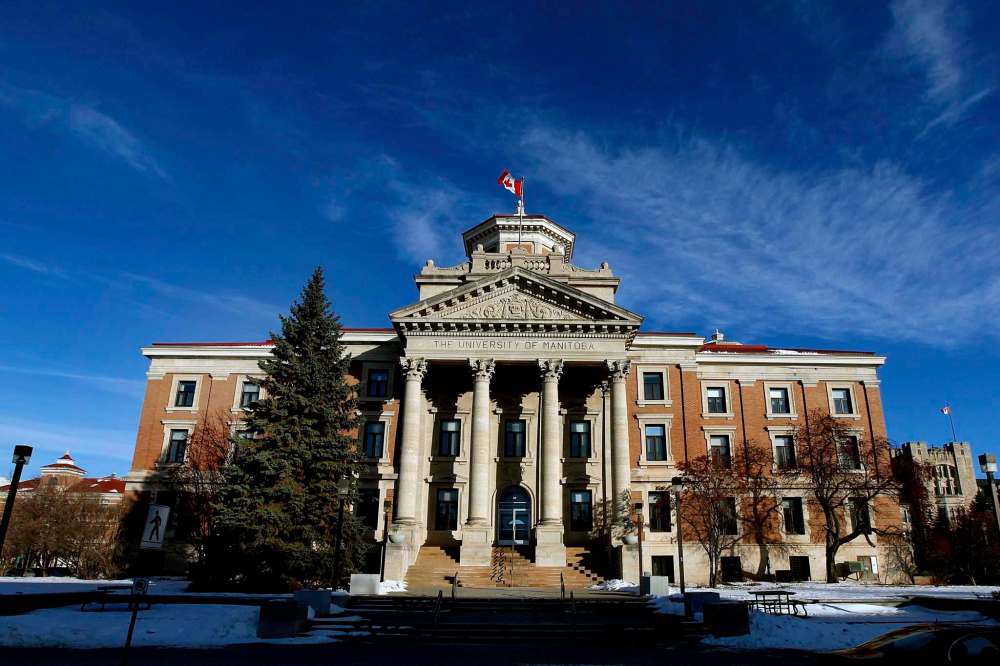
As a representative of 26,000 students at the province’s largest university, Sanderson said issues related to international students have become a priority for the student union. They are often concerned about their financial struggles, he said.
“International students are feeling less and less that this is a province that values them,” as much as they contribute via their tuition and other student fees, he said.
He cited Manitoba’s privatization of health insurance coverage for international students last year and the decision to scrap a tuition rebate tax credit.

!function(e,t,s,i){var n=”InfogramEmbeds”,o=e.getElementsByTagName(“script”)[0],d=/^http:/.test(e.location)?”http:”:”https:”;if(/^/{2}/.test(i)&&(i=d+i),window[n]&&window[n].initialized)window[n].process&&window[n].process();else if(!e.getElementById(s)){var r=e.createElement(“script”);r.async=1,r.id=s,r.src=i,o.parentNode.insertBefore(r,o)}}(document,0,”infogram-async”,”https://e.infogram.com/js/dist/embed-loader-min.js”);
At U of M, international students in undergraduate programs pay about 3.4 times more tuition than Canadian undergrads, and about double the tuition of Canadian graduate students.
The tuition-revenue data were released by Statistics Canada Wednesday as part of a wide-ranging provincial breakdown of revenue sources and expenses at post-secondary institutions. The agency said Manitoba universities and colleges brought in $1.4 billion in 2017-18 and spent roughly $1.1 billion. Their biggest expenses were salaries and employee benefits, followed closely by the cost of buildings and land.
Most of the money coming into colleges and universities comes from the provincial government for operating costs. That funding increased by nearly four per cent over the past five years in Manitoba. Federal funding for things such as research grants increased by about 20 per cent during the same time.
Tuition revenue in Manitoba hit more than $248 million in 2017-18, and made up about 17 per cent of the total revenue for universities and colleges across the province, the data show.
Meanwhile, the population of international students at the U of M is increasing — by 44 per cent since 2013 — while enrolment for Canadian students is on a slight decline.
Carl Neumann, president of the University of Manitoba Graduate Students’ Association, said he’s aware a “substantial portion” of users of the university’s food bank are international students, who account for one-third of all grad students.
Neumann said he’s working with other advocates to try to get the province to restore public health insurance for international students.
Neumann said he doesn’t believe international grad students are regarded as a source of revenue.

About 80 per cent of the differential fees they pay go back into bursaries and scholarships for international students, he said.
But, he said, international students in Manitoba have endured a “substantial financial hit,” with rising tuition fees and the cancellation of public health plans.
“It’s definitely a strain for many students,” he said.
katie.may@freepress.mb.ca
Twitter: @thatkatiemay
Katie May is a multimedia producer for the Free Press.
Our newsroom depends on a growing audience of readers to power our journalism. If you are not a paid reader, please consider becoming a subscriber.
Our newsroom depends on its audience of readers to power our journalism. Thank you for your support.
Katie May is a multimedia producer for the Free Press.
Our newsroom depends on a growing audience of readers to power our journalism. If you are not a paid reader, please consider becoming a subscriber.
Our newsroom depends on its audience of readers to power our journalism. Thank you for your support.
Advertisement Advertise With Us
Advertisement Advertise With Us