

Judge cites systemic issues in four-year sentence for killing mother

Advertisement
Read this article for free:
or
Already have an account? Log in here »
To continue reading, please subscribe:
Monthly Digital Subscription
$1 per week for 24 weeks*
- Enjoy unlimited reading on winnipegfreepress.com
- Read the E-Edition, our digital replica newspaper
- Access News Break, our award-winning app
- Play interactive puzzles
*Billed as $4.00 plus GST every four weeks. After 24 weeks, price increases to the regular rate of $19.95 plus GST every four weeks. Offer available to new and qualified returning subscribers only. Cancel any time.
Monthly Digital Subscription
$4.99/week*
- Enjoy unlimited reading on winnipegfreepress.com
- Read the E-Edition, our digital replica newspaper
- Access News Break, our award-winning app
- Play interactive puzzles
*Billed as $19.95 plus GST every four weeks. Cancel any time.
To continue reading, please subscribe:
Add Free Press access to your Brandon Sun subscription for only an additional
$1 for the first 4 weeks*
*Your next subscription payment will increase by $1.00 and you will be charged $16.99 plus GST for four weeks. After four weeks, your payment will increase to $23.99 plus GST every four weeks.
Read unlimited articles for free today:
or
Already have an account? Log in here »
Hey there, time traveller!
This article was published 10/07/2020 (2094 days ago), so information in it may no longer be current.
A Berens River man who fatally assaulted his mother while drunk has been sentenced to more than four years custody, in a case a judge described as another troubling example of the “ruin” of First Nations people following generations of governmental marginalization.
Anthony McKay, 23, pleaded guilty to manslaughter for a June 2018 attack that ended in the death of his mother, Shirley McKay, 57, several months later.
“Like so many other cases, this case is troubling, not only for its specific facts, but because it’s a reminder that core issues affecting many in the Indigenous population are not really being addressed sufficiently or urgently enough,” Queen’s Bench Justice Chris Martin said Friday, noting he has two other cases of Indigenous men before him, awaiting sentencing for killing Indigenous women.
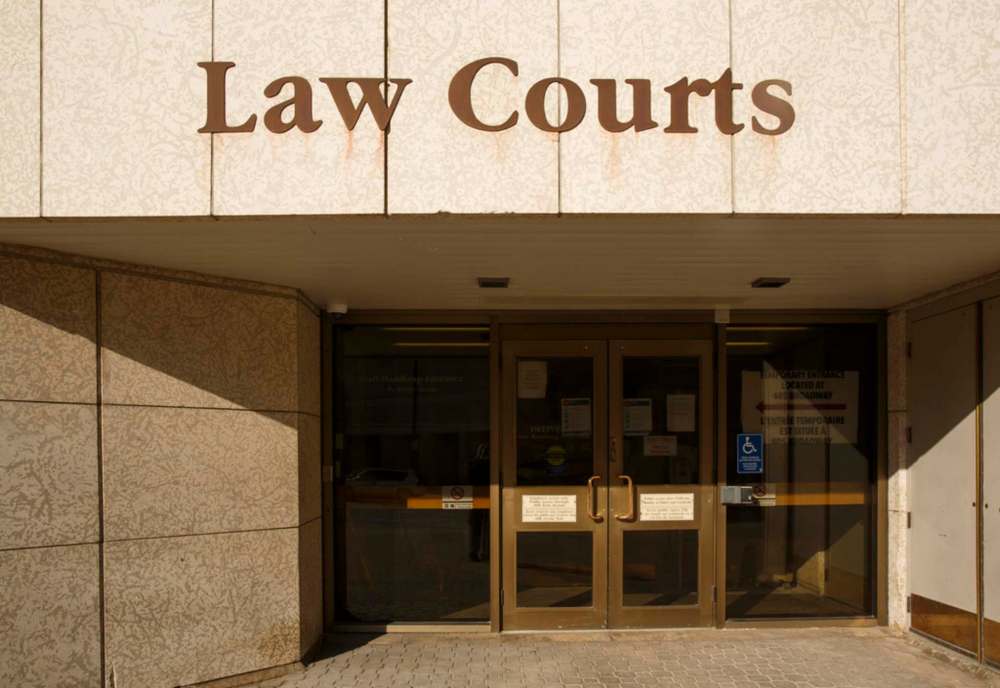
“The ruin of the First Nations and peoples of Canada (are) not just statistics — as seen here, it is real pain,” he said. “As a human, Mrs. McKay deserved better. And like anyone born in this bountiful country, her son, her killer, deserved a better start, a better chance in life.”
Court heard Anthony McKay had been drinking and possibly sniffing solvents when he returned to home at about 2 a.m. Sometime in the hours that followed, he beat his mother unconscious.
A cousin who arrived at the home at 8 a.m. found blood “everywhere” and McKay “clearly drunk,” Martin said.
McKay did not get help for his mother until hours later, when she was taken by police to the local nursing station. She was transported to Winnipeg hospital, where she died in September 2018.
McKay, who has been diagnosed with partial fetal alcohol syndrome, had a childhood marked by neglect, violence, and long periods in foster care.
In 2013, Child and Family Services agreed to his request he be made a permanent ward, when he reported he didn’t feel safe in the care of his mother and siblings. McKay was granted extended care beyond 18, but that ended when he dropped out of high school in Winnipeg and moved back to Berens River First Nation, 270 kilometres north of the city.
Martin said McKay’s personal history was shaped by that of his home community, which, until the 1950s, had been subject to an Indian Act “pass system” that prevented residents from leaving the reserve to fish, hunt, or trap or visit their children off-reserve, such as at a residential school, without permission of the local Indian Agent.
“It is well-accepted that the government’s role, since the early days of dealing with First Nations peoples, has had the effect of isolating, infantilizing, marginalizing and traumatizing Indigenous societies like the Ojibwa (or Anishinaabe) of Berens River,” Martin said.
McKay’s mother was his sole support, and he has shown “genuine and deep remorse,” Martin said. “Without his admission to police, the Crown case would have been especially frail.”

The Crown recommended McKay be sentenced to seven years in prison; the defence countered at 50 months. While at “the very low end,” the defence recommendation was within the range of a fit sentence, when coupled with three years supervised probation geared at rehabilitating McKay, Martin said.
“The set of circumstances surrounding a young Indigenous man killing the mother he loves, his only real support, is uniquely unusual,” Martin said.
“It must be prominently recognized that Mr. McKay is cognitively and psychologically damaged by the circumstances he was born into and his upbringing,” the judge said.
“To be clear, his being a troubled product of his upbringing does not excuse his grievous behaviour here, but it does help explain what he did by understanding some root causes of why he is who he is.”
dean.pritchard@freepress.mb.ca
Dean Pritchard is courts reporter for the Free Press. He has covered the justice system since 1999, working for the Brandon Sun and Winnipeg Sun before joining the Free Press in 2019. Read more about Dean.
Every piece of reporting Dean produces is reviewed by an editing team before it is posted online or published in print — part of the Free Press‘s tradition, since 1872, of producing reliable independent journalism. Read more about Free Press’s history and mandate, and learn how our newsroom operates.
Our newsroom depends on a growing audience of readers to power our journalism. If you are not a paid reader, please consider becoming a subscriber.
Our newsroom depends on its audience of readers to power our journalism. Thank you for your support.
Dean Pritchard is courts reporter for the Free Press. He has covered the justice system since 1999, working for the Brandon Sun and Winnipeg Sun before joining the Free Press in 2019. Read more about Dean.
Every piece of reporting Dean produces is reviewed by an editing team before it is posted online or published in print — part of the Free Press‘s tradition, since 1872, of producing reliable independent journalism. Read more about Free Press’s history and mandate, and learn how our newsroom operates.
Our newsroom depends on a growing audience of readers to power our journalism. If you are not a paid reader, please consider becoming a subscriber.
Our newsroom depends on its audience of readers to power our journalism. Thank you for your support.
Advertisement Advertise With Us
Advertisement Advertise With Us