

Judge urges technology upgrade
Justice 'frustrated and surprised' by poorly recorded audio evidence

Advertisement
Read this article for free:
or
Already have an account? Log in here »
To continue reading, please subscribe:
Monthly Digital Subscription
$1 per week for 24 weeks*
- Enjoy unlimited reading on winnipegfreepress.com
- Read the E-Edition, our digital replica newspaper
- Access News Break, our award-winning app
- Play interactive puzzles
*Billed as $4.00 plus GST every four weeks. After 24 weeks, price increases to the regular rate of $19.95 plus GST every four weeks. Offer available to new and qualified returning subscribers only. Cancel any time.
Monthly Digital Subscription
$4.99/week*
- Enjoy unlimited reading on winnipegfreepress.com
- Read the E-Edition, our digital replica newspaper
- Access News Break, our award-winning app
- Play interactive puzzles
*Billed as $19.95 plus GST every four weeks. Cancel any time.
To continue reading, please subscribe:
Add Free Press access to your Brandon Sun subscription for only an additional
$1 for the first 4 weeks*
*Your next subscription payment will increase by $1.00 and you will be charged $16.99 plus GST for four weeks. After four weeks, your payment will increase to $23.99 plus GST every four weeks.
Read unlimited articles for free today:
or
Already have an account? Log in here »
Hey there, time traveller!
This article was published 25/03/2019 (2586 days ago), so information in it may no longer be current.
The quality of secret recordings police gather while investigating some of Manitoba’s most serious crimes has been called into question, shining a spotlight on the rarity of forensic audio analysis in Canada.
Last week, Court of Queen’s Bench Justice Chris Martin spoke out about wiretap and intercepted probe recordings that were difficult to hear because of static, background noise and soft-spoken or whispered conversation.
As he delivered his verdict at a first-degree murder trial, he said he was “frustrated and surprised” by the poor quality of the recordings, which were the Crown’s only direct evidence in the case.
The judge took the unusual step of calling for police to have recording equipment with “first-rate” technology, considering judges have to allow “someone’s deepest privacy to be invaded” when they authorize the use of wiretaps.
“Anecdotally, this is not the first time a murder trial in Manitoba has been in this position,” Martin said. “I expect the investigators and Crown did the best that they could with the resources they had. But evidence in such a condition leaves the investigation, the court, the Crown and the accused in an untenable position. Over time, it erodes confidence in the administration of justice,” he said.
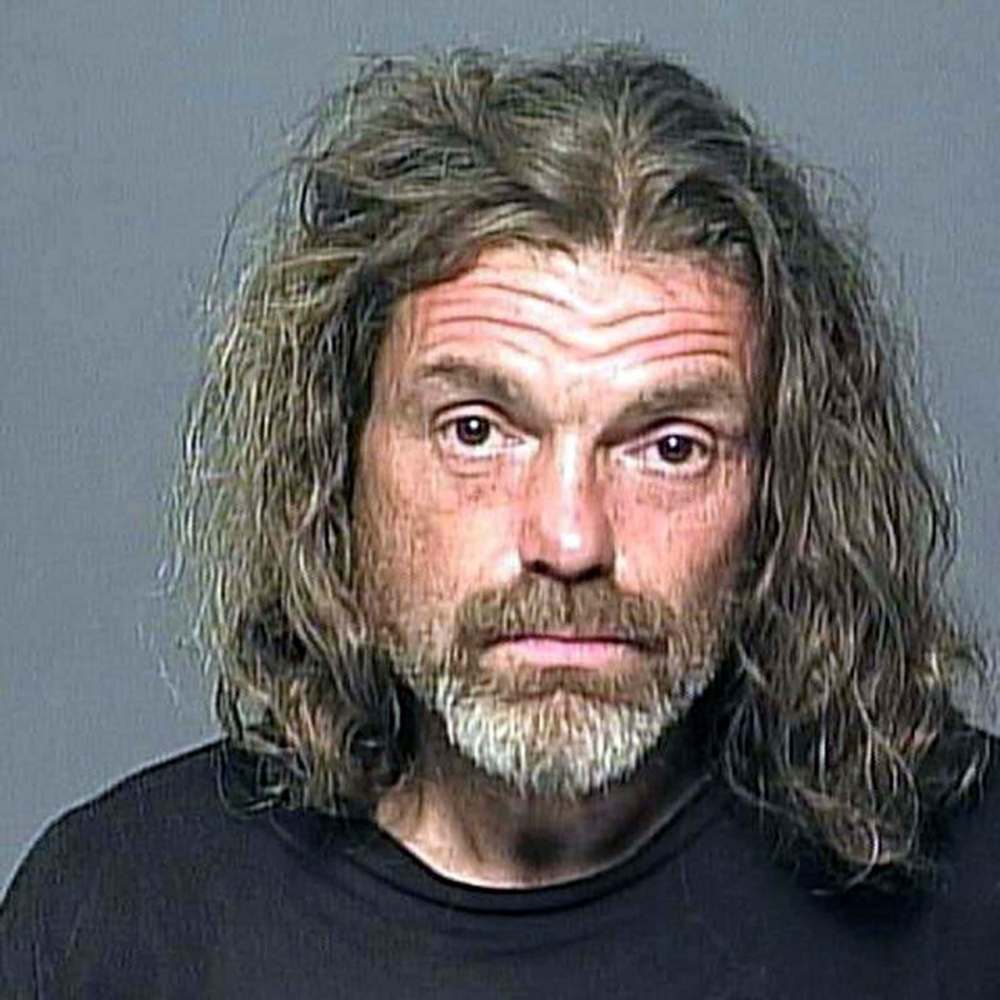
On March 19, Martin found Julian Donally Telfer guilty of first-degree murder in the 2016 drive-by shooting of Theodoros (Teddy) Belayneh. He acquitted co-accused Paige Eveline Crossman.
For more than a month before they were arrested, Winnipeg police investigators listened in on their conversations in their apartments and in their rented vehicles via probes that had been set up to record them. In his decision, Martin said he found Telfer guilty even when disregarding the intercepted recordings.
Wiretap and probe recordings are rarely authorized; they’re usually reserved for the most serious cases. They can become the Crown’s strongest evidence against an accused, such as in last year’s second-degree murder trial of Raymond Cormier. He was acquitted of the high-profile death of 15-year-old Tina Fontaine. In that case, jurors were given headphones to listen to often-unclear or inaudible portions of recordings, and they were reminded that the accompanying transcripts, prepared by police, couldn’t be used to help them make their decision.
“How much weight can be placed on evidence that is that unreliable because of how poor the quality is?” asked Eric Wach, a Winnipeg defence lawyer who has handled several drug cases involving wiretaps.
Those cases sometimes require Crown and defence lawyers to seek outside help to make sure they can play back and hear the recordings properly.
“It’s really labour intensive, because you effectively have to listen to, sometimes, hours and hours and hours of conversations and then compare them to the transcripts to make sure that they’re one and the same,” Wach said.
“Sometimes you do have to turn to audio experts in order to amplify certain portions that can’t be heard. Those experts are very expensive, too, so that comes at a big cost to your client as well.”
In his decision on Telfer and Crossman, Martin not only said police need the best tools, but he questioned whether forensic specialists could have been brought in to help.
“I wondered as I heard the testimony, and later as I adjusted my audio players, whether forensic or professional sound engineers could have brought clarity,” he said.
The Winnipeg Police Service said it was aware of the judge’s comments, but declined an interview request on the subject, saying police can’t talk about their investigative techniques.
Few Canadians are trained to handle forensic audio recordings. David McKay’s company, Blackstone Forensics of Vancouver, is one of only a handful of such firms across the country. The bulk of his clients are involved with civil and criminal court cases.
The forensic audio and video specialist says audio collected in a police investigation can lose quality if it’s improperly extracted from the recording device, when it’s converted to different file formats and when it’s played back on low-quality speakers. Listening without headphones doesn’t help, he said.
“There’s a number of points in time as that recording has made its way through the criminal justice system, that there could be areas where the recording has lost some detail or quality. Really, the job that we do is to ensure that doesn’t happen,” he said.

McKay has taken courses at the National Center for Media Forensics in Denver — most forensic audio specialists are in the U.S. — and he manages the Forensic Video and Surveillance Technology lab at the British Columbia Institute of Technology. He said he is aware of only three or four other companies that do similar work in Canada.
He can clarify or enhance a recording by cutting out background noise, amplifying voices and isolating certain sounds. It requires hours of manual work because there is no “magic” software, he said. There’s “a very fine line in what you can actually do without changing the contents of that recording.”
“You can’t just take any audio engineer that has no training in forensics and have them do the work, because there could be things that they do in their daily sound-editing life that… wouldn’t be acceptable in a forensic setting,” he said.
katie.may@freepress.mb.ca
Twitter: @thatkatiemay
Katie May is a multimedia producer for the Free Press.
Our newsroom depends on a growing audience of readers to power our journalism. If you are not a paid reader, please consider becoming a subscriber.
Our newsroom depends on its audience of readers to power our journalism. Thank you for your support.
Katie May is a multimedia producer for the Free Press.
Our newsroom depends on a growing audience of readers to power our journalism. If you are not a paid reader, please consider becoming a subscriber.
Our newsroom depends on its audience of readers to power our journalism. Thank you for your support.
Advertisement Advertise With Us
Advertisement Advertise With Us
History
Updated on Monday, March 25, 2019 12:15 PM CDT: Updates headline