

Kapyong deal’s long, winding road
Peguis' special status has made negotiations more complex
Advertisement
Read this article for free:
or
Already have an account? Log in here »
To continue reading, please subscribe:
Monthly Digital Subscription
$1 per week for 24 weeks*
- Enjoy unlimited reading on winnipegfreepress.com
- Read the E-Edition, our digital replica newspaper
- Access News Break, our award-winning app
- Play interactive puzzles
*Billed as $4.00 plus GST every four weeks. After 24 weeks, price increases to the regular rate of $19.95 plus GST every four weeks. Offer available to new and qualified returning subscribers only. Cancel any time.
Monthly Digital Subscription
$4.99/week*
- Enjoy unlimited reading on winnipegfreepress.com
- Read the E-Edition, our digital replica newspaper
- Access News Break, our award-winning app
- Play interactive puzzles
*Billed as $19.95 plus GST every four weeks. Cancel any time.
To continue reading, please subscribe:
Add Free Press access to your Brandon Sun subscription for only an additional
$1 for the first 4 weeks*
*Your next subscription payment will increase by $1.00 and you will be charged $16.99 plus GST for four weeks. After four weeks, your payment will increase to $23.99 plus GST every four weeks.
Read unlimited articles for free today:
or
Already have an account? Log in here »
Hey there, time traveller!
This article was published 13/08/2018 (2811 days ago), so information in it may no longer be current.
OTTAWA — The federal government almost clinched a deal to transfer Kapyong Barracks to local First Nations three years before an agreement-in-principle was signed in the spring, the Free Press has learned.
Instead, one of the seven bands that form Treaty One First Nations splintered into a separate negotiation process, highlighting an issue that could re-emerge in the Kapyong talks.
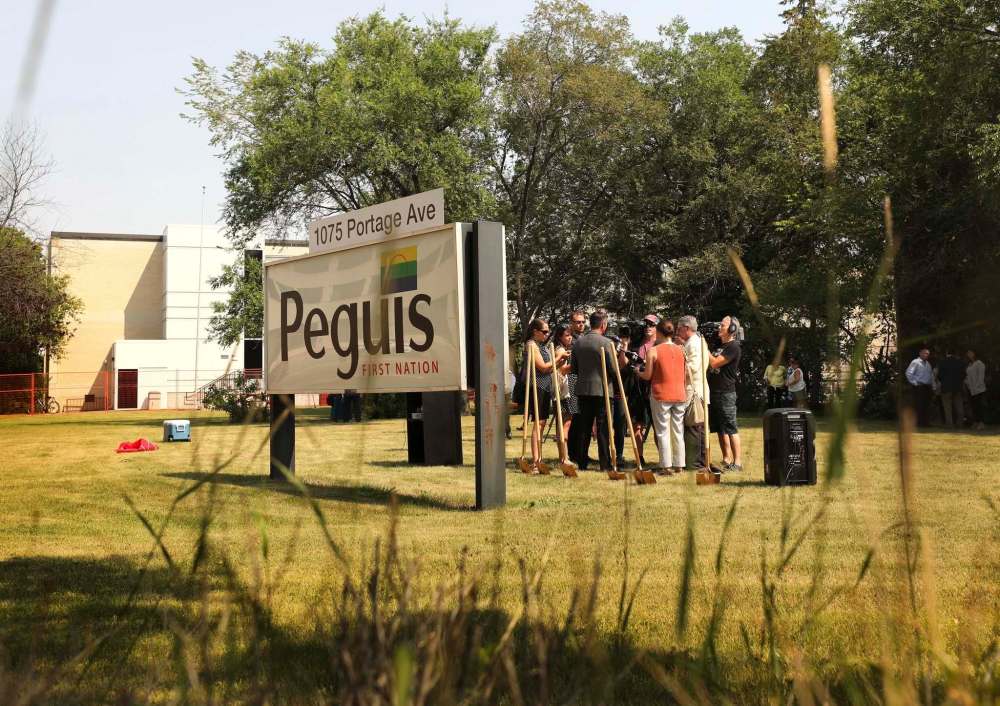
Last week, Peguis First Nation broke ground at 1075 Portage Ave. for its first urban reserve in what could become a model for Kapyong. But Peguis has a deal with Ottawa over land allotments that is distinct from the other six First Nations under that treaty.
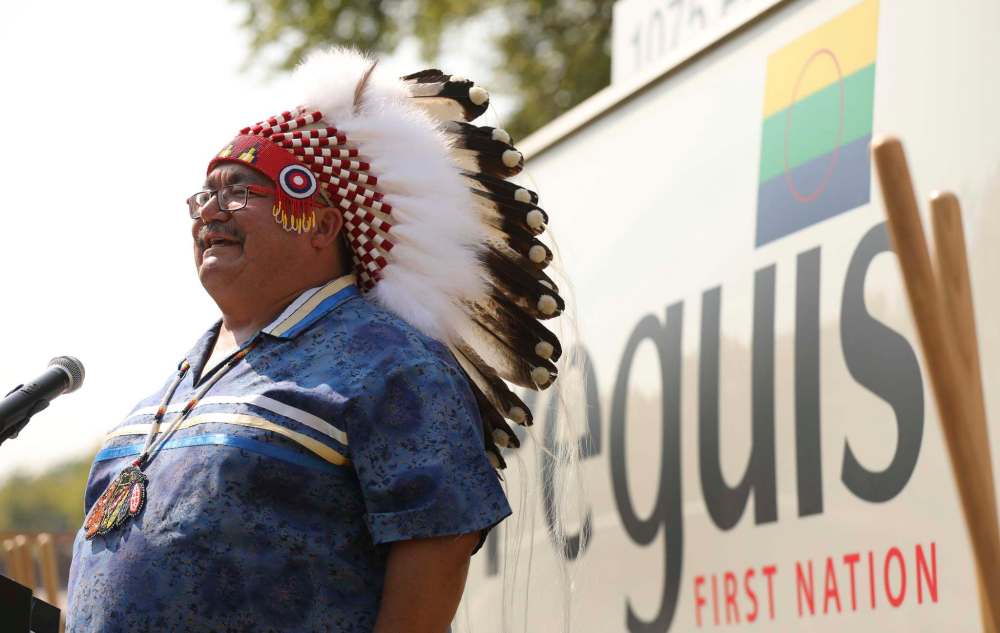
Cindy Spence started her term as Peguis chief in March 2015 and was blamed by fellow chiefs for delaying the Kapyong talks. She argues she was standing up for Peguis’ separate land entitlement.
“I wasn’t at liberty to share a lot of what I shared at the table,” Spence said in her first wide-ranging interview on Kapyong. “Negotiations got very heated, at many times.”
She says shortly after she took office in March 2015, the other six chiefs pressured her to sign a deal: “Immediately following the election, I was approached by the other six communities who attempted to get us to join them to accept Canada’s initial offer in regards to Kapyong,” Spence wrote in an email.
Peguis, which is the most populous First Nation in Manitoba, had a federal commission assess its land entitlements in 1998. The court found that the federal government has not upheld the per capita acreage it promised when Peguis signed Treaty One in 1871.
In a resulting settlement, Peguis has federal funds that it can use to purchase a quota of land anywhere in Manitoba, including surplus federal land. Other bands are limited to land already available for sale that’s within their traditional territory.
During Ottawa’s years-long legal battle with Treaty One, a Federal Court of Appeal judge noted “significant differences” between Peguis’ land entitlement and that of the other six First Nations. Ottawa itself noted that Peguis has “more expansive rights/obligations” as a result of the settlement, which came into force in 2008.
Spence said land allocation is particularly sensitive to Peguis after the Crown’s 1908 decision to move what was then called the St. Peter’s Reserve near Selkirk about 200 kilometres north to the group’s current reserve land, in a flood plain in the Interlake region. That makes it the only Treaty One nation to be located outside the treaty area.
She said the point of buying back the land is to give Peguis citizens a foothold in or near Winnipeg and to use it for economic spinoffs that can pull them out of poverty while restoring their traditional territory.
“That’s been something that has been important to our elders and our people, and something that many of our people hold sacred,” she said.
Spence was particularly concerned that shared land ownership increased the chance of management issues. For example, all Manitoba councils formed the Tribal Council Investment Group in 1990, but its executives ended up squandering millions on travel expenses and strip clubs, with little remitted to First Nations people.
A legal adviser, who was also an elder, told Spence that putting part of the land in Peguis’ name would keep leaders more accountable. That adviser is no longer part of the negotiations.
Long Plain Chief Dennis Meeches speaks on behalf of all seven First Nations. He couldn’t recall whether Spence had been presented with a deal in March 2015 by the other six bands. “There were offers on the table, initial offers, counteroffers,” he said. “A lot of things have happened.”
Peguis’ separate land entitlement occupied months of government employees’ time, according to hundreds of pages of emails obtained from Canada Lands Co. (CLC), the Crown corporation that has helped Ottawa negotiate a deal with First Nations.
By January 2016, a Vancouver lawyer specializing in treaty rights was in touch with CLC and Justice Canada on Peguis’ behalf, according to internal emails obtained through access-to-information requests.
Both Spence and Meeches confirmed that Peguis had a parallel negotiation process with Ottawa by that summer, entirely separate from the other six First Nations. The goal was to carve out a distinct piece of land for Peguis.
Now, Meeches and Hudson say Peguis is on board with the other First Nations, aiming to have the entire property shared by all seven bands.
The documents also show CLC updated a list of when each of the seven chiefs finished their term. This spring, sources told the Free Press that the April announcement of an agreement-in-principle was hastily organized in hopes of preserving momentum on the interim deal ahead of looming elections. (The Indian Act forces First Nations to hold elections every two years.)
Peguis holds its next election in March 2019; nominations likely won’t be held until the new year, so it’s unknown whether candidates for chief would side with current chief Glenn Hudson or Spence in negotiating a Kapyong deal.

Meeches didn’t want to entertain the idea that the issue could re-emerge under another chief. “We’re way beyond that, and the article you’re trying to write may skew what’s happening right now,” he told the Free Press.
He also said Treaty One hopes to get renderings completed by the fall with the help of CLC and use them for public consultations. That would be the first time Winnipeggers get a clear sense of how the property may be developed. Those involved are considering a war museum, condos, a gas bar and a casino.
Spence says she hopes Kapyong becomes an opportunity “to build us up” and bring Winnipeggers and First Nations closer together, but she admits it’s been a saga.
“There’s a lot of history around Kapyong; I’ll tell you that.”
dylan.robertson@freepress.mb.ca