

Lawyer fears rules may scare abuse victims

Advertisement
Read this article for free:
or
Already have an account? Log in here »
To continue reading, please subscribe:
Monthly Digital Subscription
$1 per week for 24 weeks*
- Enjoy unlimited reading on winnipegfreepress.com
- Read the E-Edition, our digital replica newspaper
- Access News Break, our award-winning app
- Play interactive puzzles
*Billed as $4.00 plus GST every four weeks. After 24 weeks, price increases to the regular rate of $19.95 plus GST every four weeks. Offer available to new and qualified returning subscribers only. Cancel any time.
Monthly Digital Subscription
$4.99/week*
- Enjoy unlimited reading on winnipegfreepress.com
- Read the E-Edition, our digital replica newspaper
- Access News Break, our award-winning app
- Play interactive puzzles
*Billed as $19.95 plus GST every four weeks. Cancel any time.
To continue reading, please subscribe:
Add Free Press access to your Brandon Sun subscription for only an additional
$1 for the first 4 weeks*
*Your next subscription payment will increase by $1.00 and you will be charged $16.99 plus GST for four weeks. After four weeks, your payment will increase to $23.99 plus GST every four weeks.
Read unlimited articles for free today:
or
Already have an account? Log in here »
Hey there, time traveller!
This article was published 07/08/2019 (2412 days ago), so information in it may no longer be current.
A newly enforced rule that all claimants filing lawsuits in Manitoba provide their full name on court documents could discourage sex-assault victims from coming forward, says a lawyer who represented nine clients alleging they were abused by disgraced former priest Ron Leger.
“I’m sure it had good intentions… but I think the unintended consequence that probably no one thought through is this issue of victims of crimes,” said Rob Talach, a London, Ont., lawyer who specializes in sex-abuse cases.
The names or initials of parties in a statement of claim are readily available on the Manitoba Courts website. Talach said this is why he typically filed sex-abuse lawsuits using only the victims’ initials, to protect their identities from the public.
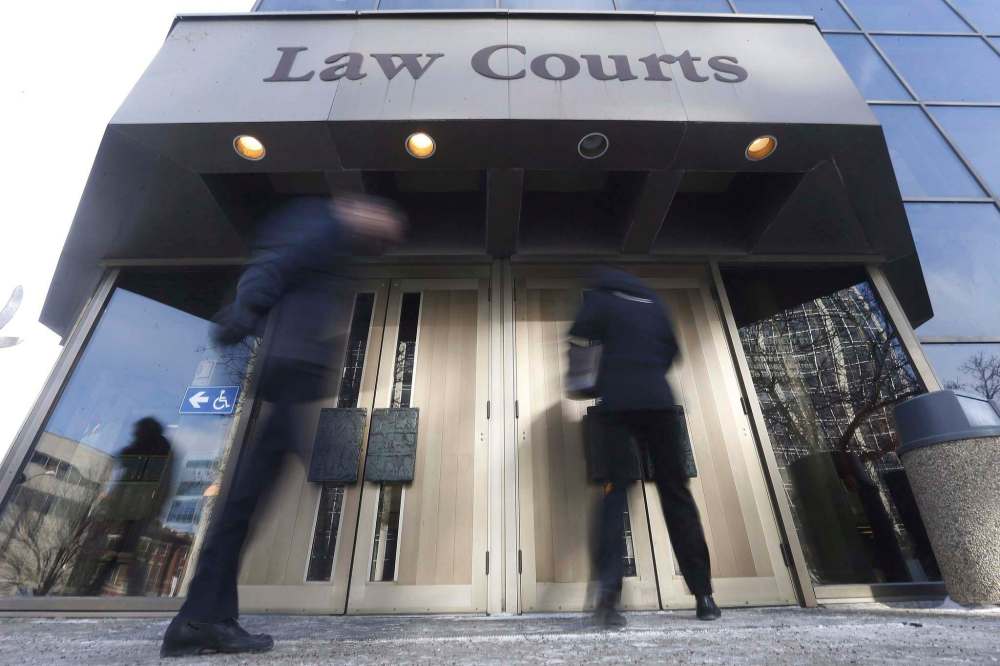
Talach said he was shocked in recent months when a process server filing civil suits for him at the Winnipeg Law Courts was told they could not file the documents without the claimants’ full names.
“Our process server was just stopped cold at the counter with the documents,” Talach said.
“We were told we could bring a motion after and go before the court and make our case for why we thought we should switch to initials.”
It can take years or even decades before sex-abuse victims have the courage to come forward, Talach said. Any roadblock has the potential to send victims back into the shadows.
“It’s definitely a chilling effect,” he said.
“I’ve got examples in my office where somebody called us a few years ago and they got cold feet and they called us back six years later. It’s not good for society because victims lead you to perpetrators and many times, civil litigation and non-criminal civil proceedings can lead to criminal prosecution and taking these bad guys off the street.
“If the province has accidentally created a system where victims are less likely to come forward, I think that is a detriment and a danger to all society,” Talach said.
Leger, 81, had been set to stand trial in the fall on charges of sexually abusing nine boys, but the trial was adjourned when it was disclosed he was in palliative care. Leger died July 30.
Bill, one of Leger’s alleged victims, was set to testify at the trial and also filed a civil suit against him.
Bill, not his real name, said he was comfortable providing his full name for court documents, but could understand why others might not feel the same.
“I can totally see why some people wouldn’t want that and would back away. ‘Oh, my name’s there? I’m done, I’m out,’” he said.
“I always assumed if you were an adult, you could choose (whether to provide your full name). This is my first involvement with the court world, so it’s very confusing… I’m sure there are people out there who still haven’t told their family or their loved ones and don’t want to and honestly shouldn’t have to. It’s removing the choice from the person and that never sat well for me.”
The rule requiring full names of all parties in a court proceeding has always been in place, but is now being more rigidly enforced, a court spokeswoman said.
“It’s important in the law that there should be consistency of how we are applying the rules,” the spokeswoman said.

In some instances, court staff have accepted statement of claims with only initials on the understanding the claimants would be filing a motion to approve the move.
“So some of the deputy registrars were accepting that and then others weren’t, so there was a bit of an inconsistency there,” the spokeswoman said.
If a claimant files a motion to be identified by their initials at the same time they file a statement of claim, the statement of claim will not be posted to the court website until the motion has been approved, the spokeswoman said.
“The court is certainly open to making improvements here if there are suggestions from counsel as to how else to approach this,” she said.
dean.pritchard@freepress.mb.ca
Dean Pritchard is courts reporter for the Free Press. He has covered the justice system since 1999, working for the Brandon Sun and Winnipeg Sun before joining the Free Press in 2019. Read more about Dean.
Every piece of reporting Dean produces is reviewed by an editing team before it is posted online or published in print — part of the Free Press‘s tradition, since 1872, of producing reliable independent journalism. Read more about Free Press’s history and mandate, and learn how our newsroom operates.
Our newsroom depends on a growing audience of readers to power our journalism. If you are not a paid reader, please consider becoming a subscriber.
Our newsroom depends on its audience of readers to power our journalism. Thank you for your support.
Dean Pritchard is courts reporter for the Free Press. He has covered the justice system since 1999, working for the Brandon Sun and Winnipeg Sun before joining the Free Press in 2019. Read more about Dean.
Every piece of reporting Dean produces is reviewed by an editing team before it is posted online or published in print — part of the Free Press‘s tradition, since 1872, of producing reliable independent journalism. Read more about Free Press’s history and mandate, and learn how our newsroom operates.
Our newsroom depends on a growing audience of readers to power our journalism. If you are not a paid reader, please consider becoming a subscriber.
Our newsroom depends on its audience of readers to power our journalism. Thank you for your support.
Advertisement Advertise With Us
Advertisement Advertise With Us