

Learn long-term lessons from pandemic response: doctors

Advertisement
Read this article for free:
or
Already have an account? Log in here »
To continue reading, please subscribe:
Monthly Digital Subscription
$1 per week for 24 weeks*
- Enjoy unlimited reading on winnipegfreepress.com
- Read the E-Edition, our digital replica newspaper
- Access News Break, our award-winning app
- Play interactive puzzles
*Billed as $4.00 plus GST every four weeks. After 24 weeks, price increases to the regular rate of $19.95 plus GST every four weeks. Offer available to new and qualified returning subscribers only. Cancel any time.
Monthly Digital Subscription
$4.99/week*
- Enjoy unlimited reading on winnipegfreepress.com
- Read the E-Edition, our digital replica newspaper
- Access News Break, our award-winning app
- Play interactive puzzles
*Billed as $19.95 plus GST every four weeks. Cancel any time.
To continue reading, please subscribe:
Add Free Press access to your Brandon Sun subscription for only an additional
$1 for the first 4 weeks*
*Your next subscription payment will increase by $1.00 and you will be charged $16.99 plus GST for four weeks. After four weeks, your payment will increase to $23.99 plus GST every four weeks.
Read unlimited articles for free today:
or
Already have an account? Log in here »
Hey there, time traveller!
This article was published 02/01/2021 (1918 days ago), so information in it may no longer be current.
A new year has begun, but Manitoba’s COVID-19 fight continues.
As such, the province will need to confront a legacy of lives lost in personal care home outbreaks, invest in critical care, and remember how far it has come to avoid repeating past mistakes, experts say.
Allan Ronald, a retired physician renowned for his international work on infectious diseases, had just returned home to Manitoba when the pandemic was declared in March.
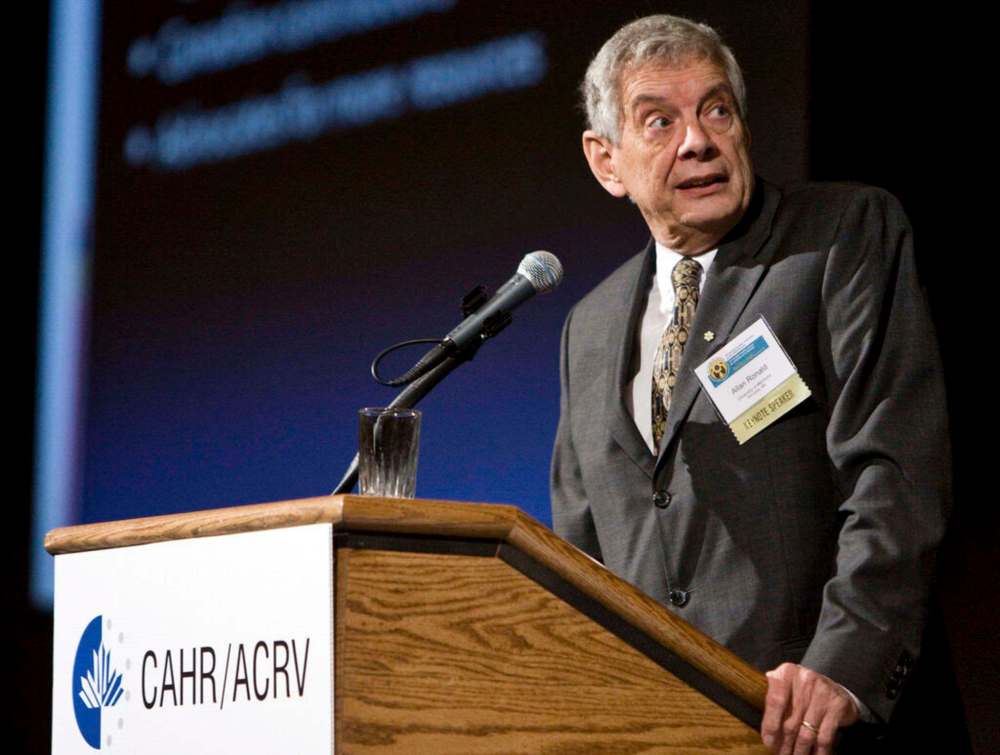
At the time, his gut told him a serious lockdown should start as soon as possible. Ronald started wearing a face mask early on, aware at 82, he had a higher risk of dying if he contracted this virus. However, like many Manitobans, he took summer trips to the cottage and revelled in a nearly COVID-free July.
“Thirteen days we went with no new cases, and we very foolishly believed, I did at least, and I think most people did, that somehow this virus was contained and we’d won the battle,” Ronald said.
“It’s so easy to be smart in retrospect, but there’s no question governments, both federally and provincially, assumed this was just another influenza-like illness that would breeze through and be a problem (for a short time).”
Reflecting on Manitoba’s pandemic response, which the former head of internal medicine at Health Sciences Centre watched from the outside, Ronald pointed to key priorities he said should be considered for the province in the future.
Making sure the health-care system is well-staffed, investing in intensive care units, and working to protect Indigenous and vulnerable groups is crucial, he said. The most important priority for all of Canada: building a better long-term care system; one that is nationally regulated, and out of the under-resourced hands of the provinces.
“It should not be a provincial mandate; this has to be a national mandate. That is what we need to care for elderly people,” Ronald said. “In Canada, where we have lots of resources, we’ve stuffed them away in these facilities which we haven’t funded well, and they’re just breeding grounds for (a virus) like this.”
Even in non-COVID times, the real risk of dementia means Canada needs to do more to protect its elderly population. The pandemic’s impact on personal care home residents, and on families who were separated from dying loved ones, must not be forgotten, he said.
“I don’t know if I’m going to (develop dementia) or not, but I hope that I can be seeing my wife and my kids as I go into my last stages of my life. So I think it’s terribly important that we think of what this has done to us, but we also have to recover from it and not think, ‘We’ve got a vaccine now, we can walk away from it,’” Ronald said.
“We have to invest in this area as a society. We can learn from other countries.”
Meanwhile, aggressive vaccination is likely to be the focus in the months ahead but Manitobans need to keep following public health orders, stressed ICU attending physician Dr. Anand Kumar.
Kumar, who works at Health Sciences Centre and teaches medicine and medical microbiology at the University of Manitoba, said he was distressed early in the pandemic after hearing some wrongly dismiss the virus as an old people’s illness.
“It just devalues their lives. So I think we really need to continue these restrictions particularly in terms of protecting the elderly,” he said.
The public’s “wonderfully responsive” willingness to follow the rules, in general, is one of the things Kumar counts among Manitoba’s early pandemic successes. The province also did relatively well managing supply chains, and hospital internal logistics plans were well-prepared, he said.
Not everything was properly planned: Kumar was among roughly 200 doctors to publicly decry the provincial government’s failure to implement timely restrictions after COVID-19 cases surged in a post-Thanksgiving spike.
It was a burden intensive-care staff couldn’t sustain, and Kumar said he’s grateful doctors spoke out when they did, fearing a complete collapse of the province’s health system capacity.

“The one problem that’s never been particularly solvable is the issue of manpower,” he said. Or, in the case of many health-care jobs, including public health nurses and contact tracers, “usually womanpower.”
Both he and Ronald pointed to lack of staff as a major limitation for pandemic response — a universal problem that was also much-discussed after the H1N1 pandemic in 2009.
“You work with what you have,” Kumar said.
katie.may@freepress.mb.ca
Twitter: @thatkatiemay
Katie May is a multimedia producer for the Free Press.
Our newsroom depends on a growing audience of readers to power our journalism. If you are not a paid reader, please consider becoming a subscriber.
Our newsroom depends on its audience of readers to power our journalism. Thank you for your support.
Katie May is a multimedia producer for the Free Press.
Our newsroom depends on a growing audience of readers to power our journalism. If you are not a paid reader, please consider becoming a subscriber.
Our newsroom depends on its audience of readers to power our journalism. Thank you for your support.
Advertisement Advertise With Us
Advertisement Advertise With Us