

Lifestyle perks just what the doctors ordered
Interlake-Eastern attracting physicians to rural areas without financial enticements
Advertisement
Read this article for free:
or
Already have an account? Log in here »
To continue reading, please subscribe:
Monthly Digital Subscription
$1 per week for 24 weeks*
- Enjoy unlimited reading on winnipegfreepress.com
- Read the E-Edition, our digital replica newspaper
- Access News Break, our award-winning app
- Play interactive puzzles
*Billed as $4.00 plus GST every four weeks. After 24 weeks, price increases to the regular rate of $19.95 plus GST every four weeks. Offer available to new and qualified returning subscribers only. Cancel any time.
Monthly Digital Subscription
$4.99/week*
- Enjoy unlimited reading on winnipegfreepress.com
- Read the E-Edition, our digital replica newspaper
- Access News Break, our award-winning app
- Play interactive puzzles
*Billed as $19.95 plus GST every four weeks. Cancel any time.
To continue reading, please subscribe:
Add Free Press access to your Brandon Sun subscription for only an additional
$1 for the first 4 weeks*
*Your next subscription payment will increase by $1.00 and you will be charged $16.99 plus GST for four weeks. After four weeks, your payment will increase to $23.99 plus GST every four weeks.
Read unlimited articles for free today:
or
Already have an account? Log in here »
Hey there, time traveller!
This article was published 27/09/2017 (3132 days ago), so information in it may no longer be current.
For about a year, health officials in the Interlake-Eastern region have gone to considerable lengths to woo doctors to join their hospitals.
Rural staffing struggles are hardly a problem unique to that area of Manitoba. The briefest of online searches will reveal numerous financial incentives offered nationwide, although many believe the promise of an additional $15,000 or $40,000 a year to be a less-than-ideal fix.
The Interlake-Eastern Regional Health Authority doesn’t offer financial incentives (it recently cut them). Instead, it offers hospital tours, wine-and-cheese retreats, fishing trips and hikes with working physicians.
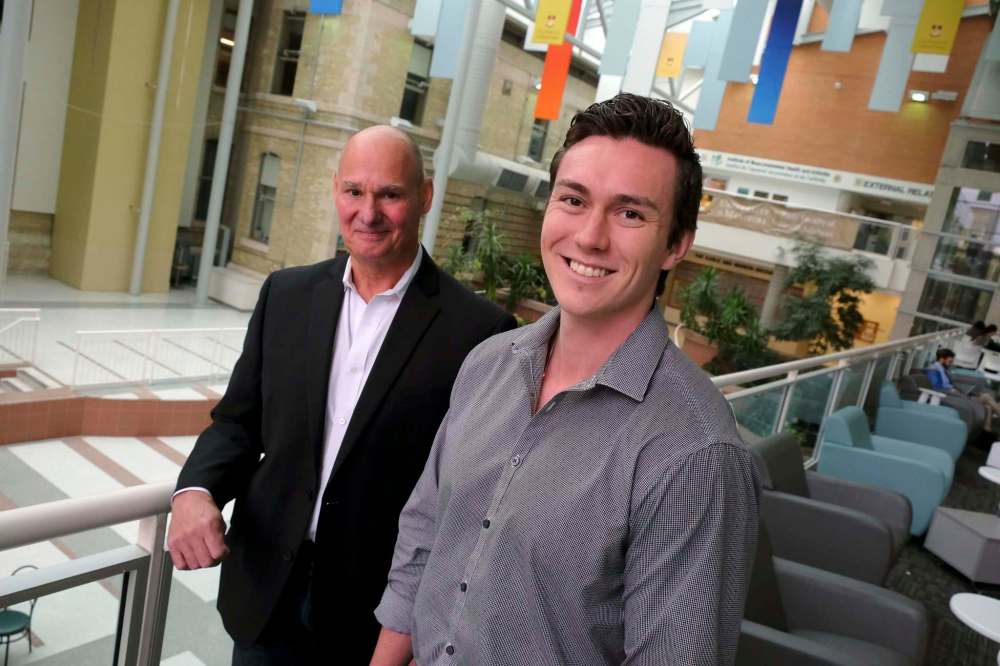
“We’re really trying to build the connection with prospective doctors,” Interlake-Eastern chief executive officer Ron Van Denakker told the Free Press.
Consider it built. On Wednesday, Van Denakker will be joined by the provincial health minister in Gimli to announce 22 new doctors have signed on to provide medical care in the region, starting in this fiscal year alone.
It’s an incredible feat considering just three years ago, Interlake-Eastern was flying doctors in from Toronto multiple times a year to fill vacant ER shifts.
“The situation we are in right now is so profoundly better than before,” said Van Denakker, who has been in the authority’s top job since before 2012, when Interlake and North Eastman merged to form Interlake-Eastern.
“We’ve done a lot to try to change the culture, to be a physician-friendly region, and we’re starting to see the fruits.”
One doctor joined in June and another in July. Ten started this month, seven are scheduled for an October start, one will begin in December, and two more will ring in the new year by joining as well.
They will practice in places such as Ashern and Selkirk, Pine Falls and Beausejour. Some grew up in Manitoba or rural townships close by, while others are international recruits enticed overseas by compelling presentations at international job fairs in Ireland and the United Kingdom.
At least two of the recruits are coming because they see rural practice as an opportunity for more diversified work and a better lifestyle.
“I always knew I wanted to work rural,” said Jonah Fulmore, a University of Manitoba medical school graduate wrapping up his residency in Neepawa. “The question was just where did I want to set up practice.”
Fulmore is set to start work as a family physician in Gimli in December. It’s a slightly different role than some urban family doctors in that he’ll operate in a clinic, in a hospital, and do the occasional ER shift.
“It’s appealing to me that I can wear a bunch of different hats,” he said.
Fulmore recently bought a house in Selkirk with his wife, Andrea, who plans to start practicing there when she finishes her residency in the spring.
They both know what it’s like to live a more rural lifestyle. Andrea is from Thunder Bay, while Fulmore was born in Winnipeg but grew up mostly in Yellowknife.
It was, he said, the retreat that really cemented Interlake-Eastern as the place he wanted to work. He got to meet with doctors, speak with front-line workers and soon-to-be colleagues, as well as to tour the hospital and clinic where they wanted him to work.
“I think it’s really important to get people exposed to where the different work opportunities are,” he said, so you’re “opening your eyes instead of walking in blindly to a community you’ve never been to.”
While Fulmore isn’t critical of financial incentives, he doesn’t think they’re the most effective way to encourage doctors to live, instead of just work, in rural areas.
“It’s a really good short-term fix,” he said, but training medical students with a rural background who actively want to work in rural communities is a better long-term solution.
Health Minister Kelvin Goertzen would agree.
In the spring, the Manitoba government axed a $4.2-million physician recruitment and retention program geared toward staffing up rural communities.
While he’d like the newly formed Shared Health Services Manitoba to look at options for a different rural physician incentive program, he said in an interview earlier this week Interlake-Eastern’s recruitment numbers are “very good news.”
“The evidence that we’re seeing at this stage of the game is that doctors, and other medical professionals as well, are really motivated by the kind of practice that they’re going to have, whether there’s going to be support for their practice,” Goertzen said.
That’s why Van Denakker said Interlake-Eastern’s focus has shifted away from financial incentives.
In August, the region sent letters to several doctors who had been receiving a “top-up stipend,” informing them it would end in early September. While the letters make it clear the decision was motivated by a provincial requirement the region find $7 million in annual savings, Van Denakker said the stipend was actually rendered unnecessary because of this year’s hires and he’s not ruling it out on a short-term basis in the future.
He also said the new hires have made it possible to drop the Selkirk ER staffing back down to one doctor at all hours of the day and a second doctor from 1:30 p.m. to 10 p.m. only. The hours of the second doctor had been increased by four — at an additional cost to the region — due to significant support demands by other understaffed hospitals needing consult.
The hires wouldn’t have been possible without the support of the region’s current doctors, Van Denakker said.
A fishing trip may seem minor, but, “what they’re really trying to say is give it a shot here, it’s a great place to be, it’s a great place to play.”
Community and nature certainly enticed Dylan Thompson, who starts as a family doctor in Gimli next month.
Thompson, whose packing up to move now, said it wasn’t just the hospital or his friendly, helpful future colleagues that made up his mind.
“The geography itself is beautiful,” said Thompson, who hails from Northern Ontario and loves to hike. “It’s a little more quiet and relaxed, close to nature.”

With a bolstered staff, Van Denakker said his focus now is on establishing a clinical teaching unit in the region. Interlake-Eastern is the only regional health authority without one, meaning medical students can’t apply directly into spots with the region until later in their training. He sees it as a big impediment to recruitment.
“The evidence is so compelling,” he said. If you train in one region with one doctor there’s a very good chance that you’re going to want to work there because “you’ve developed the relationship with the doctors in that area and the community loves you to death.”
But rest assured, Van Denakker said the doctors and communities in Interlake-Eastern will actively campaign for your medical affections.
“Places like Winnipeg don’t have to do anything,” he said, “We have to shower them with love and just whatever we can to entice them here.”
jane.gerster@freepress.mb.ca