

Man serves six months after pleading guilty to crime he couldn’t have committed

Advertisement
Read this article for free:
or
Already have an account? Log in here »
To continue reading, please subscribe:
Monthly Digital Subscription
$1 per week for 24 weeks*
- Enjoy unlimited reading on winnipegfreepress.com
- Read the E-Edition, our digital replica newspaper
- Access News Break, our award-winning app
- Play interactive puzzles
*Billed as $4.00 plus GST every four weeks. After 24 weeks, price increases to the regular rate of $19.95 plus GST every four weeks. Offer available to new and qualified returning subscribers only. Cancel any time.
Monthly Digital Subscription
$4.99/week*
- Enjoy unlimited reading on winnipegfreepress.com
- Read the E-Edition, our digital replica newspaper
- Access News Break, our award-winning app
- Play interactive puzzles
*Billed as $19.95 plus GST every four weeks. Cancel any time.
To continue reading, please subscribe:
Add Free Press access to your Brandon Sun subscription for only an additional
$1 for the first 4 weeks*
*Your next subscription payment will increase by $1.00 and you will be charged $16.99 plus GST for four weeks. After four weeks, your payment will increase to $23.99 plus GST every four weeks.
Read unlimited articles for free today:
or
Already have an account? Log in here »
Hey there, time traveller!
This article was published 22/05/2018 (2852 days ago), so information in it may no longer be current.
Richard Joseph Catcheway pleaded guilty to a crime he couldn’t have committed.
The 32-year-old indigenous man was in jail in Brandon at the time the offences occurred in Winnipeg in March 2017. Still, he wrongfully served more than six months in jail for breaking into a house before anyone realized the mistake.
In a judgment little more than two pages long, the Manitoba Court of Appeal accepted Catcheway’s withdrawal of the guilty plea, quashed his conviction and directed his acquittal.
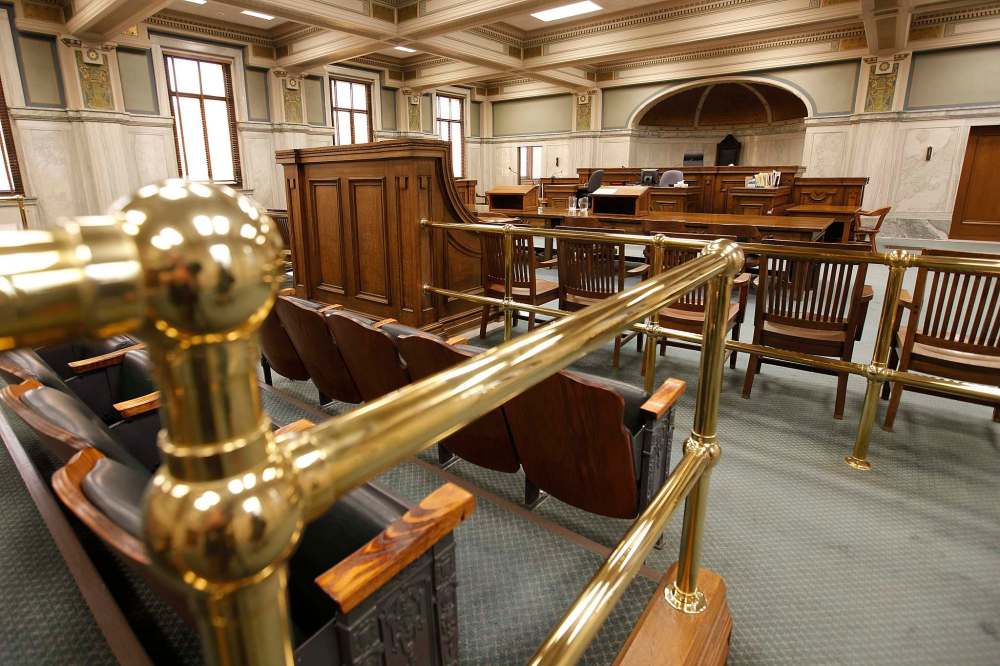
“We are all of the view that, in light of the fresh evidence that conclusively proves the accused’s innocence, it would understandably be a miscarriage of justice to uphold his guilty plea,” the judgment handed down May 10 by Chief Justice Richard J. Chartier, Justice Diana M. Cameron and Justice Jennifer A. Pfuetzner said.
The court didn’t find out that Catcheway was locked up in Brandon when he was alleged to have broken into a home in Winnipeg until after he pleaded guilty in January and his pre-sentence report was prepared.
Why would anyone plead guilty to a crime they couldn’t have committed?
In Catcheway’s case, he initially said he couldn’t remember the night of March 10, 2017 when he was alleged to have broken into a house in Fort Richmond to steal electronics, court documents said. He alternated between saying he couldn’t remember and saying he wasn’t there, his pre-sentence report said. But Catcheway, who said he’d been using crystal methamphetamine leading up to the wrongful accusation, also said he was “pleading out” because he didn’t want to go to trial and because there was a video statement saying he was there at the time of the offence. He was arrested for the crime in September with his brother Scott Matthew Catcheway,
Catcheway’s life has been chaotic since he was a toddler, an upbringing not uncommon among descendants of residential school survivors.
Catcheway doesn’t remember his mom, who was from Grand Rapids, and died of alcohol abuse when he was four years old. His father, a member of Skownan First Nation, wasn’t involved in his upbringing. He’s been diagnosed with Fetal Alcohol Spectrum Disorder and was placed in several foster care homes in Manitoba after his mother died and his father didn’t take him. He ran away several times. He used illegal substances and never made it past Grade 8 in school. He attended a culinary arts program but dropped out after a few weeks. He worked as a labourer but never held a job longer than a year. He’d be fired because of his criminal involvement or substance abuse which began at 13 when he had his first taste of alcohol, marijuana, magic mushrooms, crystal meth, cocaine, and acid. At 14, he was getting black-out drunk.
Before his sentencing in January, he cut back his drinking and had been using crystal meth and going into withdrawals when he was in custody. He was happy to be in custody to “get his head straight,” his pre-sentence report said.
Inder Singh, the Winnipeg lawyer who began representing Catcheway after the court learned he was accused of a crime he couldn’t have committed and filed his appeal, said his client is in the Brandon Correctional Centre on unrelated charges. Catcheway, he said, can apply the time he served for the conviction that has been quashed to his other sentence.
People pleading guilty to crimes they didn’t commit happens more often than Canadians think, said Amanda Carling, board president of Aboriginal Legal Services in Toronto.
“It’s pretty disappointing,” said Carling, who is Metis and grew up in Winnipeg. She hears about many cases where indigenous people who are over-represented in the criminal justice system are pleading out because they don’t have the resources, language supports or wherewithal to advocate for their own innocence. Her organization prepared a handbook they’re sharing to help people in the legal community to communicate with their Indigenous clients.
Some end up doing much more time than Catcheway did for crimes they didn’t commit, she said.

“In this instance, Mr. Catcheway is really lucky,” Carling said. He was arrested in September and his conviction was quashed earlier this month. “This was remedied much quicker than what usually happens,” said Carling, who admitted there are no statistics to back that up but wants to change that.
“No one is keeping track of these things right now. It’s a huge problem but how do you fix a problem if you’re not measuring it?” said Carling. She is helping to lead a project to come up with a database of wrongful convictions. It’s expected to launch in the fall of 2019, she said.
The public hears about famous wrongful conviction cases like David Milgaard’s and Steven Truscott’s but not about cases like Catcheway’s unless they have an advocate or a member of the media picks it up, said Carling. For indigenous people whose families have been broken by residential schools and its intergenerational affects, they most often don’t have a parent like Joyce Milgaard to advocate for them, she noted.
“The cases we have the most information on are not the cases of people in the most jeopardy,” said Carling.
carol.sanders@freepress.mb.ca
Carol Sanders
Legislature reporter
Carol Sanders is a reporter at the Free Press legislature bureau. The former general assignment reporter and copy editor joined the paper in 1997. Read more about Carol.
Every piece of reporting Carol produces is reviewed by an editing team before it is posted online or published in print — part of the Free Press‘s tradition, since 1872, of producing reliable independent journalism. Read more about Free Press’s history and mandate, and learn how our newsroom operates.
Our newsroom depends on a growing audience of readers to power our journalism. If you are not a paid reader, please consider becoming a subscriber.
Our newsroom depends on its audience of readers to power our journalism. Thank you for your support.
Carol Sanders
Legislature reporter
Carol Sanders is a reporter at the Free Press legislature bureau. The former general assignment reporter and copy editor joined the paper in 1997. Read more about Carol.
Every piece of reporting Carol produces is reviewed by an editing team before it is posted online or published in print — part of the Free Press‘s tradition, since 1872, of producing reliable independent journalism. Read more about Free Press’s history and mandate, and learn how our newsroom operates.
Our newsroom depends on a growing audience of readers to power our journalism. If you are not a paid reader, please consider becoming a subscriber.
Our newsroom depends on its audience of readers to power our journalism. Thank you for your support.
Advertisement Advertise With Us
Advertisement Advertise With Us