

Manitoba scores ‘excellent,’ leads nation in Education for Reconciliation
Advertisement
Read this article for free:
or
Already have an account? Log in here »
To continue reading, please subscribe:

Digital Subscription
One year of digital access for only $205*
- Enjoy unlimited reading on winnipegfreepress.com
- Read the E-Edition, our digital replica newspaper
- Access News Break, our award-winning app
- Play interactive puzzles
*First annual payment billed as $205.00 + GST for one year. This annual subscription will automatically renew at $233.00 + GST every 52 weeks (10% off the regular annual price of $259.35). Offer available to new and qualified returning subscribers only. Cancel any time.
To continue reading, please subscribe:
Add Free Press access to your Brandon Sun subscription for only an additional
$1 for the first 4 weeks*
- Enjoy unlimited reading on winnipegfreepress.com
- Read the E-Edition, our digital replica newspaper
- Access News Break, our award-winning app
- Play interactive puzzles
*Your next Brandon Sun subscription payment will increase by $1.00 and you will be charged $17.95 plus GST for four weeks. After four weeks, your payment will increase to $24.95 plus GST every four weeks.
Read unlimited articles for free today:
or
Already have an account? Log in here »
Hey there, time traveller!
This article was published 10/10/2018 (2906 days ago), so information in it may no longer be current.
Manitoba received a score of “excellent” in both categories in the national Education for Reconciliation Report Card released Tuesday — the only province or territory to do so — but officials caution there’s still more work to do.
The report, prepared by faith-based social justice organization Kairos Canada, reflected the progress made across Canada in implementing the Call to Action 62.i from the Truth and Reconciliation Commission’s 94 Calls to Action, announced by Sen. Murray Sinclair in 2015 in the report that followed six years of TRC hearings across Canada.
Since the first report card in 2016, Manitoba improved to “excellent” in both of the two main areas of assessment; it moved from “good” in the category of public commitment, and from “needs improvement” in the category of implementation.
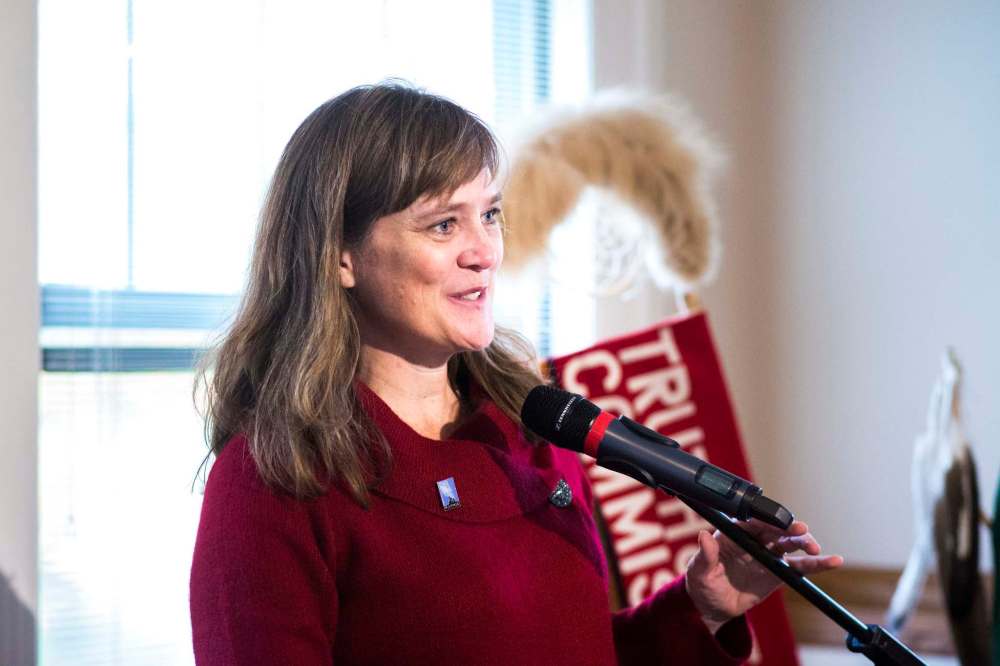
Kairos, which is administered by the United Church of Canada, has taken a leadership role in monitoring the Call to Action 62.i, which calls on governments in Canada to consult with survivors, Indigenous elders and educators to make age-appropriate curriculum for K-12 students that includes the residential schools system, treaties and the history and contributions of Indigenous people in Canada.
“Manitoba is advancing in those majority of those areas, both in the public commitment line and the implementation line,” Kairos executive director Jennifer Henry told a press conference at the University of Manitoba’s National Centre for Truth and Reconciliation.
“But even an excellent rating, as identified here, is identified as you’re on the path to meeting this Call to Action and we still need to work together to make sure it’s fully implemented.
“So, ‘excellent’ is not perfect, but it’s excellent.”
Wapanohk School in the School District of Mystery Lake, Isaac Brock School in Winnipeg School Division and Riverbend Community School in Seven Oaks School Division offer bilingual-bicultural Indigenous-language programming.
Henry said Manitoba’s inclusion of mandatory Indigenous content in social studies for students from first grade through Grade 11, training programs and guides for educators to teach the new Indigenous content and consultation with Indigenous leaders were key areas where the province took signification steps forward, compared to other provinces and territories in Canada.
“This progress is important but we recognize that this is part of one of the 94 Calls to Action requiring implementation across this nation. To honour the courage of the survivors, we must stay the course,” she said.
Quebec and New Brunswick showed the least progress, with Quebec scoring a national low of “significant work required” in the area of implementation.

Henry said Manitoba can continue to improve in developing curriculum for kindergarten-age students, improving the education and training of Indigenous and non-Indigenous teachers to deliver curriculum with Indigenous perspectives and encouraging more Indigenous people to become educators or get otherwise involved in the school system.
Ry Moran, the U of M-based National Centre for Truth and Reconciliation director, said the call to action regarding education seeks to “rectify the great imbalances in presentation of history” by teaching students about “the truth” — which has been left out of textbooks and teaching material in the past.
“This is something that will build a better Canada for all Canadians so that certain members of society are not left behind,” Moran said.
“So that the land is properly respected, so that Indigenous people see themselves not only in textbooks, but also as a vibrant, meaningful part of Canadian society.”
ashley.prest@freepress.mb.ca