

Manitoba senator blasts Liberals over Indigenous issues
Advertisement
Read this article for free:
or
Already have an account? Log in here »
To continue reading, please subscribe:
Monthly Digital Subscription
$1 per week for 24 weeks*
- Enjoy unlimited reading on winnipegfreepress.com
- Read the E-Edition, our digital replica newspaper
- Access News Break, our award-winning app
- Play interactive puzzles
*Billed as $4.00 plus GST every four weeks. After 24 weeks, price increases to the regular rate of $19.95 plus GST every four weeks. Offer available to new and qualified returning subscribers only. Cancel any time.
Monthly Digital Subscription
$4.99/week*
- Enjoy unlimited reading on winnipegfreepress.com
- Read the E-Edition, our digital replica newspaper
- Access News Break, our award-winning app
- Play interactive puzzles
*Billed as $19.95 plus GST every four weeks. Cancel any time.
To continue reading, please subscribe:
Add Free Press access to your Brandon Sun subscription for only an additional
$1 for the first 4 weeks*
- Enjoy unlimited reading on winnipegfreepress.com
- Read the E-Edition, our digital replica newspaper
- Access News Break, our award-winning app
- Play interactive puzzles
*Your next Brandon Sun subscription payment will increase by $1.00 and you will be charged $17.95 plus GST for four weeks. After four weeks, your payment will increase to $24.95 plus GST every four weeks.
Read unlimited articles for free today:
or
Already have an account? Log in here »
Hey there, time traveller!
This article was published 07/02/2018 (3018 days ago), so information in it may no longer be current.
OTTAWA — A Manitoba senator appointed by Prime Minister Justin Trudeau in December gave a scathing dressing-down Tuesday of the Liberals’ approach to Indigenous issues, in her first major comments since taking office.
Sen. Mary Jane McCallum is commonly cited as Canada’s first female First Nations dentist, and is temporarily continuing treatments in Manitoba’s north.
“When I look at what has eroded in our relationship with government, it’s been the trust,” she told the Senate committee on Aboriginal issues Tuesday, saying First Nations people get second-class dental treatment while grappling with a multitude of social issues.
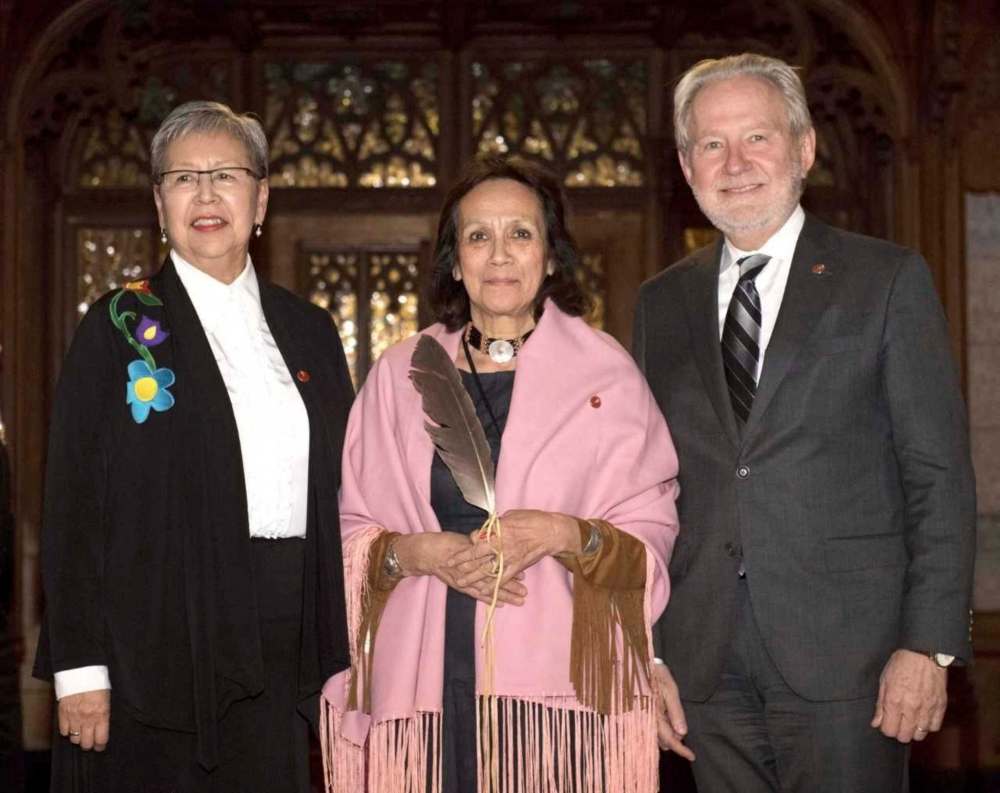
Her comments came as auditor general Michael Ferguson detailed his assessment of the Children’s Oral Health Initiative (COHI) program, which aims to prevent dental issues among Indigenous children by providing them annual checkups, temporary fillings and applying fluoride varnish to their teeth.
The program has operated since 2004, and a report Ferguson published last November found COHI was only available on half of First Nations, and has been treating a declining number of children over the past three years, despite a baby boom.
At the time, the government said more funding would help the program grow, and Ferguson found some evidence suggesting there might have been a reduction in cavities.
The senator said that doesn’t jive with what she has seen during the decade she’s observed the program.
“There is an increase in general anesthetic, which means that the COHI program isn’t working,” said McCallum, adding she had raised the issue with federal officials in Manitoba.
“With COHI, you have unqualified, unlicensed people who work, and they have no oversight body whatsoever. They are not licensed anywhere. They’re working on First Nations, and only on First Nations land would that happen.”
She also spoke about the social issues surrounding health in remote, northern Manitoba communities. She said a weeklong trip to an unnamed community allows her to treat 25 patients. “Sometimes, there are 200 to 300 people that come in. The care we deliver is all emergency work; there’s no comprehensive work.”
The new senator calls Brochet home, a remote community that straddles the Saskatchewan border. More recently, she practised dentistry at the Opaskwayak Cree Nation reserve near The Pas. It’s unclear to which community she was referring.
She said four dentists often circle through communities, meaning patients don’t trust those caring for them enough to share the issues they’re facing.
“We’ve trained people to access care only when they’re in pain,” she said, adding “self-care” has been stripped by the legacy of residential schools and other programs.
She gave the example of dental bacteria spreading in crowded houses because toothbrushes can be strewn about, and small children may toss them in the toilet. “When you have homes that don’t even have closets, you can’t even take a glass to put your toothbrushes in,” she said, holding up a water glass.
McCallum said subsidized food reaches communities where many people don’t have enough teeth to consume it.
“It’s not only a bacterial problem; there’s homelessness, because they couch-surf. They cannot go into the fridge at any time, even if they’re grannies, because they don’t feel they’ve contributed to the household.”
She said with some exceptions, her job remains fee-for-service, and she’s been the sole dentist — on a part-time basis — for a population of 12,000.
“The more higher-cost work I can do, like root canals, surgicals, the higher my per diem is. So, if I’m providing appropriate care to the people, which is restorative, my per diem comes down.”
She claimed paperwork has only gotten worse, prompting her to write to Trudeau and Indigenous Services Minister Jane Philpott. “Our ability to provide care in a remote setting is getting less and less.”
Philpott had not yet heard the senator’s testimony by Tuesday afternoon, but noted the Liberals boosted COHI funding last spring by $45.4 million through to 2021.
“My sense has been that it’s been a program that’s been highly regarded and appreciated by communities,” she said. “It takes time to do that and make sure you’ve got the right staff available.”
The government also aims to finalize its oral health policy for First Nations and Inuit people by next month, and implement in April a better data-collection policy to assess which programs are working.
McCallum said she was weary of the public discourse around Indigenous people.

“People seem to have the perception that this is mostly First Nations’ fault, that we are where we are because we choose to be on welfare or choose to be lazy or choose to be whatever they want to give us. Really, we are unable to fulfil responsibilities because the government cannot act, and they have not found a way through all of this,” she said.
Ferguson spoke to the committee about what impediments to progress he’s come across in his many audits of federal programs serving First Nations, Inuit and Métis people, for a sweeping Senate study on that issue.
His chief concerns included: a lack of simultaneous political will at different levels of government, the dispersed nature of various nations, a lack of true consultation, unstable funding, and vague goals that are hard to reach and assess.
Philpott listed most of those issues when she unveiled the scope of her new department, though some critics said there were not clear targets for housing, education and health.
“I’m sorry to report that there still has been little improvement in federal government programs for Indigenous peoples,” Ferguson said.dylan.robertson@freepress.mb.ca