

#MeToo: The chorus that echoed in all corners of society is the Free Press international story of the year

Advertisement
Read this article for free:
or
Already have an account? Log in here »
To continue reading, please subscribe:
Monthly Digital Subscription
$1 per week for 24 weeks*
- Enjoy unlimited reading on winnipegfreepress.com
- Read the E-Edition, our digital replica newspaper
- Access News Break, our award-winning app
- Play interactive puzzles
*Billed as $4.00 plus GST every four weeks. After 24 weeks, price increases to the regular rate of $19.95 plus GST every four weeks. Offer available to new and qualified returning subscribers only. Cancel any time.
Monthly Digital Subscription
$4.99/week*
- Enjoy unlimited reading on winnipegfreepress.com
- Read the E-Edition, our digital replica newspaper
- Access News Break, our award-winning app
- Play interactive puzzles
*Billed as $19.95 plus GST every four weeks. Cancel any time.
To continue reading, please subscribe:
Add Free Press access to your Brandon Sun subscription for only an additional
$1 for the first 4 weeks*
*Your next subscription payment will increase by $1.00 and you will be charged $16.99 plus GST for four weeks. After four weeks, your payment will increase to $23.99 plus GST every four weeks.
Read unlimited articles for free today:
or
Already have an account? Log in here »
Hey there, time traveller!
This article was published 28/12/2017 (3037 days ago), so information in it may no longer be current.
It was a year of shocks to the heart and the system. A year when the world’s tensions broke loose and ran free.
A year of Trump, and his itchy Twitter fingers. A year of protest. A year in which the Islamic State crumbled; neo-fascist groups marched in Charlottesville; and the world seemed to grow more turbid, unsettled, obscene.
California burned. Hurricanes churned, smashing Houston and Dominica and Puerto Rico until they didn’t much resemble what they had been: buildings shredded, roads ravaged, human lives snuffed, along with the electricity.
Bombs. Guns. Rage, incoherent: a man slaughtered 58 people from the vantage of a hotel window in Las Vegas. The Rohingya people in Myanmar fled massacres and torched villages.
Hondurans fought to take back their democracy.
Over it, the beat of ballistic missiles pounded against chests. A word war between North Korea and the United States; one of their leaders even threatened to unleash “fire and fury like the world has never seen.” It was not Kim Jong Un.
Yet through it all, we clung to the hope that the world is still lurching towards justice; that there will be comeuppance, somehow, for those who have harmed us; that the courage of one is yet enough to interrupt power-addled abuse.
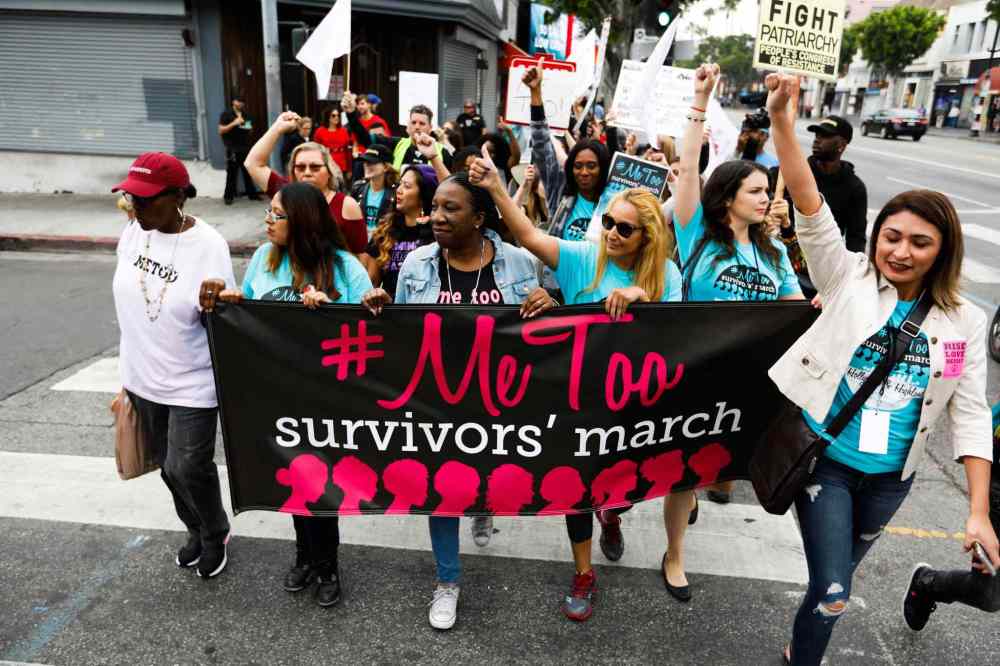
So it is that the top international story this year, as voted by Free Press readers, was one shouted from every corner of society, and mostly by women. A movement that toppled moguls, dethroned celebrities and dismissed politicians.
First, it was Harvey Weinstein. And then…
“Me too,” they said, in voices that numbered in the hundreds, thousands and millions.
When the news about Weinstein’s staggering history of sexual assault and harassment broke in early October there was a sense that something had shifted, that the dark secrets of powerful abusers would not be kept any longer.
The dam broke, and then came the flood. Stories spanning many industries of harassment, groping, assault. So many stories that news outlets had to start keeping a running list, far from exhaustive and updated almost daily.
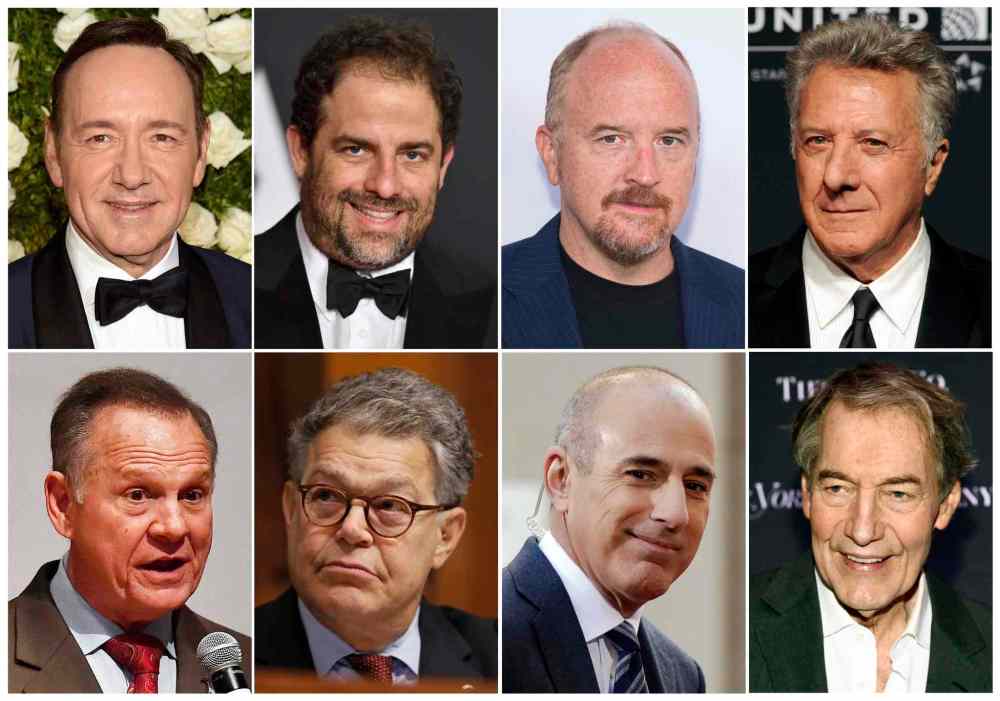
Reports exposed the abuses of multiple journalists, symphony conductors and Hollywood players. They exposed Kevin Spacey, Louis C.K. and a gaggle of broadcasters, including Garrison Keillor, Charlie Rose and Matt Lauer.
Some of the accused, after losing their jobs, issued strong denials. Others fessed up — chef Mario Batali said the allegations of his groping “match up with the way (he has) acted” — and pledged to “seek help” for their behaviour. But one way or another, few of the allegations slipped by without reaction, or without consequence. In most cases, there was some kind of price. One by one, abusers were cut free by companies who may have once done nothing.
After all this, it’s a shock to remember: it hasn’t even been three months since Weinstein’s abuses were outed.
So there has not yet been enough time to have a full reckoning, or a complete understanding of what happened, why now and what next. But there is enough out there to sketch the shape of it, and take heed of what the picture shows.
What is true: powerful abusers have long depended on isolating their victims, often using nothing more than the fact of their influence. Many of Weinstein’s victims stayed silent for decades, fearing what he could do to their careers.
Earlier this month, director Peter Jackson confirmed that the Weinstein brothers successfully lobbied him not to hire actors Ashley Judd or Mira Sorvino to star in the Lord of the Rings trilogy. Both women were Weinstein victims.
“In hindsight, I realize this was very likely the Miramax smear campaign in full swing,” Jackson told a New Zealand news site. “I now suspect we were fed false information about both of these talented women.”
For people without the reach of celebrity, publicly naming an abuser is even more fraught. So here, there has always been a dismal sort of calculation for a victim: will the price of speaking up be more than what they can bear to pay?
But social media allows victims to network with others, to connect in ways beyond furtive whispers. It enables tidal waves of support, that can — though not always — rise behind their story, overwhelming the abuser’s influence. The anger that drives those waves can be wild, frothing, uncensored. It is also comparatively democratic, returning some power to the hands of the masses. But democracy can be messy, and these waves are no exception to that.
So in the wake of the Me Too movement — or rather, perhaps, in its crest — we can turn to new questions. For one, there is the matter of how sexual misconduct allegations should be weighed by the public, outside a court of law.
And yes, that will need to be sorted — but first, there has to be balance.
And in a way, what happened in these last months is just the physics of rebalancing: an equal and opposite reaction to the forces that long silenced victims.
Push people down for too long, and they rise up. Silence them for too long and, when they speak, it explodes in a shout. Maybe one day, we’ll be better equipped to handle predators in our midst before the pressure builds up.
Then there are the places where the absence of allegations poses its own sort of question. Why, for instance, have so few prominent Canadians been named as sexual predators? There were a few bigwigs in Quebec, including the founder of the Just For Laughs festival, but surely they are not of all the abusers in the nation.
In the haze, a few possible answers take shape: power here is not so vast, or so concentrated. The population is smaller and more entangled. We have fewer media outlets, with fewer reporters to tackle an often difficult subject.
But it’s not over. It hasn’t even been three months. The burst dam has not yet drained all its long-stymied water.
So as we look forward, it is to a world in which there are fewer safe corners for people who abuse their power.
For that, we can credit hundreds of victims who have spoken up, and not only in the course of these last few months.

It’s true, there’s a certain futility to naming the year’s top international story, because all stories affect someone. How can one even rank #MeToo versus the reality of genocidal violence in Myanmar, or starvation in war-torn Yemen?
Yet there is something instructive in why this story was chosen: the act of speaking up, calling out and demanding abusers be named caught our attention. It spoke to a new openness to hear credible victims’ stories as evidence.
Above all, it stirred up imagination. It allowed us to envision a world where no one is too wealthy, too famous, or too high in the company to escape accountability for their actions. We don’t live in that world yet; look at the U.S president.
Still, it’s a nice dream. Maybe one New Year’s Day, we’ll wake up to see it.
melissa.martin@freepress.mb.ca
Melissa Martin
Reporter-at-large
Melissa Martin reports and opines for the Winnipeg Free Press.
Every piece of reporting Melissa produces is reviewed by an editing team before it is posted online or published in print — part of the Free Press‘s tradition, since 1872, of producing reliable independent journalism. Read more about Free Press’s history and mandate, and learn how our newsroom operates.
Our newsroom depends on a growing audience of readers to power our journalism. If you are not a paid reader, please consider becoming a subscriber.
Our newsroom depends on its audience of readers to power our journalism. Thank you for your support.
Melissa Martin
Reporter-at-large
Melissa Martin reports and opines for the Winnipeg Free Press.
Every piece of reporting Melissa produces is reviewed by an editing team before it is posted online or published in print — part of the Free Press‘s tradition, since 1872, of producing reliable independent journalism. Read more about Free Press’s history and mandate, and learn how our newsroom operates.
Our newsroom depends on a growing audience of readers to power our journalism. If you are not a paid reader, please consider becoming a subscriber.
Our newsroom depends on its audience of readers to power our journalism. Thank you for your support.
Advertisement Advertise With Us
Advertisement Advertise With Us