

Median incomes up in Manitoba, but percentage living in poverty unchanged
Advertisement
Read this article for free:
or
Already have an account? Log in here »
To continue reading, please subscribe:

Digital Subscription
One year of digital access for only $205*
- Enjoy unlimited reading on winnipegfreepress.com
- Read the E-Edition, our digital replica newspaper
- Access News Break, our award-winning app
- Play interactive puzzles
*First annual payment billed as $205.00 + GST for one year. This annual subscription will automatically renew at $233.00 + GST every 52 weeks (10% off the regular annual price of $259.35). Offer available to new and qualified returning subscribers only. Cancel any time.
To continue reading, please subscribe:
Add Free Press access to your Brandon Sun subscription for only an additional
$1 for the first 4 weeks*
- Enjoy unlimited reading on winnipegfreepress.com
- Read the E-Edition, our digital replica newspaper
- Access News Break, our award-winning app
- Play interactive puzzles
*Your next Brandon Sun subscription payment will increase by $1.00 and you will be charged $17.95 plus GST for four weeks. After four weeks, your payment will increase to $24.95 plus GST every four weeks.
Read unlimited articles for free today:
or
Already have an account? Log in here »
Hey there, time traveller!
This article was published 13/09/2017 (3264 days ago), so information in it may no longer be current.
OTTAWA — Manitobans are richer than they were a decade ago, according to 2016 census data released Wednesday, though poverty persists among children and seniors.
Strong commodity prices drove the province’s incomes up by 20.3 per cent between 2005 and 2015, almost double the national rate.
The median household income in Manitoba was $68,147 in 2015, and for those aged 25 to 54 it was $41,659, just slightly lower than national figures. The increase correlates to Canadians moving west and immigrants settling in the job-rich Prairie provinces, with slower growth in Ontario and Quebec.
Among the province’s metropolitan areas, the highest rise in incomes from 2005 to 2015 was recorded in Winkler at 24.2 per cent, and Brandon at 23.3 per cent. Winnipeg-area incomes grew by 16.6 per cent, the same rate as Steinbach despite that city accounting for the fastest growth in the number of households.
Statistics Canada defines the Winnipeg area as the city and commuter towns, like St. Paul and Springfield.
Fewer Manitobans, 12 per cent, are relying on government transfers, such as social assistance and the Canada Pension Plan, than they were in 2005.
Yet 21.9 per cent of Manitoban children are living poverty, compared with 17 per cent nationwide — a number that has hardly budged over the past decade.
And thousands of the province’s seniors also live in poverty, at 13.9 per cent, compared with 14.5 nationally — though Manitoba saw a much slower increase in the number than the rest of the country.

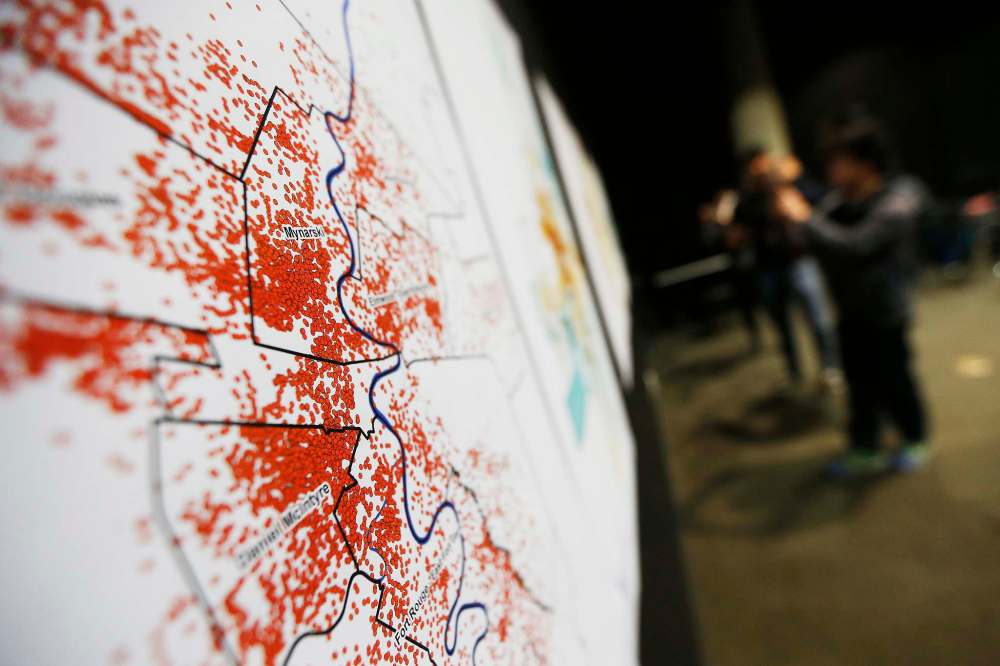
The Winnipeg area now counts 114,240 residents with a low income, a share of its population that has risen from 14.4 to 15 per cent from 2005 to 2015.
Earlier this year, census data showed far fewer boomerang kids in Winnipeg than many Ontario cities. Just 33.1 per cent of young adults aged 20 to 34 still live with their parents in Winnipeg, close to the national average, suggesting young people have better access to living-wage jobs.
The gender gap in incomes is persisting across Canada, though initial data suggest it’s narrowing.
More to come.
dylan.robertson@freepress.mb.ca


History
Updated on Wednesday, September 13, 2017 2:41 PM CDT: Adds map.