

Métis federation taking province to court over hunting-rights restrictions

Advertisement
Read this article for free:
or
Already have an account? Log in here »
To continue reading, please subscribe:

Digital Subscription
One year of digital access for only $205*
- Enjoy unlimited reading on winnipegfreepress.com
- Read the E-Edition, our digital replica newspaper
- Access News Break, our award-winning app
- Play interactive puzzles
*First annual payment billed as $205.00 + GST for one year. This annual subscription will automatically renew at $233.00 + GST every 52 weeks (10% off the regular annual price of $259.35). Offer available to new and qualified returning subscribers only. Cancel any time.
To continue reading, please subscribe:
Add Free Press access to your Brandon Sun subscription for only an additional
$1 for the first 4 weeks*
- Enjoy unlimited reading on winnipegfreepress.com
- Read the E-Edition, our digital replica newspaper
- Access News Break, our award-winning app
- Play interactive puzzles
*Your next Brandon Sun subscription payment will increase by $1.00 and you will be charged $17.95 plus GST for four weeks. After four weeks, your payment will increase to $24.95 plus GST every four weeks.
Read unlimited articles for free today:
or
Already have an account? Log in here »
Hey there, time traveller!
This article was published 29/10/2021 (1791 days ago), so information in it may no longer be current.
The province is using the RCMP to target, harass and intimidate moose hunters exercising their Indigenous rights, the Manitoba Métis Federation claimed Friday.
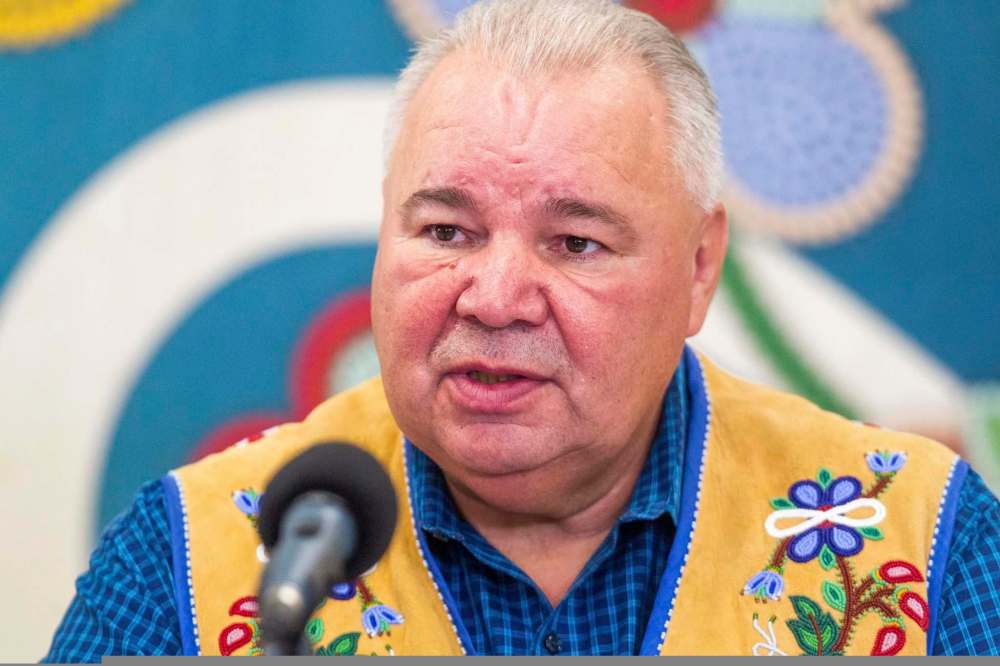
MMF president David Chartrand told a news conference the organization is taking the government to court over its repeated attempts to use “unreasonable and unconstitutional restrictions” to infringe on Métis right to harvest in the Duck and Porcupine Mountains in western Manitoba.
The province unilaterally imposed a shared management process under the Wildlife Act, which established a committee to make recommendations on the conservation of wildlife that includes harvesters, landowners and other stakeholders.
The process is unlawful, Chartrand said, because it puts rights to harvesting promised by section 35 in the Constitution Act in the hands of non-Indigenous people.
“There was no consultation, none whatsoever,” he said. “The province continues to drive itself through a process of (former premier Brian) Pallister’s policies, of race war. It continues to neglect that there is Métis rights in this country, and especially in the Prairies.”
Several hunters harvesting moose in the region have been detained by RCMP, he said.
“Conservation (officers) already have the responsibility and power to hold you, to stop you, to address matters of harvesting with you,” he said. “And now, the only reason I can see them calling the RCMP is to intimidate my people, to scare them.”
He said a father and his teenage son were unjustly stopped and held in the back of a police vehicle by the RCMP and then held by conservation officers for several hours after legally harvesting a moose.
“He didn’t break a criminal code out there… but by using the RCMP, the goal was to intimidate my people and to intimidate that youth, who is traumatized today,” he said.
The hunting of bull moose in the Duck and Porcupine Mountains is managed through the Moose Conservation Harvesting Initiative, which allows Métis harvesters up to 26 of the total 60 animals that can be harvested in specific areas.
The hunters are chosen through a lottery system.
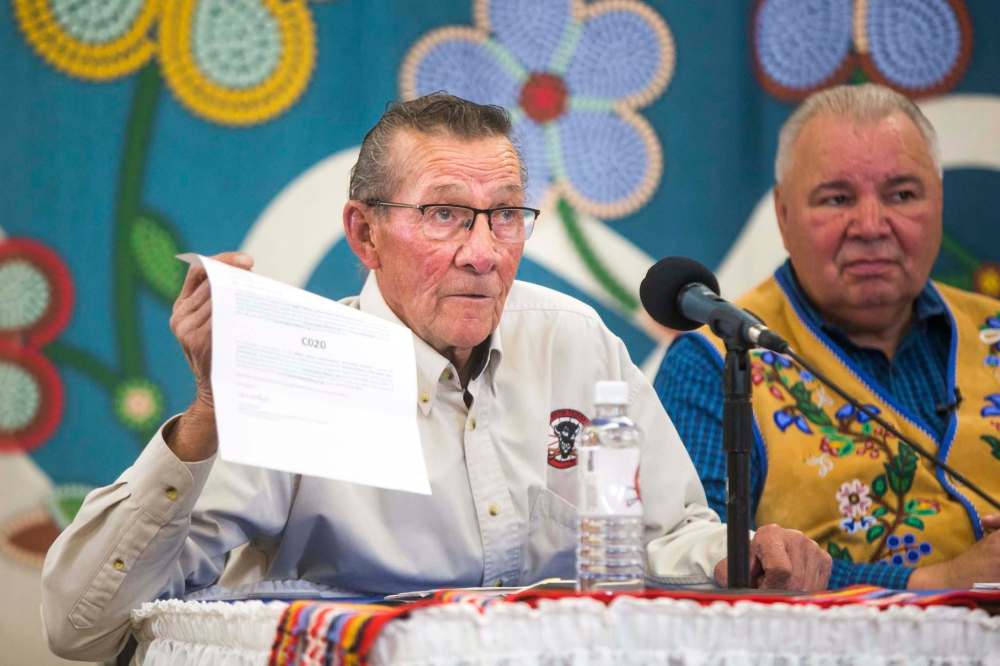
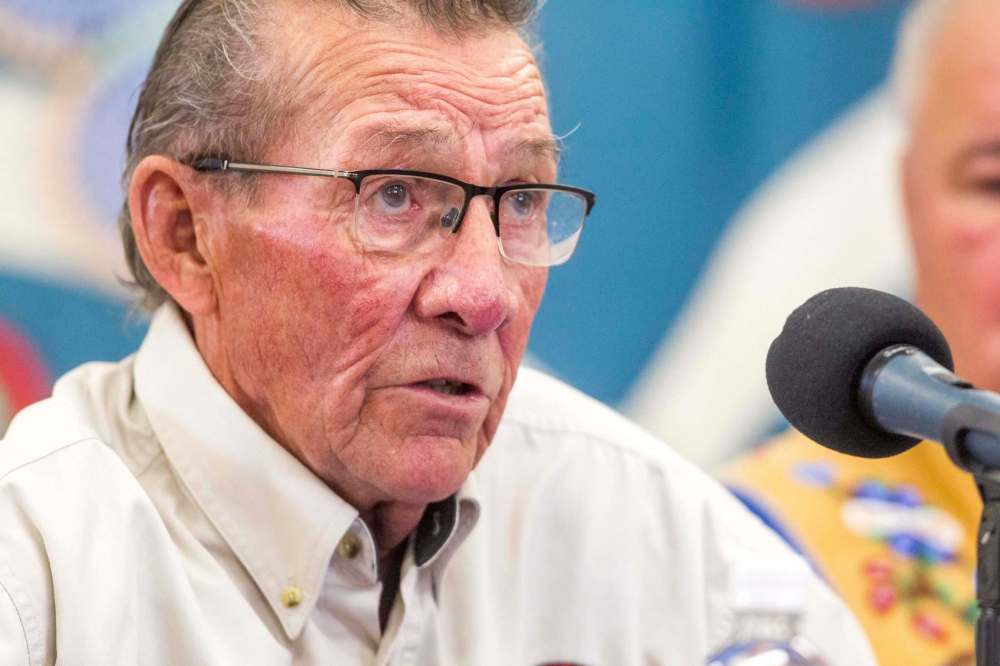
At Friday’s news conference, 82-year-old George Lavallee said he and his hunting team were followed by conservation officers in a helicopter and then stopped by officers in Duck Mountain Provincial Forest Oct. 9. He got a warning for hunting in a closed space.

Lavallee said he had the right to be in the area, showed one of the officers the letter he had received from the MMF when he won the harvester lottery and called the situation “harassment.”
“We’re law-abiding citizens, we’re not breaking the law,” he said. “We have our rights, we are fighting for our rights. You’re taking food away from my family, you’re taking away food that I give to my community. For what purpose and for what reason?”
He plans to return to the area and hunt again at the end of the month.
malak.abas@freepress.mb.ca
Twitter: malakabas_
Malak Abas is a city reporter at the Free Press. Born and raised in Winnipeg’s North End, she led the campus paper at the University of Manitoba before joining the Free Press in 2020. Read more about Malak.
Every piece of reporting Malak produces is reviewed by an editing team before it is posted online or published in print — part of the Free Press‘s tradition, since 1872, of producing reliable independent journalism. Read more about Free Press’s history and mandate, and learn how our newsroom operates.
Our newsroom depends on a growing audience of readers to power our journalism. If you are not a paid reader, please consider becoming a subscriber.
Our newsroom depends on its audience of readers to power our journalism. Thank you for your support.
Malak Abas is a city reporter at the Free Press. Born and raised in Winnipeg’s North End, she led the campus paper at the University of Manitoba before joining the Free Press in 2020. Read more about Malak.
Every piece of reporting Malak produces is reviewed by an editing team before it is posted online or published in print — part of the Free Press‘s tradition, since 1872, of producing reliable independent journalism. Read more about Free Press’s history and mandate, and learn how our newsroom operates.
Our newsroom depends on a growing audience of readers to power our journalism. If you are not a paid reader, please consider becoming a subscriber.
Our newsroom depends on its audience of readers to power our journalism. Thank you for your support.
Advertisement Advertise With Us
Advertisement Advertise With Us