

MMF pulls plug on hunting with spotlights in some areas of province
Advertisement
Read this article for free:
or
Already have an account? Log in here »
To continue reading, please subscribe:

Digital Subscription
One year of digital access for only $205*
- Enjoy unlimited reading on winnipegfreepress.com
- Read the E-Edition, our digital replica newspaper
- Access News Break, our award-winning app
- Play interactive puzzles
*First annual payment billed as $205.00 + GST for one year. This annual subscription will automatically renew at $233.00 + GST every 52 weeks (10% off the regular annual price of $259.35). Offer available to new and qualified returning subscribers only. Cancel any time.
To continue reading, please subscribe:
Add Free Press access to your Brandon Sun subscription for only an additional
$1 for the first 4 weeks*
- Enjoy unlimited reading on winnipegfreepress.com
- Read the E-Edition, our digital replica newspaper
- Access News Break, our award-winning app
- Play interactive puzzles
*Your next Brandon Sun subscription payment will increase by $1.00 and you will be charged $17.95 plus GST for four weeks. After four weeks, your payment will increase to $24.95 plus GST every four weeks.
Read unlimited articles for free today:
or
Already have an account? Log in here »
Hey there, time traveller!
This article was published 25/09/2017 (3283 days ago), so information in it may no longer be current.
The Manitoba Metis Federation has moved to extinguish the spotlight of Metis hunters.
Representatives at the organization’s Annual General Assembly in Winnipeg voted Sunday to end the controversial method of hunting in which a high-powered light is used to lock onto an animal via its reflective eyes, causing it to freeze and become an easy target.
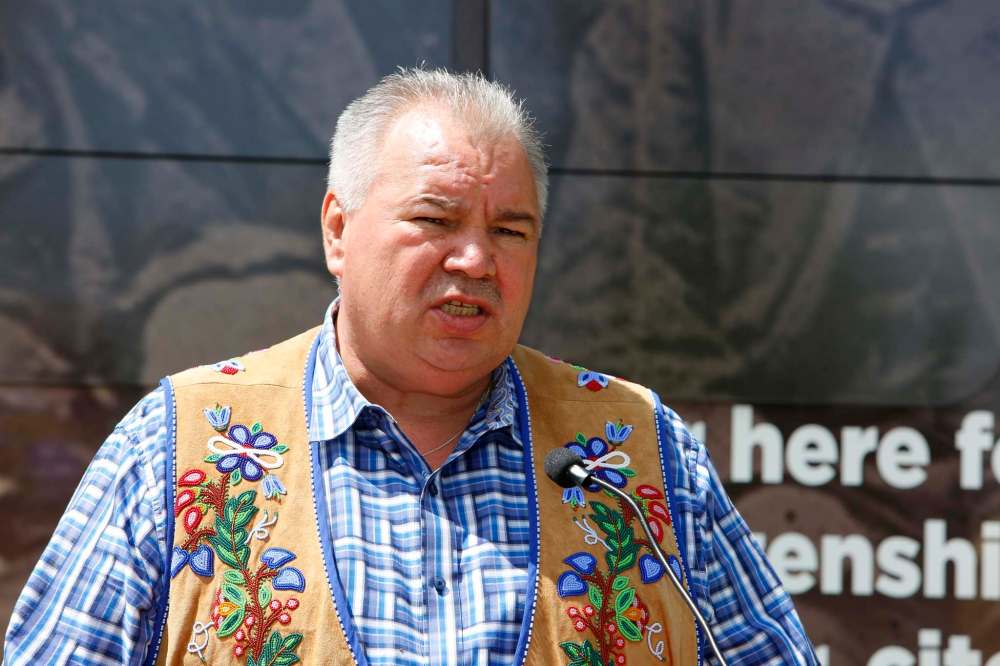
“The practice of spotlighting in agro-Manitoba will now be against the Métis law. If you were to do that, you will receive punishment from the Métis government,” MMF president David Chartrand said Monday.
The resolution posted on the MMF website directs “there will be a complete prohibition on undertaking dangerous night spot-lighting, which shall be defined as chasing animals in motorized vehicles, including, trucks, snowmobiles, ATVs, boats, etc. with artificial lighting.”
Just what areas will make up “agro-Manitoba” have yet to be defined, but will be mapped out in consultation with the province, Chartrand said. “The south will be off-limits, for sure,” but areas of central Manitoba will be debated.
Night hunting, however, will continue to be allowed by the MMF in northern, remote and unpopulated areas of the province.
While legal for Indigenous people in Manitoba, spotlighting has been in the public eye due to safety concerns, with the province stepping up enforcement this year of illegal night hunting.
The MMF hopes to have its ban areas — and punishments for breaking its law — mapped out as soon as possible, Chartrand said.
“I would like to sit down with (the government)… and come to terms on how we define the map. Hunting season is around the corner, so we should be sending this out immediately,” he said. “We will negotiate with the province. Once that mapping is set… it will be (put) in our law book and sent to every harvester.”
Eligible Métis are issued harvester cards, used to identify themselves to conservation and law officials. In terms of potential discipline for breaking the prohibition on spotlighting, the MMF is looking at options ranging from fines up to having that card revoked, Chartrand said.
“If we withdraw that person’s right, that person will… legally lose their constitutional ability to harvest… any species of animal,” he said. A fitting punishment, “if they want to disrespect the laws of their people.”
Chartrand stressed the MMF represents the “only Indigenous people in Canada that have written laws with (hunting) seasons and limits. Conservation is the No. 1 principle of our policy.”
“This is the right approach to educating the next generation that we all have to work together… If we do not start practising, and protecting, conservation, then what right do we have 20 years from now if there is no more species to hunt?” he said.
The MMF represents roughly 120,000 members, and there are some 12,000 harvester cards issued.

However, “I don’t want that number to scare people,” Chartrand said. “A lot of people get them for social purposes, others for medicinal, plants. Some get it for firewood.”
The number using the cards to actively hunt animals drops to “several thousand,” he said.
Sunday’s vote came after a series of nine consultations across Manitoba this summer.
“There was no doubt the issue was accepted as most as a concern,” Chartrand said, but the MMF needed to bring it to the assembly to create an official stance. More than 3,000 people attended the three-day event.
“I was very proud of our people, over 97 per cent supported the end (of spotlighting)… and for a new law to be established.”