

Most protection orders dismissed or dropped

Advertisement
Read this article for free:
or
Already have an account? Log in here »
To continue reading, please subscribe:

Digital Subscription
One year of digital access for only $205*
- Enjoy unlimited reading on winnipegfreepress.com
- Read the E-Edition, our digital replica newspaper
- Access News Break, our award-winning app
- Play interactive puzzles
*First annual payment billed as $205.00 + GST for one year. This annual subscription will automatically renew at $233.00 + GST every 52 weeks (10% off the regular annual price of $259.35). Offer available to new and qualified returning subscribers only. Cancel any time.
To continue reading, please subscribe:
Add Free Press access to your Brandon Sun subscription for only an additional
$1 for the first 4 weeks*
- Enjoy unlimited reading on winnipegfreepress.com
- Read the E-Edition, our digital replica newspaper
- Access News Break, our award-winning app
- Play interactive puzzles
*Your next Brandon Sun subscription payment will increase by $1.00 and you will be charged $17.95 plus GST for four weeks. After four weeks, your payment will increase to $24.95 plus GST every four weeks.
Read unlimited articles for free today:
or
Already have an account? Log in here »
Hey there, time traveller!
This article was published 10/10/2017 (3271 days ago), so information in it may no longer be current.
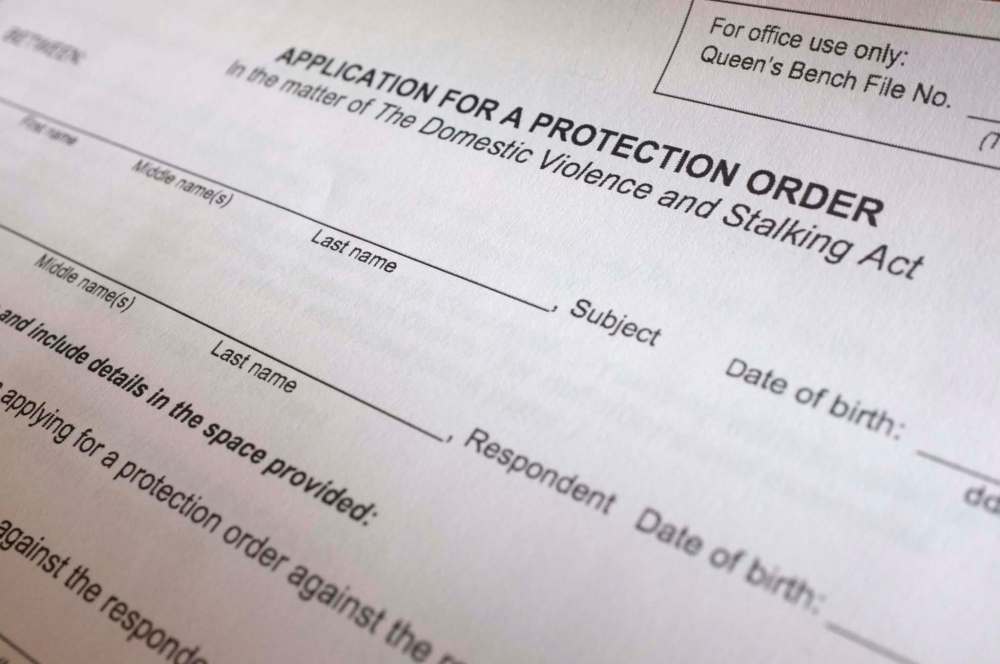
Despite legislative changes intended to make it easier for domestic-violence victims to ask the courts for urgent protection against alleged abusers, fewer than half of all protection-order applications are granted in Manitoba.
Courts approved only 44 per cent of protection-order applications this fiscal year — a slight increase from the previous year, but still in keeping with a longstanding trend in which the majority of victim applications are dismissed or withdrawn.
Manitoba Justice statistics show 864 orders were denied or withdrawn in 2016-17, while 684 were granted. Some of those granted may have been later challenged by the alleged abuser and set aside by the courts, but the department doesn’t track how many of the approved orders were later overturned in any given year.
Three women who accused Manuel Ruiz of domestic violence and stalking behaviour were denied protection orders against him in 2001, 2006 and 2010. The 52-year-old Winnipeg firefighter and martial arts instructor is charged with sexual assault and drug offences that have raised questions about the abuse allegations in his past — a past from which women sought protection.
Manitoba’s domestic violence laws have changed since then, but as for whether protection orders are easier to get since the Domestic Violence and Stalking Act was updated last spring, that remains to be seen.
Anna Pazdzierski, executive director of Nova House women’s shelter in Selkirk, said the legislation hasn’t completely curbed a systemic problem.
“I think the big issue, even with legislation, is that we have trouble getting the JJP (justices of the peace) who hear those orders to actually believe women. That’s the big issue,” she said.
There hasn’t been any recent research on domestic-violence protection orders in Manitoba, so it’s difficult to know whether the province’s updated domestic-violence laws have prompted real change, said law Prof. Karen Busby, director of the University of Manitoba’s Centre for Human Rights Research.
In some cases where domestic violence is alleged along with an ongoing family-court dispute, the protection order applicant will withdraw her request in favour of applying for a prevention order instead.
Prevention orders, unlike protection orders, are not imposed on an urgent basis, and the court will typically hear from both sides before deciding whether to grant one. They can last longer and have more conditions applied, as well. That could be why dismissed/withdrawn protection-order applications still make up the majority, Busby said.
“That might explain it. That’s going to explain some cases. Does it explain a lot or most? I don’t know,” she said.
About 15 years ago, Busby joined researchers in Alberta and Saskatchewan to look at how the protection-order process differed across the Prairies. They found different legislation in each province made a big difference in the handling of domestic-violence complaints.
Applications for emergency orders under Manitoba’s broader Domestic Violence and Stalking Act were more widely used than in Alberta and Saskatchewan, the study found. Manitoba dealt with more protection order applications than the other provinces. Manitobans appeared to be more likely to apply for protection orders, and they were also more likely to be denied.
In Manitoba in 2002, 48.8 per cent of protection-order applications were granted, according to the study, published in What’s Law Got to Do With It?: the Law, Specialized Courts and Domestic Violence in Canada. In 2003, the number of granted orders dipped to 36 per cent. The percentage of granted applications in Alberta and Saskatchewan, meanwhile, hovered around 80 per cent to 85 per cent during that time. Despite the percentage gap, Manitoba issued more protection orders compared with the other Prairie provinces at the time of the study.
“I think it’s been below 50 per cent for some time,” in Manitoba, Busby said.
Protection orders are meant to prohibit an abuser from contacting or going near a victim in cases involving domestic violence or stalking, and the justice of the peace who hears from the complainant doesn’t need to hear from the person who would be bound by the order before granting it. But before that happens, the complainants — usually women — have to go to court and explain why they’re in need of protection.
It’s up to the justice of the peace to decide whether to impose the protection order. And in the wake of the homicides of two Winnipeg women who were each killed by their partners in October 2015, despite having sought protection orders — Selena Keeper was denied an order, while Camille Runke granted one — the province pledged to strengthen its domestic-violence laws and make the process easier for victims.
The changes included removing a requirement for complainants to be in “imminent” danger before a protection order could be granted, allowing a support person to accompany the complainant during the court hearing, strengthening rules requiring a person bound by a protection order to give up any firearms, and requiring justices of the peace to check the court registry for any legal records — including past requests for protection orders against an individual.
But Pazdzierski said despite the changes, women who don’t get help from a “protection order designate” — someone like Pazdzierski, who’s trained to help fill out the paperwork and prepare for the court hearing — likely won’t be granted a protection order. She and other protection-order designates spend up to four hours preparing a protection-order application, and she’s seen a pattern along the way.

Justices of the peace are more likely to grant protection orders in cases where the victims are crying or emotional instead of well-spoken, Pazdzierski said. They want to see that the victim fears for her life, and they want precise dates when the violence or stalking behaviours happened.
“You need to be fearful that that person is going to hurt you, and you need to have experienced where he’s hurt you before, and then you need to plead your case before this person who, we find, often would sooner take the side of the abuser than the victim,” she said. “If there’s children involved, they often think a woman is only going for a protection order so that she can get custody of her children.
“They just automatically seem to assume that women aren’t telling the truth, that they’re using the protection order for their own benefit.”
katie.may@freepress.mb.ca
Twitter: @thatkatiemay
Katie May is a multimedia producer for the Free Press.
Our newsroom depends on a growing audience of readers to power our journalism. If you are not a paid reader, please consider becoming a subscriber.
Our newsroom depends on its audience of readers to power our journalism. Thank you for your support.
Protection order applications in Manitoba
2016-17
Granted: 684
Dismissed or withdrawn: 864
44 per cent granted
2015-16
Granted: 565
Dismissed or withdrawn: 818
41 per cent granted
2014-15
Granted: 657
Dismissed or withdrawn: 854
43 per cent granted
2013-14
Granted: 580
Dismissed or withdrawn: 978
37 per cent granted
— source: Manitoba Justice
Note: Does not account for granted protection orders that were later set aside.
Katie May is a multimedia producer for the Free Press.
Our newsroom depends on a growing audience of readers to power our journalism. If you are not a paid reader, please consider becoming a subscriber.
Our newsroom depends on its audience of readers to power our journalism. Thank you for your support.
Advertisement Advertise With Us
Advertisement Advertise With Us