

No repeal: Manitoba turns its construction industry focus to minimum-wage rates
.

Advertisement
Read this article for free:
or
Already have an account? Log in here »
To continue reading, please subscribe:
Monthly Digital Subscription
$1 per week for 24 weeks*
- Enjoy unlimited reading on winnipegfreepress.com
- Read the E-Edition, our digital replica newspaper
- Access News Break, our award-winning app
- Play interactive puzzles
*Billed as $4.00 plus GST every four weeks. After 24 weeks, price increases to the regular rate of $19.95 plus GST every four weeks. Offer available to new and qualified returning subscribers only. Cancel any time.
Monthly Digital Subscription
$4.99/week*
- Enjoy unlimited reading on winnipegfreepress.com
- Read the E-Edition, our digital replica newspaper
- Access News Break, our award-winning app
- Play interactive puzzles
*Billed as $19.95 plus GST every four weeks. Cancel any time.
To continue reading, please subscribe:
Add Free Press access to your Brandon Sun subscription for only an additional
$1 for the first 4 weeks*
*Your next subscription payment will increase by $1.00 and you will be charged $16.99 plus GST for four weeks. After four weeks, your payment will increase to $23.99 plus GST every four weeks.
Read unlimited articles for free today:
or
Already have an account? Log in here »
Hey there, time traveller!
This article was published 08/01/2021 (1895 days ago), so information in it may no longer be current.
The Manitoba government will not repeal the Construction Industry Wages Act, industry leaders have announced.
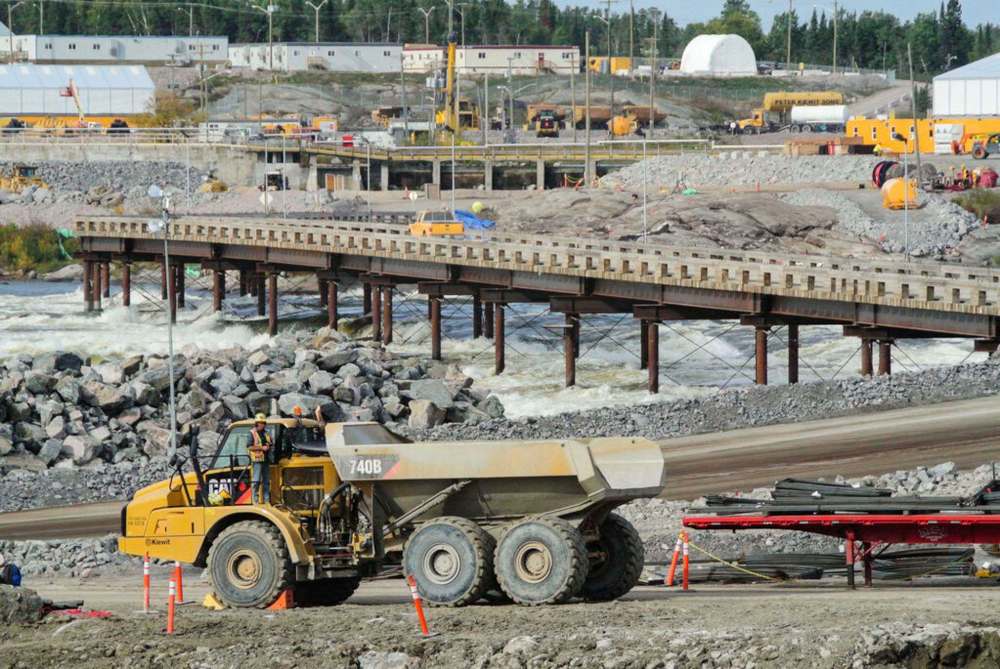
The act sets out the minimum hourly and overtime wage rates, and the standard hours of work per day, week or month in the heavy construction, and the industrial, commercial, institutional construction industry sectors.
It has been credited with attracting and retaining skilled trades and well-paying jobs in Manitoba.
In late December, industry representatives were invited to join Finance Minister Scott Fielding for a Jan. 7 Zoom meeting to discuss repealing the legislation, how much time the transition may take — and what steps might be warranted to “minimize disruption.”
After Thursday’s meeting, five major industry groups — Winnipeg Construction Association, Manitoba Heavy Construction Association, Mechanical Contractors Association of Manitoba, Merit Contractors Association of Manitoba, and Construction Labour Relations Association of Manitoba — issued a joint news release.
“We had a good discussion with Minister Fielding, who confirmed that rather than repealing the (legislation), Manitoba will update the minimum-wage rates for the construction industry workforce,” said Ron Hambley, president of the Winnipeg Construction Association.
Prior to the meeting, trades, contractors, unions, opposition parties, and even Conservative party Sen. Don Plett questioned repealing the act. Plett told the Free Press last month it is not the time to “tinker” with it.
With federal investments in infrastructure projects expected to be a major part of Canada’s post-pandemic economic recovery, messing with construction industry wages wasn’t prudent, advocates said.
On Thursday, Fielding committed to establishing a panel to review the legislation “with broad worker-employer representation to update the construction industry minimum-wage rates,” the news release from industry said.

When asked to respond, the minister’s office issued a statement saying Fielding has personally reached out to several industry associations and labour groups over the past few weeks to explain the government’s intentions.
“The minimum-wage rates in the Construction Industry Wages Act are outdated and our government believes it’s time to address this. We are committed to fair wages for construction industry workers,” Fielding said in the statement.
“We are consulting valued industry and labour representatives to modernize the current act instead of repealing it.”
The last such minimum-wage adjustment was made in 2017.
carol.sanders@freepress.mb.ca
Carol Sanders
Legislature reporter
Carol Sanders is a reporter at the Free Press legislature bureau. The former general assignment reporter and copy editor joined the paper in 1997. Read more about Carol.
Every piece of reporting Carol produces is reviewed by an editing team before it is posted online or published in print — part of the Free Press‘s tradition, since 1872, of producing reliable independent journalism. Read more about Free Press’s history and mandate, and learn how our newsroom operates.
Our newsroom depends on a growing audience of readers to power our journalism. If you are not a paid reader, please consider becoming a subscriber.
Our newsroom depends on its audience of readers to power our journalism. Thank you for your support.
Carol Sanders
Legislature reporter
Carol Sanders is a reporter at the Free Press legislature bureau. The former general assignment reporter and copy editor joined the paper in 1997. Read more about Carol.
Every piece of reporting Carol produces is reviewed by an editing team before it is posted online or published in print — part of the Free Press‘s tradition, since 1872, of producing reliable independent journalism. Read more about Free Press’s history and mandate, and learn how our newsroom operates.
Our newsroom depends on a growing audience of readers to power our journalism. If you are not a paid reader, please consider becoming a subscriber.
Our newsroom depends on its audience of readers to power our journalism. Thank you for your support.
Advertisement Advertise With Us
Advertisement Advertise With Us