

Northern First Nations closer to autonomy
'Long-overdue solution to health-care crisis in the north': MKO grand chief
Advertisement
Read this article for free:
or
Already have an account? Log in here »
To continue reading, please subscribe:
Digital Subscription
One year of digital access for only $1.44 a week*
- Enjoy unlimited reading on winnipegfreepress.com
- Read the E-Edition, our digital replica newspaper
- Access News Break, our award-winning app
- Play interactive puzzles
*Billed as $5.77 plus GST every four weeks. After 52 weeks, price increases to the regular rate of $19.95 plus GST every four weeks. Offer available to new and qualified returning subscribers only. Cancel any time.
To continue reading, please subscribe:
Add Free Press access to your Brandon Sun subscription for only an additional
$1 for the first 4 weeks*
- Enjoy unlimited reading on winnipegfreepress.com
- Read the E-Edition, our digital replica newspaper
- Access News Break, our award-winning app
- Play interactive puzzles
*Your next Brandon Sun subscription payment will increase by $1.00 and you will be charged $17.95 plus GST for four weeks. After four weeks, your payment will increase to $24.95 plus GST every four weeks.
Read unlimited articles for free today:
or
Already have an account? Log in here »
Hey there, time traveller!
This article was published 01/01/2018 (3219 days ago), so information in it may no longer be current.
OTTAWA — Manitoba’s northern First Nations are starting the year with hope of reforming how they access health care, amid unprecedented federal momentum towards more Indigenous autonomy.
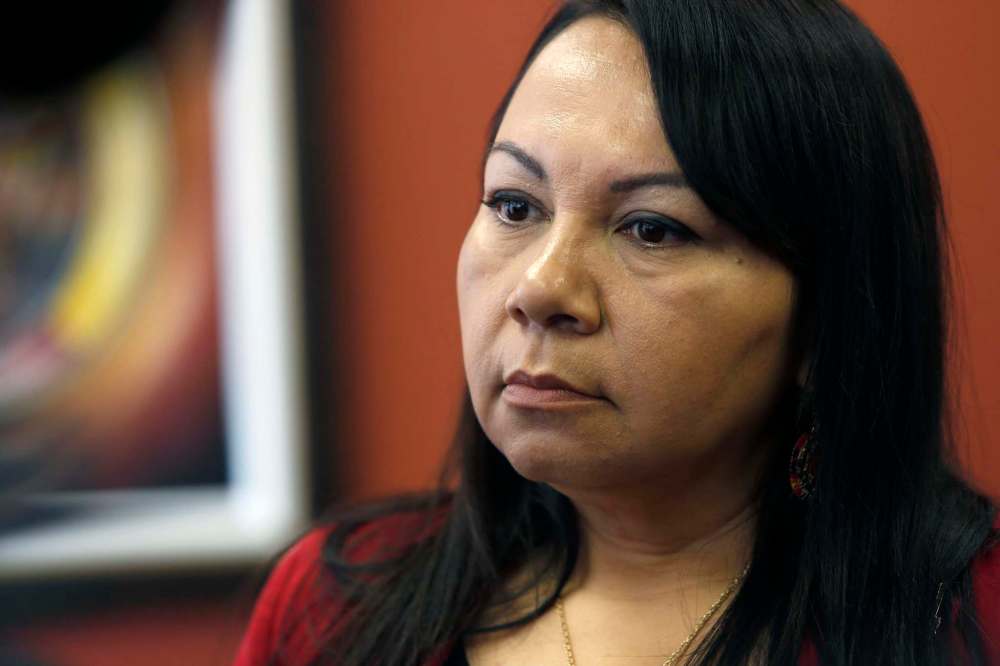
“If we keep going the same way we’re going now, we’re going to have people that are just as sick, if not sicker, and a health-care system that’s going to balloon even more,” said Grand Chief Sheila North Wilson of the Manitoba Keewatinowi Okimakanak, which represents 30 Cree nations in the province’s north.
“Whereas, if we start creating systems that are more tailored to what the needs are and what the solutions are, then I think we’re all going to be better for it in the long run.”
Since at least the 1980s, First Nations groups in Manitoba have been angling to take over health-care dollars and responsibilities from the federal government. Major groups have passed motions, signed memoranda and held conferences about the issue.
Generally, the federal government pays for on-reserve health care, often through nurses that give advice and basic treatments, but fly patients down to cities for more complex treatment. They generally cover the tab for treatments in province-run hospitals, because Manitobans living on reserves fall under a federal health plan instead of a provincial one.
But now, Ottawa has pledged a “nation-to-nation relationship,” and has budgeted funds to achieve a longstanding vision of giving health care autonomy to Indigenous groups.
“This is not a new concept, this is just one that has been building,” said North Wilson. “I don’t know if we’ve gone this far before.”
Chiefs from around the province have expressed interest, coming together five years ago to push health transformation as a priority. But the need and potential are greatest in the north, which reports more illness and a lack of prevention initiatives.
“It’s a long-overdue solution to a health-care crisis in the north.”
This fall, Ottawa gave MKO funding to survey its 30 First Nations groups, to hear what services they want to be brought into local hands.
Valerie Gideon, a senior official in the new federal Indigenous Services Department, says there’s momentum in Manitoba.
“We are having very exciting conversations; First Nations are taking the lead, and they are developing these new models,” said Gideon, the acting senior assistant deputy minister of the First Nations and Inuit Health Branch.
North Wilson says the idea is gaining traction at both levels of government, after some reticence from the province.
“I do think the federal government, and even the provincial government, sees the value in allowing First Nations-led services. Because it will save money in the long run, because it will prevent illnesses,” she said.
MKO has submitted a proposal to Ottawa and the provincial government, which they’ve called the “Clinic Care Transformation Initiative.” The proposal focuses on having physicians available to northern communities, instead of just nurses.
The province says that it’s reviewing the proposal, and that its experts will meet with MKO officials early next year to learn more.
Sources familiar with the past year’s health-funding negotiations between Ottawa and Manitoba said that the funding of First Nations services was a frequent sticking point. They say the province has been worried that changing the system could off-load expensive federal obligations onto Manitoba.
North Wilson claimed those talks held up the idea, but she’s optimistic the province will seriously consider the proposal this year, after discussing it last July with Premier Brian Pallister.
“We’re also Manitobans; even though a lot of jurisdictions are still considered federal, we’re all still part of our province.”
On paper, MKO is catching up to a similar group in northern Ontario, though the Manitoba group appears to have more hands-on experience with delivering health care.
Last July, northern Ontario’s Nishnawbe Aski Nation an agreement with Ottawa and the Ontario government, pledging to examine funding shortfalls and bureaucratic hurdles and eventually devolve health care planning to local groups.
A year prior, Ottawa put up $69 million in funding for First Nations mental-health projects, $10 million of which the MKO used to employ crisis-intervention workers. The funding came amid a wave of suicide crises, and the teams combine conventional counselling with sharing circles and traditional prevention programs.
The teams have since spread outside MKO jurisdiction to hubs in the province’s south, and even to respond to crises in northern Ontario.
In terms of working with the province, Gideon says her department wants to build on good relationships it already has with officials. Her colleagues are working with the Northern and Winnipeg Regional Health Authorities to make sure the province gets its fair share of midwifery and mental-health dollars, as it has for tuberculosis programming.
She says the chiefs are leading the health-transformation process, but that there’s been “some starts and stops” with the province.
“Any time that there is that interest from the Manitoba government, we will absolutely jump right into those conversations. So I don’t think that there are any very real barriers; I think we’ve just had difficulty maintaining momentum.”
She said it’s a problem elsewhere.
“We’ve also had a lot of challenges with respect to bringing provinces and territories at the table. In some cases we’ve had a lot of success, but in other cases we haven’t seen a lot of movement over the last two decades.”
A northern Saskatchewan group told the Free Press last fall it shelved the idea entirely, out of concern that province’s health reform would leave First Nations people in a worse shape.
Gideon has followed health transformation for decades, through graduate studies and high-level work within Health Canada.
She pointed out that the government’s instructions to Indigenous Services Minister Jane Philpott call for allowing Indigenous people to develop and deliver their own services. That’s amid criticisms that top-down approaches don’t always match communities’ needs and can even be patronizing.
“The accountability will be between Indigenous governments and their members. Versus accountability to federal or provincial governments.”
Gideon says her colleagues have had some success by letting First Nations and Inuit groups design their own programming, but that giving further autonomy, and stable funding, has allowed them to outperform services administered from Ottawa.
For example, First Nations groups in British Columbia largely replaced federal health-care services with a health authority, similar to regional boards that control hospitals and doctors. That’s allowed them to collaborate with the province on programs like pharmacare and data collection, while keeping other parts autonomous.
This devolution could ultimately extend to social services and education. This past October, Canada’s first school board operated exclusively by First Nations opened near Brokenhead, Man.
North Wilson says that when health services do end up in local hands, she expects care costs to rise, but ultimately be cheaper.
“Initially it may cost more to start [delivering] health care, but it’s essential if we want people in future to be healthier, rather than just catching illnesses at the end, in Stage 4 [cancer] when there’s little chance of survival. That’s the reality we’re facing when we look at this work.”
She said longer-term, health devolution would mean less reliance on strained facilities in Winnipeg, thanks to northern facilities like the planned health centre in Cross Lake, while Gideon noted that reserves surrounding Island Lake have requested a hospital, which might serve patients from more remote communities too.
She said there’s also been a proposal to set up a 24/7 clinic in Winnipeg to provide after-hours support to patients flown into Winnipeg, and help with the adjustment for those staying for long-term medical procedures.
North Wilson says new clinics and hospitals could generate employment that has a low chance of being threatened by advances in technology. The number of health-care jobs is rising across the continent, and is the top sector in many northern communities.
“We can also create jobs, high-quality, high-paying jobs for people that need them in the north,” said North Wilson, noting an uptick in First Nations people enrolling in medical programs.
“It is a myth that there are no jobs in the north, because there are, but you need a good education to do most of them.”

She says the success of local mental-health teams speaks to First Nations’ potential.
“People might not think our community is ready to take over a complex and extensive system as a health-care system, but that’s what we’re doing now, is enhancing the capacity that we already have.”
“We have a real opportunity here. If we’re all interested in lowering costs of the healthcare system in our province, and making people healthier, then this is the way to do it, is to work with us, as First Nations who know what the solutions are.”
dylan.robertson@freepress.mb.ca
History
Updated on Monday, January 1, 2018 4:13 PM CST: Adds missing word
Updated on Tuesday, January 2, 2018 2:42 PM CST: Corrects reference to Cross Lake health centre.