

Ontario on track to twin Trans-Canada to Manitoba border
Project would remove bottleneck and increase speed limit
Advertisement
Read this article for free:
or
Already have an account? Log in here »
To continue reading, please subscribe:
Monthly Digital Subscription
$1 per week for 24 weeks*
- Enjoy unlimited reading on winnipegfreepress.com
- Read the E-Edition, our digital replica newspaper
- Access News Break, our award-winning app
- Play interactive puzzles
*Billed as $4.00 plus GST every four weeks. After 24 weeks, price increases to the regular rate of $19.95 plus GST every four weeks. Offer available to new and qualified returning subscribers only. Cancel any time.
Monthly Digital Subscription
$4.99/week*
- Enjoy unlimited reading on winnipegfreepress.com
- Read the E-Edition, our digital replica newspaper
- Access News Break, our award-winning app
- Play interactive puzzles
*Billed as $19.95 plus GST every four weeks. Cancel any time.
To continue reading, please subscribe:
Add Free Press access to your Brandon Sun subscription for only an additional
$1 for the first 4 weeks*
*Your next subscription payment will increase by $1.00 and you will be charged $16.99 plus GST for four weeks. After four weeks, your payment will increase to $23.99 plus GST every four weeks.
Read unlimited articles for free today:
or
Already have an account? Log in here »
Hey there, time traveller!
This article was published 24/12/2018 (2643 days ago), so information in it may no longer be current.
It looks like the twinning of the Trans-Canada Highway from the Manitoba-Ontario border to Kenora may finally start in the new year.
Kenora MP Bob Nault, a Liberal, said the stars are aligned to start construction after the Harper government announced the project a decade ago.
The Ontario government must still make a submission for a 50-50 cost-sharing agreement. That’s under a federal transport corridors fund set up to eliminate bottlenecks where an economic case can be made. The fund is taking new applications in January.
Ontario Energy Minister Greg Rickford, who is MPP for Kenora-Rainy River, has said twinning that stretch of highway is a priority for Ontario’s new Progressive Conservative government.
Rickford’s office said this week he will pursue all funding options, including the federal government’s corridors fund.
If that’s done, there’s a good chance construction could finally begin at the Manitoba-Ontario border in the fall, Nault said.
“It’s well known that’s a pretty difficult piece of road,” Nault said.
Manitoba stands to benefit because an estimated 3,000 cottages in the Lake of the Woods area are owned by Manitobans.
Nault said it is an opportunity for the Manitoba government to also twin the Trans-Canada between Falcon Lake and the Ontario border under a similar 50-50 funding arrangement.
“It makes no sense for the twinning to stop at Falcon Lake,” said Nault. “It’s a short piece of road (about 10 kilometres from Falcon to the Ontario border) but critical economically. There are a lot of Manitobans who live in my riding for a big part of the year.”
While the Trans-Canada is a national highway, it falls under provincial jurisdiction except in national parks such as Banff National Park.
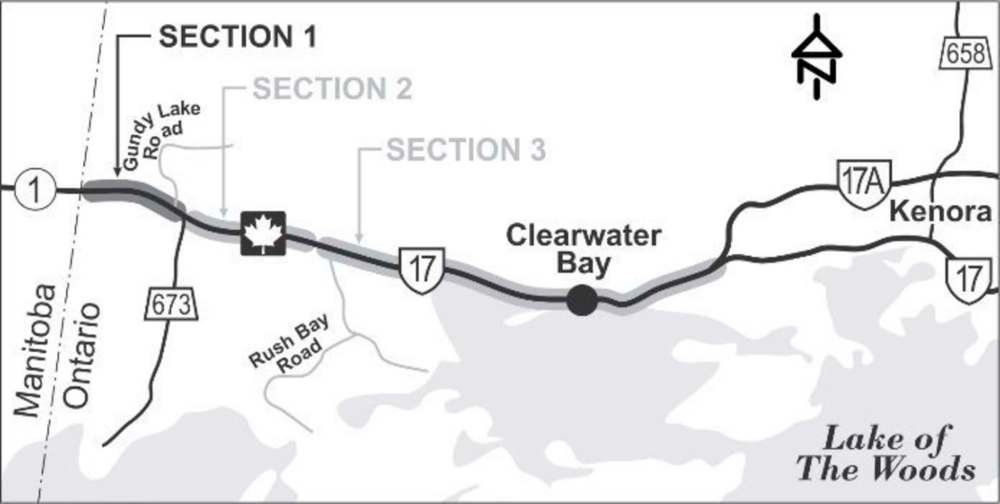
The twinning of the 42 kilometres from the Manitoba-Ontario border to the Kenora turn-off has been broken into three phases for construction.
“This road is so critical that when we have an accident, it shuts the entire Trans-Canada down. There’s no alternative,” Nault said.
From Ontario’s perspective, a twinned highway would be safer and bump up the speed limit to 100 kilometres per hour from the current 90 km/h. That would make it faster to travel to Kenora and would open cottage and recreational development further east in the Vermillion Bay area, Nault said.
“Consultants have told me that, generally speaking, people don’t like to drive more than three hours to get to a cottage. This would stimulate the economy past Kenora,” he said.
Northwest Ontario also does a lot of business with the West, including in wood products going to and from the area. That business is being stymied by the bottleneck in the road.
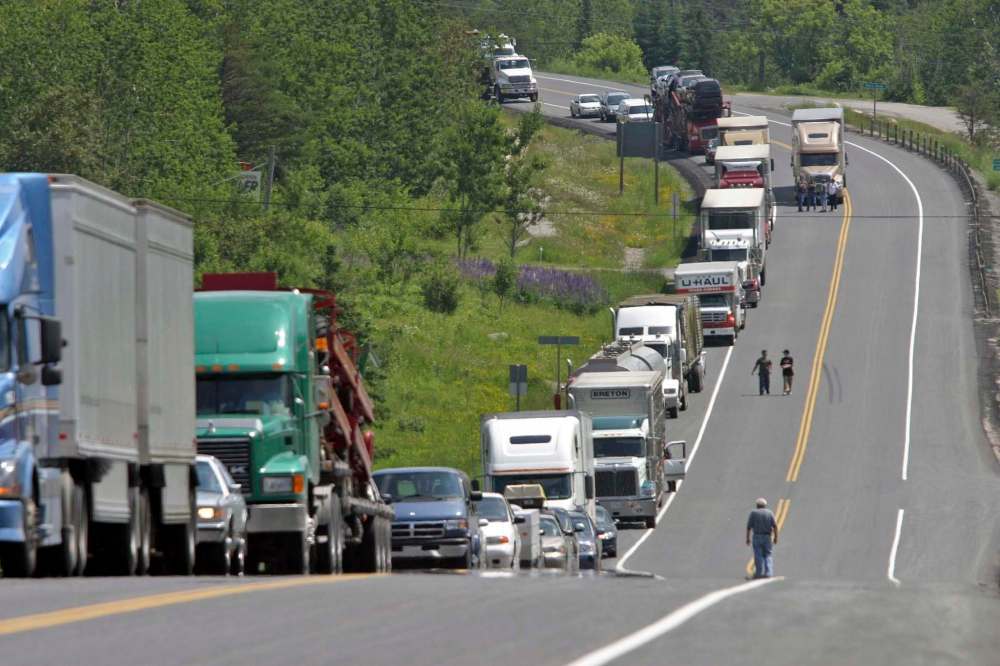
“It’s a very busy highway coming out of Manitoba into Ontario. It’s bumper to bumper in the summertime,” Nault said.
He added that First Nations leaders are very supportive of highway upgrade. They were initially in opposition, partly because Shoal Lake Band 40, which is near the border, didn’t even have an all-weather road to get in and out of its reserve. The so-called Freedom Road is under construction, but is already being used for local traffic. First Nations opposition was one of the factors that stalled the twinning.

The Harper government made a big announcement in 2009 to cost-share the $100-million twinning project with Ontario, but it never got off the ground. A new cost estimate has not been released.
Another holdup to the twinning was the inability to reach a consensus on the exact location of the new lanes. The money set aside was eventually used for a 37-kilometre four-lane highway from Thunder Bay to Nipigon.
Transport Minister Marc Garneau would have to approve the Ontario proposal. His initial reaction has been positive, Nault said. Environmental assessments and engineering on the first phase have been completed.
“The government of Canada has been funding twinning of highways — there were two announcements in the last year. So I don’t see how this wouldn’t be a top priority,” he said.
bill.redekop@freepress.mb.ca