

Opposition awaits Liberals’ approach after throne speech
Trudeau's minority government in spotlight
Advertisement
Read this article for free:
or
Already have an account? Log in here »
To continue reading, please subscribe:
Monthly Digital Subscription
$1 per week for 24 weeks*
- Enjoy unlimited reading on winnipegfreepress.com
- Read the E-Edition, our digital replica newspaper
- Access News Break, our award-winning app
- Play interactive puzzles
*Billed as $4.00 plus GST every four weeks. After 24 weeks, price increases to the regular rate of $19.95 plus GST every four weeks. Offer available to new and qualified returning subscribers only. Cancel any time.
Monthly Digital Subscription
$4.99/week*
- Enjoy unlimited reading on winnipegfreepress.com
- Read the E-Edition, our digital replica newspaper
- Access News Break, our award-winning app
- Play interactive puzzles
*Billed as $19.95 plus GST every four weeks. Cancel any time.
To continue reading, please subscribe:
Add Free Press access to your Brandon Sun subscription for only an additional
$1 for the first 4 weeks*
*Your next subscription payment will increase by $1.00 and you will be charged $16.99 plus GST for four weeks. After four weeks, your payment will increase to $23.99 plus GST every four weeks.
Read unlimited articles for free today:
or
Already have an account? Log in here »
Hey there, time traveller!
This article was published 04/12/2019 (2333 days ago), so information in it may no longer be current.
OTTAWA — After weeks of pledging to work co-operatively, federal parties will be put to the test today with the Trudeau minority government’s throne speech.
The Liberals have hinted they’ll try to heal national fissures through action on climate change and drug coverage.
But any progress on those issues will be contingent on how the Liberals behave in the House of Commons. Prime Minister Justin Trudeau has said voters “gave me a lot to think about” by downgrading his government to a minority, but opposition MPs aren’t holding their breath.
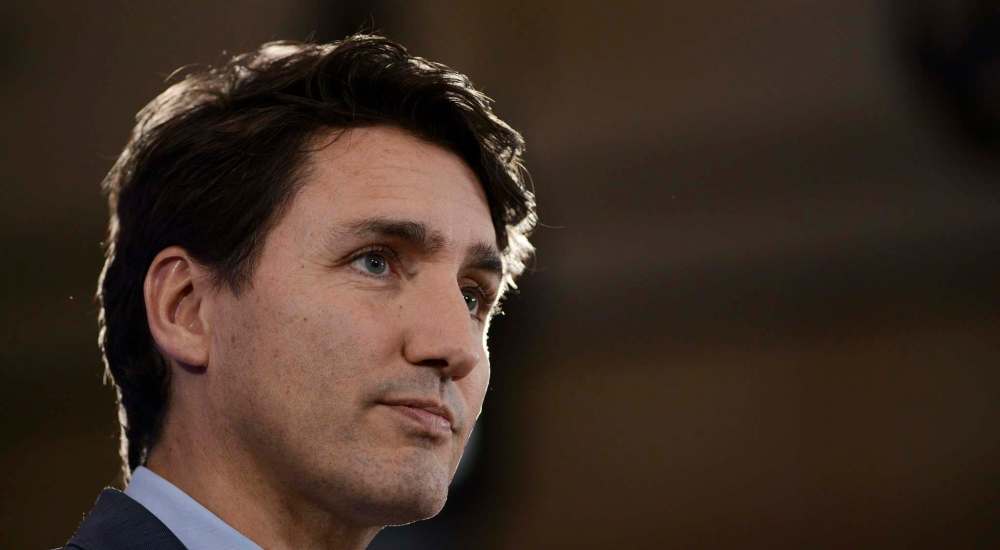
“We’re going to get our first window into whether this period of reflection has ushered in a change of attitude,” said Daniel Blaikie, NDP MP for Elmwood—Transcona.
He noted the Liberals’ first four years in charge included “dysfunction,” with uproar over proposals to shorten House hours, overnight voting sessions in order to keep private some details in the SNC-Lavalin affair, and pushback on limits to debate time that culminated in Trudeau elbowing an MP.
“It was a really bad attitude and a lot of things that went wrong in the last Parliament… was a result of that kind of arrogant, entitled attitude,” Blaikie said.
Trudeau has renewed Winnipeg North MP Kevin Lamoureux’s term as parliamentary secretary to the Liberal House leader, meaning he will continue to be in the chamber for long hours to help usher legislation.
“I like to think, at the end of the day, that you will see a sense of humility on the floor of the House, a lot more co-operation,” he said, expecting “initiatives that will gain support from a mixture of political parties, at different times.”
Lamoureux feels the parties will be more careful with what they say in a minority Parliament, where a single confidence vote can bring down the government.
“It does obligate governments to be more co-operative, to listen more. You’ll also see opposition parties behave in a more responsible fashion,” he said.
As for policy, Lamoureux said he’s pushing within the party to deliver on “long-overdue” pharmacare, after a report the Liberals commissioned called for a $15-billion, single-payer program.
Yet, drug coverage is one of the issues the Liberals will have to delicately navigate with premiers, a majority of whom lean conservative.
Manitoba Premier Brian Pallister has rejected the idea, saying Monday: “If you can’t get (health-care funding) right, don’t start with another program.”
Within the Commons, the NDP said any pharmacare pledge needs clear timelines and commitments. The party expects the Liberals to opt for a program to fill gaps in coverage, instead of a universal program.
“It’s rolling out better services for Canadians, but it’s also doing it in a way that’s more cost-efficient. If the premier doesn’t understand that, he should give his head a shake,” Blaikie said.
He also echoed NDP Leader Jagmeet Singh’s calls for bolder targets for reducing greenhouse gas emissions in today’s speech, which will be read by Gov.-Gen. Julie Payette.
However, the parties seem to have dialed back their ultimatums, with Singh saying voting down regular spending legislation is “not the way to make the government do what’s right.”
Conservative House leader Candice Bergen, who represents Portage—Lisgar, said she expects a clear commitment to the oil and gas sector after an election that gave the Liberals no seats in Alberta and Saskatchewan.
“We’re not so interested in words and flowery language; we’re interested in real action that will help Canadians get back to work. And just as importantly, to send a signal that Canada is unified, and that we’re not going to be pitting one region against another,” she said.
“Manitobans sent a message to Trudeau; they gave us two more seats. And I think Manitobans’ patience with Trudeau is wearing thin, and they want to see that he’s listening and making some better decisions.”
Throne speeches outline a government’s main policy goals, and generally avoid casting aspersions against opponents. The speech will be followed by a confidence vote, likely to authorize spending, which will take place Tuesday at the latest.
Should that vote fail, Canadians will likely return to the polls.
Yet, few expect an immediate election call, with the Tories’ infighting over Andrew Scheer’s leadership, the NDP’s desolate coffers and the Bloc Québécois’ handsome electoral result in that province.

Bergen said the Liberals can gain Tory support through things such as boosting internal trade and taking a tougher stance on China.
“We certainly expect them to work with us, for the good of the country,” she said.
Bergen was first elected in the 2008 Harper minority, and noted opposition MPs now have more authority in committees to compel testimony and documents. That could influence when Canadians next go to the polls.
“In a minority, it’s fairly certain that the prime minister will call an election when it suits his interests,” she said.
dylan.robertson@freepress.mb.ca