

Pallister balks at Trudeau’s proposed 10 per cent tax on cannabis
Advertisement
Read this article for free:
or
Already have an account? Log in here »
To continue reading, please subscribe:

Digital Subscription
One year of digital access for only $205*
- Enjoy unlimited reading on winnipegfreepress.com
- Read the E-Edition, our digital replica newspaper
- Access News Break, our award-winning app
- Play interactive puzzles
*First annual payment billed as $205.00 + GST for one year. This annual subscription will automatically renew at $233.00 + GST every 52 weeks (10% off the regular annual price of $259.35). Offer available to new and qualified returning subscribers only. Cancel any time.
To continue reading, please subscribe:
Add Free Press access to your Brandon Sun subscription for only an additional
$1 for the first 4 weeks*
- Enjoy unlimited reading on winnipegfreepress.com
- Read the E-Edition, our digital replica newspaper
- Access News Break, our award-winning app
- Play interactive puzzles
*Your next Brandon Sun subscription payment will increase by $1.00 and you will be charged $17.95 plus GST for four weeks. After four weeks, your payment will increase to $24.95 plus GST every four weeks.
Read unlimited articles for free today:
or
Already have an account? Log in here »
Hey there, time traveller!
This article was published 03/10/2017 (3278 days ago), so information in it may no longer be current.
OTTAWA — Manitoba Premier Brian Pallister’s frosty relationship with Ottawa was on full display Tuesday as he ridiculed a proposal to split a 10 per cent levy on recreational marijuana and blasted controversial business-tax reforms.
The premiers’ meeting with Prime Minister Justin Trudeau was meant to find common ground on issues like bridging Indigenous employment gaps. But an afternoon press conference showed the rifts to be growing.
Trudeau floated a 10 per cent excise tax on recreational marijuana, with revenues split between the province and the feds. He told reporters that prompted “loud and clear” concerns from the premiers.
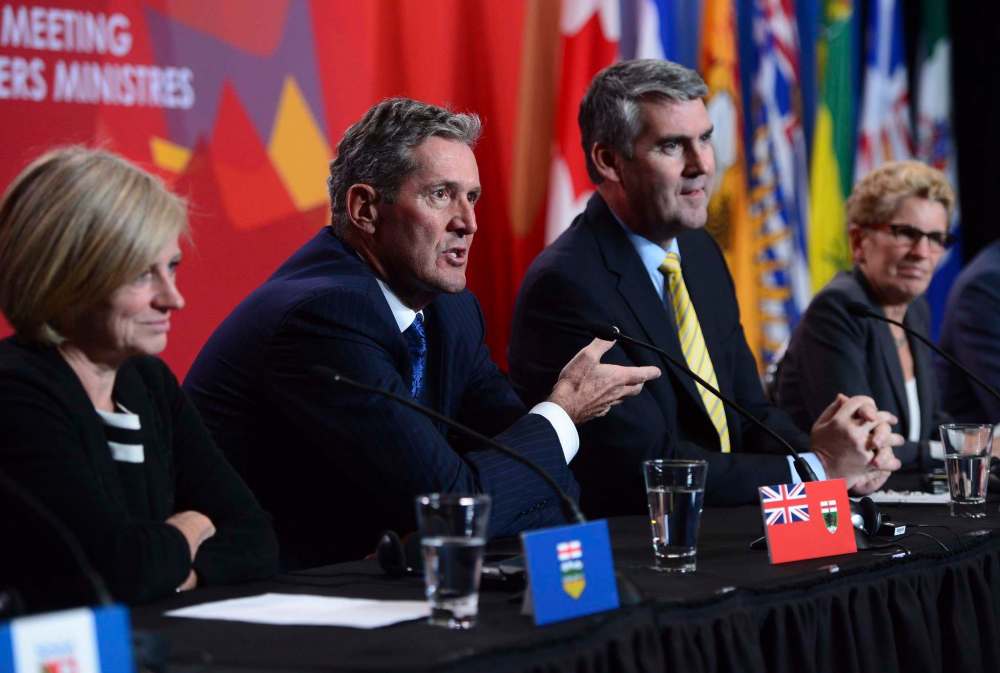
Pallister said it was premature to be talking about splitting tax revenue from marijuana without a clear sense of how much it will cost.
“We might be splitting the costs, not a net proceed; we don’t know,” he told reporters. “We do know the lion’s share of the work and expenses will be born by provinces, though.”
He later said Trudeau created an odd vibe in the closed-door talks.
“This proposal took everybody by surprise. Fifty-fifty, seriously? I know it was floated before, but I don’t think anyone thought they were serious about it,” he said. “It might be a starting point if we were negotiating on a used car, but it doesn’t make sense when it comes to this issue of great importance to Canadians.”
Pallister said Manitoba did not present a counter-proposal.
Some of the premiers did say Tuesday they now have a clearer idea of the five concerns they raised in July: road safety and enforcement, preparation and training on distribution, taxation, public education, and supply and demand and how that might affect the black market.
The premiers rallied around those concerns at an Edmonton meeting in July after Pallister seemed to be the sole voice pushing for an extension to the Liberals’ commitment to legalize recreational pot by Canada Day 2018. The premiers have since said they’ll only stick to that timeline if Ottawa adequately addresses those questions.
Some concerns persist, especially around getting enough supply to counter the black market. British Columbia Premier John Horgan in particular fretted over “trying to contain the enthusiasm within the community.”
Meanwhile, Trudeau said his government is open to changing its contentious tax reform, but didn’t give any details. Monday marked the end of a public consultation period that resulted in a reported 20,000 submissions.
The proposals would clamp down on “loopholes” that have high-income owners paying a lower tax rate than others. The summertime consultation period and scope of the changes have upset large and small business groups, doctors, accountants, lawyers, farmers, shop owners and even some of Trudeau’s Liberal backbenchers.
On Tuesday morning, Pallister urged Trudeau to soften his rhetoric, suggesting he was instigating “class warfare” between “small, family-run businesses and everyone else.” Pallister said federal Finance Minister Bill Morneau “dialed down the language” while briefing the premiers.
But by the afternoon, Trudeau said his focus remains “raise taxes for the wealthiest one per cent and lower them for the middle class,” accusing his predecessors of “sending child-benefit cheques to millionaires.”
It remains unclear how the government will change its tax policy. Nova Scotia Premier Stephen McNeil said he was reassured to hear farmers won’t be financially punished for passing on the family farm to relatives, but Pallister said there wasn’t any explicit changes promised at the meeting.

He said the proposals were creating uncertainty at a time when the province is trying to balance its books.
“This works counter to our objectives,” Pallister said.
“We’ll see what real changes come down the pipe,” he added with a shrug.
— with files from The Canadian Press
dylan.robertson@freepress.mb.ca