

Pandemic builds extra language, technological barriers for newcomers
.
Advertisement
Read this article for free:
or
Already have an account? Log in here »
To continue reading, please subscribe:

Digital Subscription
One year of digital access for only $205*
- Enjoy unlimited reading on winnipegfreepress.com
- Read the E-Edition, our digital replica newspaper
- Access News Break, our award-winning app
- Play interactive puzzles
*First annual payment billed as $205.00 + GST for one year. This annual subscription will automatically renew at $233.00 + GST every 52 weeks (10% off the regular annual price of $259.35). Offer available to new and qualified returning subscribers only. Cancel any time.
To continue reading, please subscribe:
Add Free Press access to your Brandon Sun subscription for only an additional
$1 for the first 4 weeks*
- Enjoy unlimited reading on winnipegfreepress.com
- Read the E-Edition, our digital replica newspaper
- Access News Break, our award-winning app
- Play interactive puzzles
*Your next Brandon Sun subscription payment will increase by $1.00 and you will be charged $17.95 plus GST for four weeks. After four weeks, your payment will increase to $24.95 plus GST every four weeks.
Read unlimited articles for free today:
or
Already have an account? Log in here »
Hey there, time traveller!
This article was published 19/12/2020 (2113 days ago), so information in it may no longer be current.
Newcomers often face an uphill battle finding their footing in Canada’s predominately English-speaking society, and the COVID-19 pandemic appears to have tilted the odds against them further.
Katherine Cullihall volunteers teaching English to newcomers at Winnipeg-based Immigrant Centre Manitoba. Classes have moved online since the pandemic began more than nine months ago.
“A lot of language has to do with what we see on people’s faces, how your mouth works, how you say things,” said Cullihall. “So those things aren’t as possible on Zoom.”
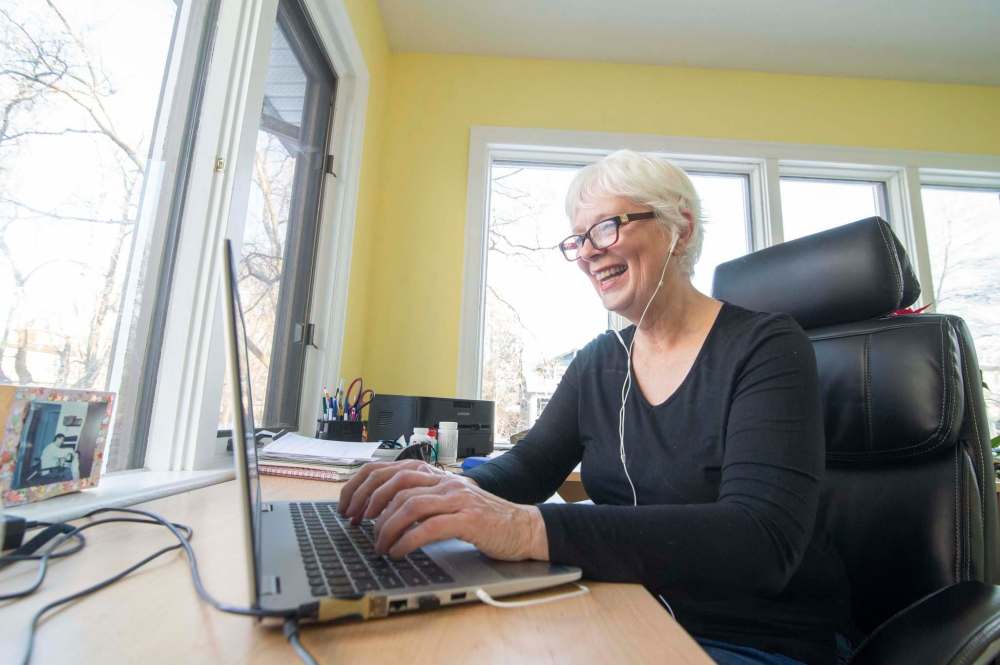
While learning via a videoscreen does allow newcomers to see faces, she said, it’s much more difficult to show them how to make a sound that might not exist in their mother tongue.
“The -th words, that’s a toughie for many people,” she said.
Normally, the class would engage in a host of activities that connect language to the physical world, using objects and playing charades. Interactions such as these help students make connections between words and their meanings, she said, helping overall retention of the language.
The online environment, however, limits what students can do. And without in-person contact, it’s difficult to gauge students’ progress, said Cullihall.
Language barriers may become even more difficult to surmount as code red restrictions reduce newcomers’ opportunities to interact with native English speakers.
“Adults, in general, are greatly disadvantaged compared with young children in learning a new language,” said Melanie Soderstrom, who specializes in language acquisition in the University of Manitoba’s psychology department.
She said part of the disadvantage is social: adults tend to stay within groups of people who speak their own language.
“COVID times will be exaggerating these effects greatly,” Soderstrom said in an email, “especially with schools and daycares being open, while many opportunities for adults to engage socially are cut off.”
Soderstrom said research shows infants can learn language over video-conferencing software, as long as it is interactive. “Though I don’t think anyone would claim that that is a full replacement for in-person interaction.”
Even if that research applies to adults, many newcomers face technological barriers that make online learning difficult to access.
“Some people didn’t have access to good Wi-Fi and computers when they were young, and they’re still facing the perceived ability to be able to navigate those systems,” said Jackson Grier at Newcomers Employment and Education Development Services Inc.
Grier, who helps newcomers ages 15-29 find employment, stressed how important language skills can be.
“Sometimes, we have youth that still are not able to send professional emails and market themselves and create cover letters,” he said. “So, they’re already at a disadvantage in what’s definitely not a buyers’ job market right now.”

Penetrating the bureaucratic language of official documents can be a significant challenge for newcomers, said Grier.
In the early days of the pandemic, applying for government supports caused a lot of confusion for those who had difficulty with the language. Often, people would fail to understand the questions on the applications. Even when they figured that out, they could find their supports cut off later on, he said, because they hadn’t understood the need to reapply each period.
“(It) can create a lot of misfortune for those that are trying to access rights and information that they’re entitled to,” said Grier.
Grier said he worries these barriers will begin to mount for some newcomers. With many of his clients already straining to understand a completely new society, its rules and its language, the pandemic’s added stress could have lasting effects.
Many have already had their educations disrupted in the move to Canada, he said. And now, as COVID-19 makes learning more difficult, those trying to finish high school before they “age out” at 22 or 23 may be forced into a job market without a diploma or strong English skills — putting them at a disadvantage difficult to overcome, he said.